In the realm of modern technology, few innovations have been as transformative as the laser. While the term "laser" often conjures images of science fiction or precise cutting tools, its role as the core component of laser sensors is fundamental to countless everyday and industrial applications. A laser sensor is a device that utilizes laser light to detect, measure, or profile objects with exceptional accuracy and reliability. Understanding the synergy between the laser source and the sensing mechanism is key to appreciating their widespread impact.
At its heart, a laser (Light Amplification by Stimulated Emission of Radiation) is a device that generates a coherent, monochromatic, and highly directional beam of light. This coherence is what sets laser light apart from ordinary light sources like LEDs or incandescent bulbs. The laser's ability to produce a tight, focused beam over long distances with minimal divergence makes it an ideal "illuminator" for sensing tasks. Within a laser sensor, this beam is projected towards a target. The interaction of the laser light with the target—whether it's reflected, scattered, absorbed, or modulated—is then captured and analyzed by a photodetector or receiver within the sensor.
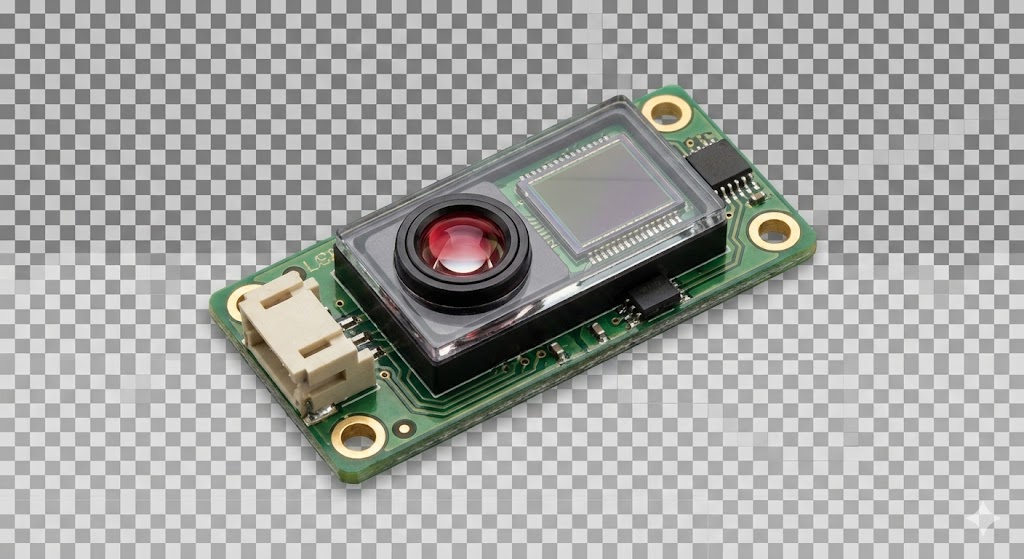
The core principles of laser sensing are often based on time-of-flight, triangulation, or interferometry. Time-of-flight sensors measure the time it takes for a laser pulse to travel to a target and back, calculating distance with remarkable precision. This principle is employed in applications ranging from topographic mapping (LiDAR) to industrial distance measurement. Triangulation sensors, on the other hand, use geometric principles. A laser dot is projected onto a target, and its position is viewed from a known angle by a receiver (like a CMOS or CCD array). Any change in the target's distance causes a shift in the dot's position on the receiver, allowing for precise displacement or profile measurement. Interferometric sensors exploit the wave nature of light, using the interference patterns created by combining a reference laser beam with a measurement beam to detect minute displacements, often on a nanometer scale.
The applications of laser sensors are vast and cross-disciplinary. In manufacturing and automation, they are indispensable for non-contact measurement of dimensions, thickness, vibration, and presence detection on high-speed production lines. They ensure quality control in semiconductor fabrication, automotive assembly, and food packaging. In the consumer electronics sector, laser sensors enable the autofocus systems in smartphone cameras and the gesture recognition features in some devices. The automotive industry relies heavily on laser-based LiDAR for advanced driver-assistance systems (ADAS) and the development of autonomous vehicles, creating a detailed 3D map of the surrounding environment.
Beyond industry, laser sensors play a critical role in scientific research, environmental monitoring, and healthcare. They are used to measure atmospheric pollutants, monitor structural health of bridges and buildings, and guide surgical instruments with sub-millimeter accuracy. The versatility stems from the laser's unique properties: its ability to be focused to a very small spot for high-resolution scanning, its suitability for use in challenging environments (vacuum, high temperature, corrosive atmospheres) where physical contact is impossible, and its high speed, allowing for real-time data acquisition.
Looking forward, the trends in laser and sensor technology point towards further miniaturization, increased efficiency, and enhanced functionality. The development of vertical-cavity surface-emitting lasers (VCSELs) has been pivotal, offering smaller, more energy-efficient, and cost-effective laser sources that are now common in consumer-grade depth sensors. Advances in single-photon avalanche diode (SPAD) detectors are pushing the limits of sensitivity for LiDAR systems. Furthermore, the integration of laser sensors with artificial intelligence and machine learning is unlocking new capabilities, such as predictive maintenance and complex object recognition from point cloud data. As laser technology continues to evolve towards new wavelengths and more compact, robust designs, the next generation of laser sensors will undoubtedly drive innovation in robotics, smart infrastructure, and the ever-expanding Internet of Things (IoT), solidifying their role as a cornerstone of precision measurement and perception in the digital age.