Introduction to Photoelectric Sensors in Pressure Measurement
Photoelectric sensors are widely used in industrial automation for detecting objects, distances, and material presence. However, when it comes to pressure measurement, their application is less straightforward. As an electrical engineer, I often encounter questions about whether photoelectric sensors can replace traditional pressure transducers. The answer requires a deep dive into the physics and engineering principles behind these devices. Photoelectric sensors work by emitting a beam of light, typically infrared or visible, and detecting changes in the reflected or interrupted beam. They are not designed to measure pressure directly, as pressure involves force per unit area, which is a mechanical quantity. To adapt them for pressure measurement, indirect methods such as diaphragm deflection or optical displacement must be employed. In this article, we will explore the accuracy, limitations, and practical considerations of using photoelectric sensors for pressure sensing in industrial environments.
How Photoelectric Sensors Can Measure Pressure Indirectly
To measure pressure with a photoelectric sensor, an indirect approach is necessary. A common method involves coupling the sensor with a mechanical diaphragm that deflects under pressure. The diaphragm is often coated with a reflective surface, and the photoelectric sensor is positioned to detect changes in the distance to this surface. As pressure increases, the diaphragm bends, altering the reflected light intensity or the time-of-flight of the light beam. For example, a diffuse reflective photoelectric sensor can detect small displacement changes, while a through-beam sensor might be used for larger deflections. In practice, this setup requires precise calibration and a stable mounting structure to avoid vibration errors. The accuracy of such a system depends heavily on the sensor’s resolution, the diaphragm’s material properties, and the environmental conditions. For high-pressure applications, the diaphragm must be robust, while for low-pressure, sensitive measurements, even minor temperature fluctuations can introduce significant errors.
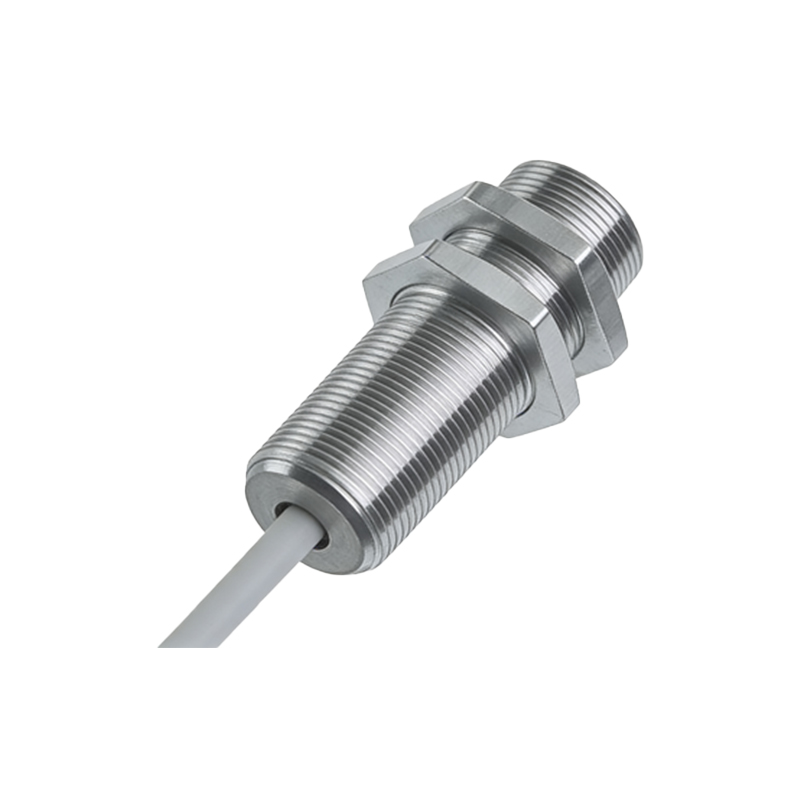
Accuracy Comparison With Traditional Pressure Transducers
Traditional pressure transducers, such as strain gauge or capacitive types, offer direct and highly accurate pressure readings, often with accuracy ratings of ±0.1% to ±0.5% of full scale. In contrast, photoelectric sensor-based pressure measurement systems typically achieve accuracies in the range of ±1% to ±5% under ideal conditions. The primary loss in accuracy comes from the indirect measurement chain: the diaphragm’s non-linear response, the photoelectric sensor’s sensitivity to ambient light, and the need for signal processing to convert light changes into pressure values. For instance, a photoelectric sensor with a 12-bit resolution might detect a 0.5 mm displacement, but this corresponds to a pressure change of only a few percent in a typical diaphragm setup. Additionally, drift over time due to dust accumulation on the optical surface or temperature-induced expansion of the diaphragm can degrade accuracy further. Therefore, while photoelectric sensors can be used for pressure monitoring in non-critical applications, they are not recommended for precision control systems where high accuracy is mandatory.
Environmental Factors Affecting Accuracy
The accuracy of photoelectric sensors in pressure measurement is highly sensitive to environmental conditions. In industrial settings, factors such as dust, humidity, and temperature variations can significantly impact performance. For example, a photoelectric sensor using a through-beam configuration may lose signal strength if dust accumulates on the emitter or receiver lenses, leading to false readings. Similarly, in high-humidity environments, condensation on the diaphragm or optical surfaces can cause light scattering, reducing measurement reliability. Temperature changes affect both the sensor’s electronics and the diaphragm’s mechanical properties, introducing thermal drift. An engineer must account for these factors by using protective housings, regular cleaning schedules, and temperature compensation algorithms. In practice, I have seen photoelectric sensors fail in harsh environments like foundries or chemical plants, whereas traditional pressure transducers with IP67 ratings and robust designs maintain consistent performance. Thus, for outdoor or dirty environments, photoelectric sensors are generally less accurate and reliable.
Practical Applications and Limitations
Despite their accuracy limitations, photoelectric sensors can be useful in specific pressure measurement scenarios where cost and simplicity are prioritized over precision. For instance, in pneumatic systems for low-pressure monitoring (e.g., less than 10 psi), a photoelectric sensor with a diaphragm can serve as a simple on-off switch to detect pressure thresholds. Another application is in fluid level detection, where pressure changes from liquid height are measured indirectly. However, these uses are typically for qualitative rather than quantitative analysis. The main limitations include slow response times due to mechanical diaphragm movements, limited pressure range, and the need for frequent recalibration. In my engineering experience, I advise against using photoelectric sensors for dynamic pressure measurements, such as in hydraulic systems under rapid cycling, as the lag in light detection can miss transient spikes. For most industrial applications, investing in a proper pressure transducer is more cost-effective in the long run due to better accuracy and durability.
Conclusion: Are They Accurate Enough?
In summary, photoelectric sensors are not inherently accurate for pressure measurement when compared to dedicated pressure transducers. Their accuracy is limited by indirect measurement methods, environmental sensitivity, and inherent design constraints. While they can provide acceptable results in controlled, low-precision applications, they fall short in demanding industrial environments. For engineers considering this approach, a thorough evaluation of required accuracy, environmental conditions, and budget is essential. In most cases, traditional pressure sensors remain the superior choice for reliable and accurate pressure monitoring. However, with proper engineering and calibration, photoelectric sensors can serve as a cost-effective alternative for non-critical tasks.