Introduction to Reflective Photoelectric Sensors
Reflective photoelectric sensors, also known as diffuse reflection sensors, are critical components in automation and industrial control systems. These devices detect the presence, absence, or distance of an object by emitting a light beam, typically from an LED (light-emitting diode), and measuring the reflection from the target surface. Unlike through-beam or retro-reflective sensors, reflective sensors rely solely on the object itself to reflect the light back to the receiver. This principle makes them versatile for detecting a wide range of materials, including metal, plastic, and paper, without requiring a separate reflector or receiver unit. In practice, the sensor's emitter and receiver are housed in a single enclosure, simplifying installation and reducing wiring complexity. The key parameter is the reflective coefficient of the target surface, which influences detection range and reliability. For instance, a white reflective surface can be detected at a longer distance than a dark, matte surface. Engineers must consider ambient light interference and alignment, as diffuse sensors are sensitive to background conditions.
Operating Mechanism and Light Propagation
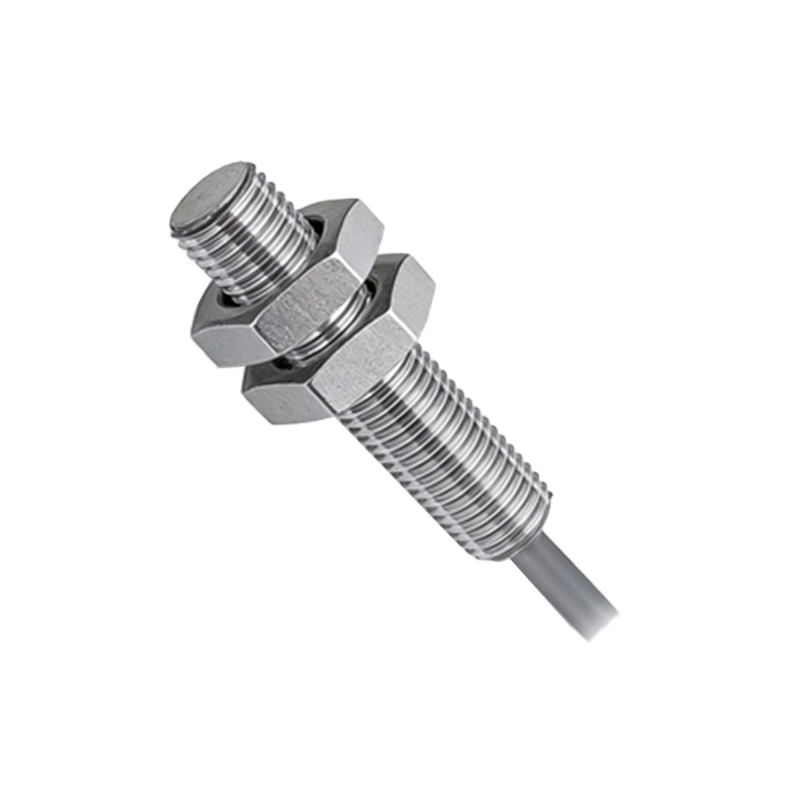
The core operation of a reflective photoelectric sensor involves the emission of a modulated light pulse, which travels through the air and strikes the target. The light is then scattered in all directions, with a portion returning to the sensor's photodetector. This process is governed by the laws of reflection and scattering. The sensor's electronics analyze the received light intensity and compare it to a preset threshold. When the reflected light exceeds this threshold, the output switches, indicating detection. A critical aspect is the use of modulated light—typically pulsed at a specific frequency (e.g., 1 kHz to 10 kHz)—to filter out steady ambient light, such as sunlight or incandescent lighting. This modulation enhances signal-to-noise ratio and prevents false triggers. The detection distance depends on factors like lens design, light source wavelength (commonly infrared at 850 nm or 940 nm), and target surface properties. For example, a polished metal surface may cause specular reflection, potentially saturating the receiver, while a textured surface provides better diffuse reflection. Engineers often adjust sensitivity via a potentiometer or digital interface to optimize performance for specific materials.
Applications and Practical Considerations
Reflective photoelectric sensors are widely deployed in manufacturing lines for object detection, counting, and positioning. Common applications include detecting parts on a conveyor belt, confirming package presence in packaging machines, and monitoring material flow in printing presses. Their key advantage is simplicity: they require no alignment of separate components, reducing installation time. However, limitations include shorter detection ranges (typically from 0.1 to 2 meters for standard models) and susceptibility to surface color and texture variations. To mitigate these issues, advanced sensors feature background suppression, which uses triangulation or time-of-flight methods to ignore objects beyond a set distance. For example, a sensor with background suppression can reliably detect a dark object on a bright conveyor belt. Additionally, environmental factors like dust, steam, or condensation on the lens can degrade performance, necessitating regular cleaning or the use of sealed, IP67-rated housings. When selecting a sensor, engineers must evaluate response time (e.g., 1 ms to 10 ms) and output type (e.g., NPN, PNP, or analog) to match the control system. Proper mounting, with the sensor perpendicular to the target surface, ensures optimal reflection and consistent detection.
Technical Specifications and Selection Criteria
Choosing the right reflective photoelectric sensor requires understanding key specifications. The sensing distance is defined by the maximum range at which a standard white target (e.g., 90% reflectance) is reliably detected. For darker surfaces, the effective range decreases proportionally. The light source type—visible red, infrared, or laser—affects beam divergence and alignment ease. Laser-based sensors offer pinpoint accuracy (e.g., 1 mm spot size) for small objects but require precise mounting. The output configuration must match the PLC or controller input: NPN (sinking) is common in Asia, while PNP (sourcing) prevails in Europe and North America. Additionally, connection options like M12 connectors or cable glands influence installation. Environmental ratings, such as IP65 or IP67, determine resistance to water and dust. For high-speed applications, response times below 0.5 ms are available. Engineers should also consider hysteretic behavior, which prevents oscillation at the detection boundary. By balancing these factors, a sensor can be optimized for specific tasks, such as detecting transparent bottles (requiring a special lens) or high-temperature objects (using a heat-resistant housing). Always consult the datasheet for ambient light immunity levels and temperature stability.