Introduction to Photoelectric Sensors in Industrial Automation
Photoelectric sensors are critical components in modern industrial automation, providing non-contact detection of objects, distances, and materials. These sensors utilize light-emitting diodes (LEDs) or laser diodes to emit beams, which are then reflected or interrupted to trigger outputs. Their applications span from packaging, material handling, and automotive assembly to food processing and logistics. As industries globally demand higher precision, faster response times, and greater reliability, the market for photoelectric sensors has expanded significantly. This article provides a professional analysis of the leading global manufacturers, their market positions, key technological differentiators, and emerging trends shaping the industry. Understanding the competitive landscape is essential for engineers and procurement professionals seeking optimal solutions for specific application challenges.
Market Leaders: Top Global Photoelectric Sensor Manufacturers
The global photoelectric sensor market is dominated by a handful of established players, each with distinct strengths in technology, distribution, and application expertise. Based on recent market reports and industry data from 2023-2024, the top manufacturers by revenue share include:
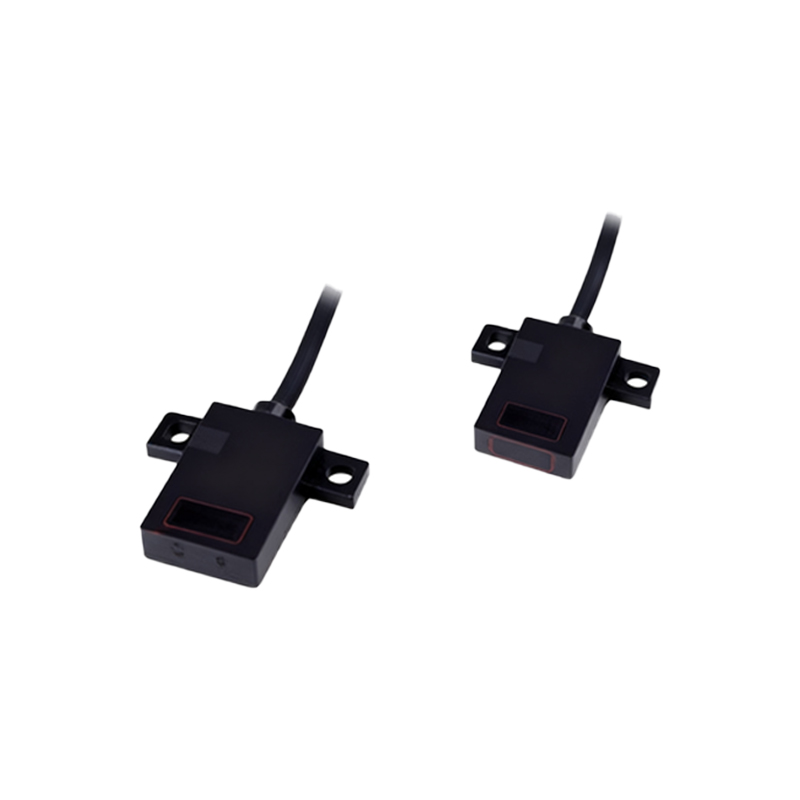
1. SICK AG (Germany) – SICK holds a leading position, particularly in through-beam and diffuse reflection sensors. Their products are renowned for robust design, high immunity to ambient light, and advanced IO-Link communication capabilities. SICK’s sensor families, such as the W4F-3 and WL12G, are widely used in harsh environments like automotive paint shops and metal processing.
2. Omron Corporation (Japan) – Omron’s photoelectric sensors, including the E3Z and E3X series, excel in precision and miniaturization. They have a strong footprint in electronics manufacturing and semiconductor industries. Omron’s proprietary SmartSensor technology enables automatic background suppression, reducing false triggering.
3. Keyence Corporation (Japan) – Keyence is known for its high-performance laser sensors, such as the LR-Z and LV series. Their sensors offer exceptional resolution, long sensing ranges (up to 100 meters for fiber optic versions), and intuitive setup via digital displays. Keyence’s direct sales model ensures deep technical support but can lead to higher upfront costs.
4. Banner Engineering Corp (USA) – Banner leads in rugged, IP69K-rated sensors for food and beverage applications. Their Q4X and R-Gage series are popular for washdown environments. Banner also offers strong wireless sensor solutions, integrating with Industry 4.0 platforms.
5. Panasonic Industrial Devices (Japan) – Panasonic’s HG-C series and EX-17 series provide cost-effective solutions with reliable performance for general automation tasks, especially in packaging and logistics.
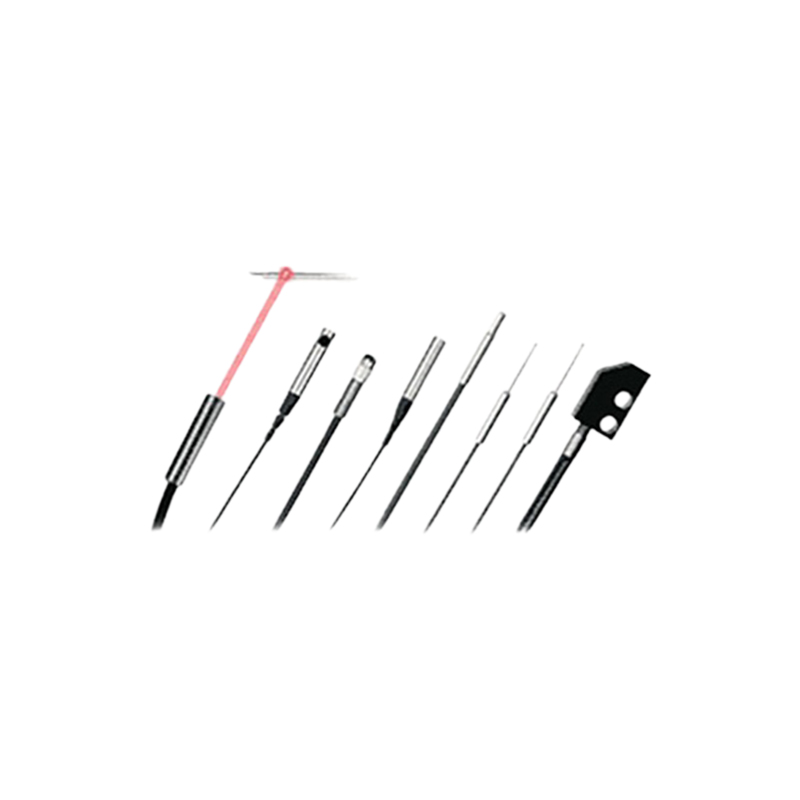
Other notable players include Pepperl+Fuchs (Germany), Balluff (Germany), and Rockwell Automation (Allen-Bradley brand, USA). These companies collectively control over 60% of the global market, with the remainder occupied by regional specialists and low-cost manufacturers from China and Eastern Europe.
Key Performance Metrics and Ranking Criteria
To objectively rank these manufacturers, engineers typically consider the following criteria:
- Sensing Range and Accuracy: Laser-based sensors from Keyence and SICK often achieve ranges exceeding 100 meters for retroreflective modes, while diffuse models from Omron maintain precision at 1 mm accuracy.
- Environmental Robustness: IP67/IP69K ratings, resistance to chemical exposure, and temperature tolerance (-40°C to 60°C) are critical. Banner and SICK lead in this category due to their use of reinforced housings and potted electronics.
- Communication Integration: IO-Link, EtherNet/IP, and PROFINET compatibility are now standard. SICK and Omron provide seamless integration with major PLC ecosystems.
- Response Time: Fast sensors (under 0.5 ms) from Keyence and SICK are preferred for high-speed pick-and-place operations.
- Cost Efficiency: Panasonic and Balluff offer the best price-performance ratio for standard applications, while Keyence and SICK command premiums for advanced features.
Based on a weighted composite score from 2023 industry surveys, SICK AG ranks first overall, closely followed by Omron and Keyence. Banner leads in North American markets due to strong distribution channels.
Emerging Trends Shaping the Photoelectric Sensor Market
The photoelectric sensor landscape is evolving rapidly due to technological advancements:
- Smart Sensors with Edge Computing: Manufacturers like SICK and Banner are embedding microprocessors into sensors for on-board data processing. This reduces latency and network load, enabling predictive maintenance and anomaly detection.
- Miniaturization and High Density: Keyence’s new LR-Z series features sensors with a 30 mm cube form factor, integrating optics and electronics into space-constrained machinery.
- Laser-Based Time-of-Flight (ToF) Sensors: ToF technology, pioneered by SICK and Omron, allows for accurate distance measurement without reflectors, ideal for mobile robotics and autonomous vehicles.
- Sustainability and Energy Efficiency: Newer models operate at lower power (under 1W) and use recyclable materials, aligning with global ESG goals.
- Wireless and Battery-Powered Sensors: Banner’s Q5X series introduces wireless sensors for remote monitoring in oil and gas or agricultural settings, reducing installation costs.
These trends indicate a shift from simple binary detection to intelligent sensing solutions. Engineers should prioritize suppliers that offer software ecosystems, such as SICK’s AppSpace or Omron’s Sysmac Studio, for easy configuration and data analytics.
Regional Market Dynamics and Future Outlook
Geographically, the Asia-Pacific region dominates the photoelectric sensor market, driven by manufacturing growth in China, Japan, and South Korea. Europe and North America follow, with strong demand from automotive and pharmaceutical industries. The global market is projected to grow at a CAGR of 6.5% from 2024 to 2030, reaching USD 4.2 billion.
In terms of product segments, through-beam sensors held the largest share in 2023 due to their high reliability in long-range detection. However, diffuse sensors are gaining traction in complex environments like logistics warehousing. Fiber optic sensors, led by Keyence and Omron, are also expanding in medical device manufacturing.
For procurement strategies, it is recommended to establish partnerships with top-tier suppliers like SICK or Omron for critical applications, while utilizing cost-effective options from Panasonic or Balluff for less demanding tasks. Investment in training for sensor selection, installation, and diagnostics is also crucial to maximize return on investment.
Conclusion
The global photoelectric sensor market is highly competitive, with SICK, Omron, Keyence, and Banner as key leaders. Engineers must evaluate sensors based on specific application requirements, environmental conditions, and budget constraints. As the industry moves toward smart, connected, and miniaturized solutions, staying updated with technological advancements will be vital for maintaining operational efficiency and reliability in automated systems.