Introduction to Separate-Type Photoelectric Sensors
Separate-type photoelectric sensors have long been a cornerstone in industrial automation, offering flexibility in mounting and alignment by separating the emitter and receiver. However, traditional designs often require complex wiring, separate power supplies, and careful optical alignment, leading to increased installation time and maintenance costs. The evolution toward integrated solutions addresses these pain points by combining emitter, receiver, and control electronics into a single, compact unit. This article explores the principles, benefits, and practical applications of an integrated separate-type photoelectric sensor, presenting a unified design that simplifies deployment while maintaining high reliability.
Design Architecture and Core Components
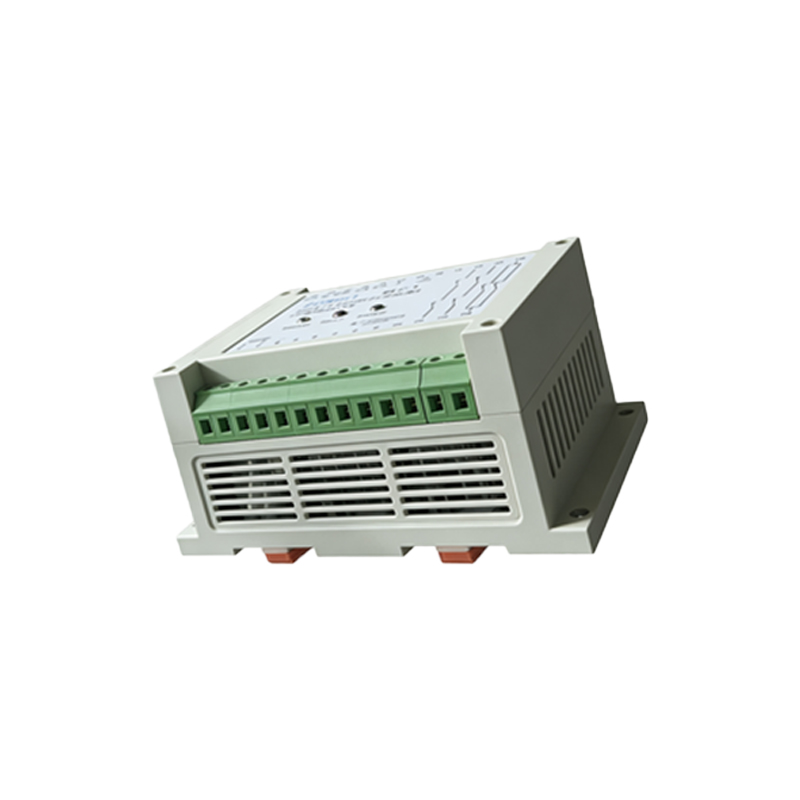
The integrated separate-type photoelectric sensor consists of three primary modules: an optical emitter (typically an infrared or visible LED), a photodetector (photodiode or phototransistor), and a signal processing unit. Unlike conventional designs, the integrated version houses these components in a single, robust housing with a shared power and communication interface. The emitter and receiver are optically aligned through a precision-molded lens system, reducing the need for external brackets. Key design considerations include minimizing crosstalk between emitter and receiver via shielding and time-division multiplexing, ensuring stable operation in high-ambient-light environments. The unit features a standard M12 connector for quick wiring, and its IP67 rating guarantees protection against dust and water ingress.
Operational Principles and Modes
The sensor operates in three primary modes: through-beam, retro-reflective, and diffuse. In through-beam mode, the emitter and receiver are housed in separate units but share a single control module, enabling synchronized pulsing. Retro-reflective mode uses a reflector to bounce the beam back, while diffuse mode relies on the target's reflective properties. The integrated design employs a microcontroller to adjust sensitivity and noise filtering automatically. For instance, in high-vibration environments, the sensor uses pulse-width modulation to discriminate against false triggers. This adaptability makes it suitable for conveyor belt monitoring, object counting, and position detection.
Installation and Alignment Benefits
A major advantage of the integrated separate-type sensor is simplified installation. The unified housing eliminates the need for separate mounting brackets and external junction boxes. Technicians can quickly align the emitter and receiver by adjusting a single mechanical locking mechanism, which reduces setup time by up to 40% compared to traditional designs. The sensor includes visual alignment indicators (LEDs) that flash when optimal alignment is achieved, further reducing manual calibration. For retro-reflective and diffuse modes, the sensor's built-in potentiometer allows fine-tuning of sensitivity without opening the enclosure.
Performance and Environmental Resilience
The integrated sensor delivers consistent performance across a wide temperature range from -25°C to 70°C. It incorporates advanced noise suppression circuits to minimize interference from ambient light, fluorescent fixtures, and electromagnetic fields. The sensing distance varies by mode: up to 30 meters for through-beam, 6 meters for retro-reflective, and 2 meters for diffuse (with a white 90% reflective target). The response time is typically 0.5 ms, suitable for high-speed applications. Additionally, the sensor's housing is constructed from UV-stabilized polycarbonate, ensuring long-term durability in outdoor or harsh industrial settings.
Application Examples in Industry
Practical applications include automated packaging lines where the sensor detects product presence on conveyors, ensuring correct box orientation before sealing. In automotive assembly, it monitors part presence on robotic grippers. Another use is in warehouse automation for detecting pallet positions in racking systems. The integrated design is particularly beneficial in confined spaces where individual component mounting is impractical. For example, in a food processing plant, the IP67-rated sensor withstands high-pressure washdowns while reliably detecting bottle caps.
Future Trends and Conclusion
The trend toward Industry 4.0 and IIoT integration is driving further innovations in separate-type photoelectric sensors. Future designs may include wireless communication (e.g., IO-Link), self-diagnostics, and predictive maintenance alerts. The integrated approach reduces wiring complexity and improves system reliability, making it a cost-effective choice for modern automation. As manufacturing demands higher throughput and flexibility, the unified separate-type sensor stands as a practical solution that bridges the gap between traditional discrete components and fully integrated smart sensors.