Einstein photoelectric sensors, named after the physicist Albert Einstein for his foundational work on the photoelectric effect, are advanced optoelectronic devices widely used in industrial automation. These sensors detect the presence, absence, or distance of objects by emitting a light beam (typically infrared, visible red, or laser) and analyzing the reflected or interrupted signal. In the electrical engineering field, they offer high precision, fast response times, and adaptability to harsh environments, making them indispensable in modern manufacturing lines.
Operating Principle Based on the Photoelectric Effect
The core technology behind Einstein photoelectric sensors leverages the photoelectric effect, where incident photons on a semiconductor material generate electron-hole pairs, leading to a measurable current change. The sensor consists of an emitter (light source) and a receiver (photodiode or phototransistor). When an object enters the sensing field, it either blocks, reflects, or absorbs the light, altering the receiver's output. This design ensures consistent performance even under challenging conditions like dust, vibration, or varying ambient light. Engineers calibrate these sensors to trigger specific responses, such as switching a relay or sending signals to a PLC.
Key Types and Configurations
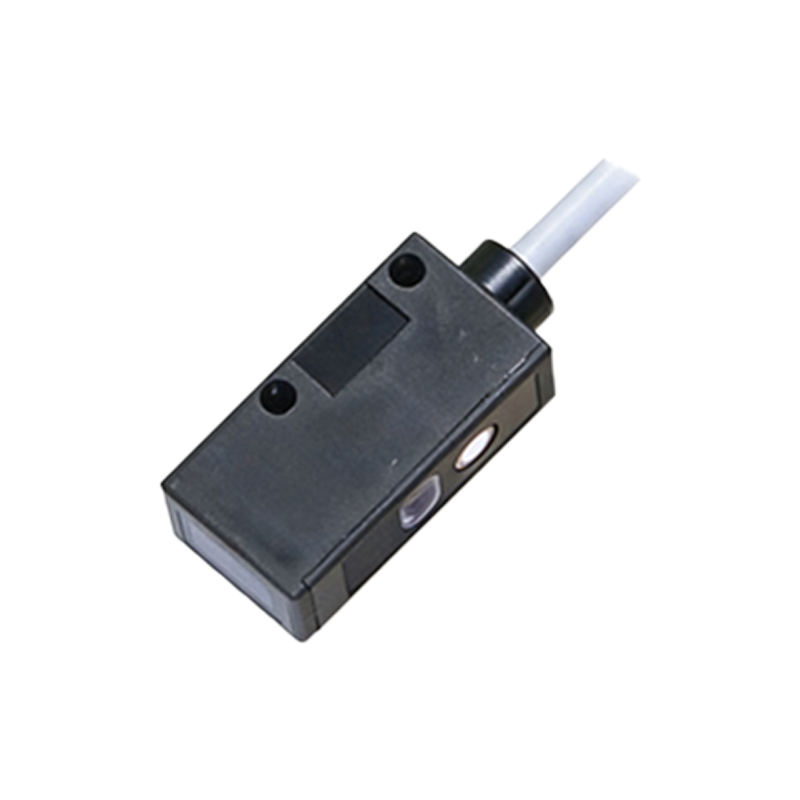
Engineers choose from three main configurations based on application needs: through-beam, retro-reflective, and diffuse reflective sensors. Through-beam sensors have separate emitter and receiver units, offering the longest detection range and highest reliability in dirty environments. Retro-reflective sensors combine emitter and receiver in one housing, using a reflector to bounce the beam back. Diffuse reflective sensors detect light reflected directly from the target object, making them compact and suitable for short-range tasks. Each type provides distinct advantages in terms of range, cost, and installation complexity.
Performance Parameters and Selection Criteria
When selecting an Einstein photoelectric sensor, electrical engineers prioritize parameters such as sensing distance, response time (typically in microseconds), output type (NPN, PNP, or analog), and protection rating (IP67 or higher). The choice also depends on the target material—transparent, opaque, or reflective surfaces require different sensing modes. For example, retro-reflective sensors excel with clear glass or plastic, while diffuse sensors work best with matte surfaces. Engineers must also consider environmental factors like temperature range, electromagnetic interference, and potential background reflections to avoid false triggers.
Applications in Modern Industrial Systems
Einstein photoelectric sensors play a critical role in automated production lines, packaging machinery, conveyor systems, and robotic guidance. They detect product presence for sorting, count items for inventory control, and ensure safety by monitoring door positions or machine guards. In the automotive industry, these sensors verify component placement during assembly. Their non-contact nature reduces wear and tear, while high switching frequencies support high-speed operations up to several thousand cycles per second.
Installation, Calibration, and Maintenance Tips
Proper installation ensures optimal sensor performance. Engineers should align emitter and receiver axes accurately for through-beam types, mount retro-reflective sensors at a slight angle to avoid direct reflection, and adjust sensitivity for diffuse sensors using a teach-in function. Calibration involves setting the detection threshold to filter noise and compensate for ambient light. Regular maintenance includes cleaning optical surfaces with lint-free cloths, checking cable connections, and verifying alignment after machine vibrations. Many modern sensors include diagnostic LEDs for quick troubleshooting.
Future Trends and Technological Advancements
The evolution of Einstein photoelectric sensors is driven by Industry 4.0, incorporating IoT connectivity, IO-Link communication, and adaptive algorithms. Smart sensors now offer self-diagnostics, remote parameter adjustments, and predictive maintenance alerts. Advances in laser and LED technology extend sensing ranges beyond 100 meters, while miniaturization enables integration into compact robotic end-effectors. Engineers can expect enhanced noise immunity and energy efficiency, further broadening their application in smart factories.
Introduction to Einstein Photoelectric Sensors
Einstein photoelectric sensors, named after the physicist Albert Einstein for his foundational work on the photoelectric effect, are advanced optoelectronic devices widely used in industrial automation. These sensors detect the presence, absence, or distance of objects by emitting a light beam (typically infrared, visible red, or laser) and analyzing the reflected or interrupted signal. In the electrical engineering field, they offer high precision, fast response times, and adaptability to harsh environments, making them indispensable in modern manufacturing lines.
Operating Principle Based on the Photoelectric Effect
The core technology behind Einstein photoelectric sensors leverages the photoelectric effect, where incident photons on a semiconductor material generate electron-hole pairs, leading to a measurable current change. The sensor consists of an emitter (light source) and a receiver (photodiode or phototransistor). When an object enters the sensing field, it either blocks, reflects, or absorbs the light, altering the receiver's output. This design ensures consistent performance even under challenging conditions like dust, vibration, or varying ambient light. Engineers calibrate these sensors to trigger specific responses, such as switching a relay or sending signals to a PLC.
Key Types and Configurations
Engineers choose from three main configurations based on application needs: through-beam, retro-reflective, and diffuse reflective sensors. Through-beam sensors have separate emitter and receiver units, offering the longest detection range and highest reliability in dirty environments. Retro-reflective sensors combine emitter and receiver in one housing, using a reflector to bounce the beam back. Diffuse reflective sensors detect light reflected directly from the target object, making them compact and suitable for short-range tasks. Each type provides distinct advantages in terms of range, cost, and installation complexity.
Performance Parameters and Selection Criteria
When selecting an Einstein photoelectric sensor, electrical engineers prioritize parameters such as sensing distance, response time (typically in microseconds), output type (NPN, PNP, or analog), and protection rating (IP67 or higher). The choice also depends on the target material—transparent, opaque, or reflective surfaces require different sensing modes. For example, retro-reflective sensors excel with clear glass or plastic, while diffuse sensors work best with matte surfaces. Engineers must also consider environmental factors like temperature range, electromagnetic interference, and potential background reflections to avoid false triggers.
Applications in Modern Industrial Systems
Einstein photoelectric sensors play a critical role in automated production lines, packaging machinery, conveyor systems, and robotic guidance. They detect product presence for sorting, count items for inventory control, and ensure safety by monitoring door positions or machine guards. In the automotive industry, these sensors verify component placement during assembly. Their non-contact nature reduces wear and tear, while high switching frequencies support high-speed operations up to several thousand cycles per second.
Installation, Calibration, and Maintenance Tips
Proper installation ensures optimal sensor performance. Engineers should align emitter and receiver axes accurately for through-beam types, mount retro-reflective sensors at a slight angle to avoid direct reflection, and adjust sensitivity for diffuse sensors using a teach-in function. Calibration involves setting the detection threshold to filter noise and compensate for ambient light. Regular maintenance includes cleaning