Introduction to Photoelectric Sensors in Balancing Machines
Photoelectric sensors are integral components in modern balancing machines, ensuring precise measurement of rotational imbalances in rotors, shafts, and other rotating parts. These sensors detect the position and speed of the rotating component by emitting a light beam and analyzing its reflection or interruption. In the electrical and manufacturing industries, balancing machines rely on photoelectric sensors to achieve high accuracy, often within microns, which is critical for reducing vibration, noise, and wear in mechanical systems. The reliable operation of these sensors under harsh industrial conditions, such as dust, vibration, and temperature fluctuations, makes them a preferred choice for dynamic balancing applications.
Operating Principle and Key Technologies
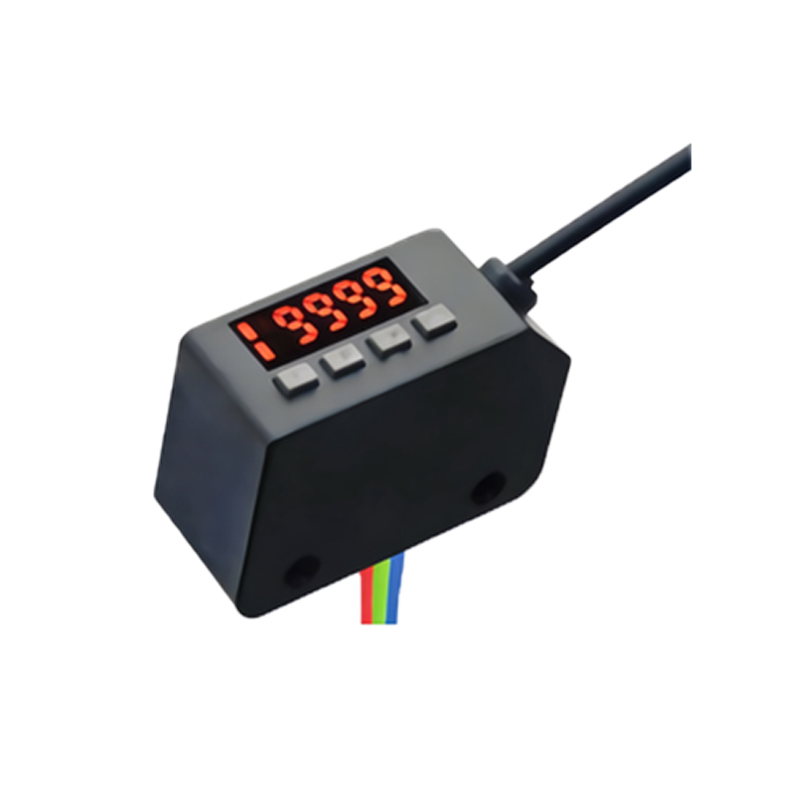
The photoelectric sensor in a balancing machine typically uses an infrared or visible light emitter and a receiver. It operates in two primary modes: through-beam and retro-reflective. In through-beam mode, the emitter and receiver are placed opposite each other, and the rotating part interrupts the light beam to trigger a signal. Retro-reflective sensors use a reflector to bounce the light back, with the sensor detecting changes when the beam is blocked. Advanced models incorporate fiber optic cables for enhanced precision in confined spaces. Key technical parameters include response time (often below 1 microsecond), sensing distance (up to several meters), and immunity to ambient light interference. These features ensure stable performance during high-speed balancing processes, where rotational speeds can exceed 10,000 RPM.
Selection Criteria for Industrial Applications
When selecting a photoelectric sensor for a balancing machine, engineers must consider factors such as environmental conditions, material of the rotating part, and required accuracy. For instance, in environments with high levels of oil mist or coolant, rugged stainless steel housings with IP67 or higher ingress protection are recommended. The sensor's output type—PNP, NPN, or analog—must match the machine's control system, such as a PLC or dedicated balancing controller. Additionally, the wavelength of the light source should be chosen to optimize detection on reflective or dark surfaces. For applications involving transparent or glossy rotors, laser-based photoelectric sensors offer superior reliability.
Installation and Calibration Best Practices
Proper installation and calibration are essential for maximizing the performance of photoelectric sensors in balancing machines. The sensor should be mounted on a rigid bracket to minimize vibration-induced errors, with the optical axis aligned perpendicular to the rotating part's surface. Calibration involves adjusting the sensitivity threshold to account for background reflections and ensuring a clean optical path free from debris. For multi-plane balancing, multiple sensors may be installed at specific angular positions to capture phase and amplitude data. Regular maintenance, including lens cleaning and cable inspection, prevents false triggers and extends sensor lifespan.
Common Challenges and Troubleshooting
Despite their robustness, photoelectric sensors in balancing machines can face issues like false triggering due to stray light or electromagnetic interference (EMI). Shielding the sensor cables and using filters can mitigate EMI. Contamination of the lens or reflector by dust or oil residue is another frequent problem, which can be addressed by installing air purging systems or using self-cleaning lenses. In high-temperature environments, sensors with built-in temperature compensation are recommended. When output signals become erratic, engineers should verify the alignment and check for mechanical wear in the rotating part, which may cause inconsistent beam interruption.
Future Trends in Sensor Technology for Balancing
The evolution of photoelectric sensors is driving advancements in balancing machine capabilities. Emerging trends include the integration of IoT connectivity for real-time data monitoring and predictive maintenance, as well as the use of multi-wavelength sensors for enhanced material discrimination. Miniaturization allows for sensor integration into compact balancing systems, while improved digital signal processing reduces noise and enhances accuracy. For high-speed applications, sensors with nanosecond response times are being developed, enabling precise balancing at extreme rotational speeds. These innovations will continue to improve efficiency and reliability in industries such as automotive, aerospace, and power generation.