Introduction to Photoelectric Sensor Signals
Photoelectric sensors are essential components in modern industrial automation, converting light variations into electrical signals. They detect the presence, absence, or distance of objects by emitting a beam of light, typically infrared, visible red, or laser, and measuring the changes in the received light. The output signal is the key interface between the sensor and the control system, often a PLC or relay.
Types of Output Signals: Digital vs. Analog
The most common signal type from a photoelectric sensor is a digital signal, which is either ON or OFF. This discrete output corresponds to a binary state: high voltage (e.g., 24V DC) when an object is detected, and low voltage (0V) when not. For precise measurements, analog signals are used, providing a continuous voltage or current (e.g., 0-10V or 4-20mA) proportional to the distance or intensity of the reflected light. This is critical in applications like level sensing or color differentiation.
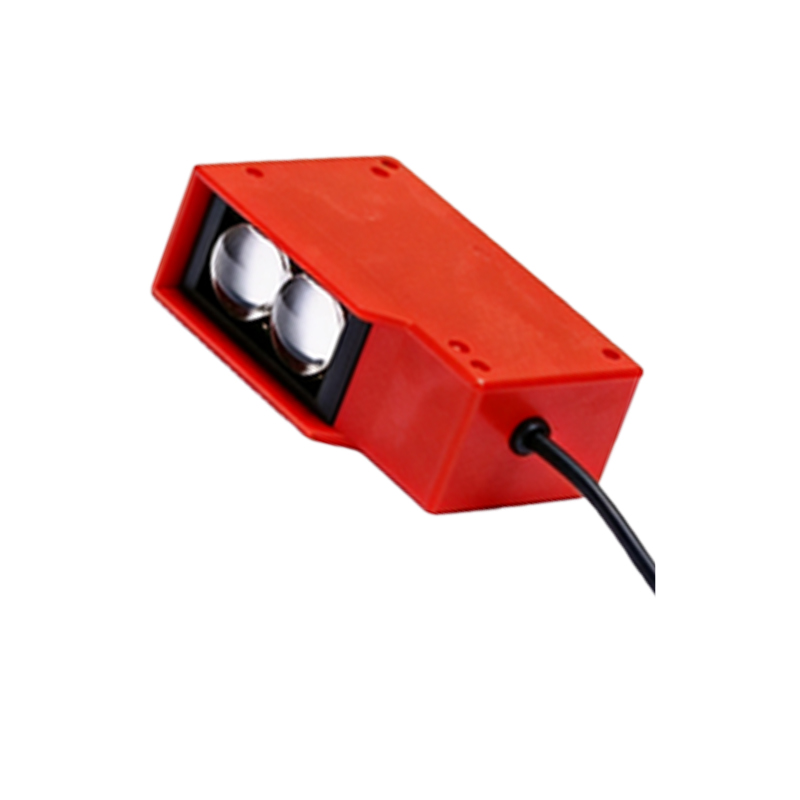
Signal Technology: Through-beam, Retro-reflective, and Diffuse
The signal nature depends on the sensing mode. In through-beam sensors, the emitter and receiver are separate; a break in the light path triggers a signal change. Retro-reflective sensors use a reflector; signal output occurs when an object interrupts the beam returning to the receiver. Diffuse sensors rely on the object itself reflecting light; the signal is generated when sufficient light bounces back to the receiver. Each mode affects signal reliability and range.
Electrical Characteristics: NPN, PNP, and Push-pull
Output signal wiring is crucial. NPN (sinking) outputs switch the load to ground, providing a low signal when active. PNP (sourcing) outputs switch to the positive supply, giving a high signal. Push-pull outputs combine both, allowing flexibility with different PLC inputs. The signal voltage and current must match the controller specifications to avoid damage or false triggering.
Signal Timing and Response Frequency
Photoelectric sensors have specific response times, typically in microseconds. The output signal must stabilize quickly for high-speed applications, such as counting products on a conveyor. Dark-on and light-on modes define whether the signal is active when the light is blocked or received. Adjustable timing functions, like on-delay or off-delay, are often built into the sensor to filter out noise or transient objects.
Conclusion: Selecting the Right Signal for Your Application
Understanding the signal output is vital for system integration. A digital signal suits simple presence detection, while analog signals enable precise measurement. Consider the environment, object characteristics, and controller compatibility. Proper signal selection ensures reliable automation, reduces false readings, and extends sensor life. Always refer to the manufacturer’s datasheet for exact specifications.