Introduction to Slot-Type Photoelectric Sensors
Slot-type photoelectric sensors, also known as fork sensors or U-shaped sensors, are essential components in industrial automation for precise object detection and positioning. These sensors integrate an emitter and receiver within a single housing, creating a stable optical path in a U-shaped slot. Unlike traditional through-beam sensors, slot-type designs eliminate alignment issues, making them ideal for high-speed, high-accuracy applications in packaging, printing, and material handling. Their robust construction and immunity to ambient light interference ensure reliable performance in harsh industrial environments.
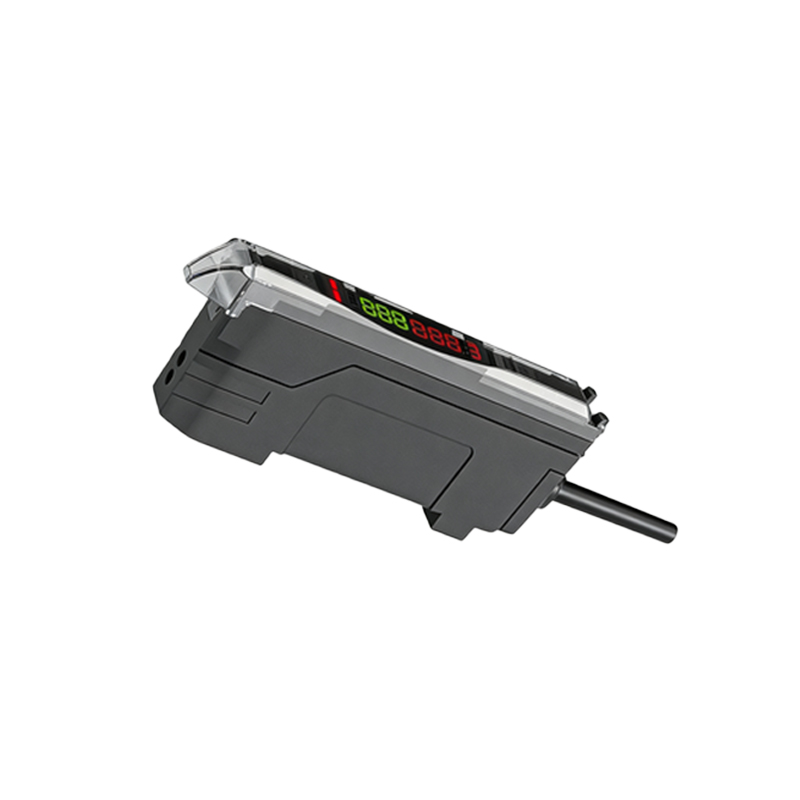
Key Principles of Positioning Accuracy
Positioning accuracy with slot-type sensors depends on the beam width, slot depth, and response time. The sensor’s optical beam is typically collimated or focused, achieving detection resolutions down to 0.1 mm for fine positioning tasks. Engineers must consider the object’s edge sharpness and material transparency. For opaque targets, the sensor’s output switches reliably when the object enters or exits the beam. High-frequency switching models, with response times below 1 ms, are recommended for dynamic positioning systems, such as counting bottle caps or aligning labels on a conveyor belt.
Selection Criteria for Industrial Applications
When selecting a slot-type sensor for positioning, evaluate the slot width (e.g., 5 mm to 120 mm) to match object size. For example, a 50 mm slot suits large carton boxes, while a 10 mm slot works for thin film edges. Output types like NPN, PNP, or push-pull must match the PLC input module. Additionally, consider environmental factors: IP67-rated sensors resist dust and washdowns in food processing lines. For high-speed machinery, choose sensors with adjustable sensitivity to compensate for surface reflectivity variations, such as glossy metal versus matte plastic.
Installation and Calibration Best Practices
Proper installation ensures optimal positioning performance. Mount the sensor rigidly to avoid vibration-induced false signals. Align the target’s path perpendicular to the slot’s optical axis to maximize beam interruption. For calibration, use the sensor’s teach-in function to set the switching threshold, especially when detecting transparent objects like glass vials. Test the system with actual production speeds to verify timing. Avoid placing sensors near strong magnetic fields from motors, as this can affect solid-state outputs.
Common Positioning Challenges and Solutions
Engineers often face challenges like double-counting or missed detections due to object fluttering. To mitigate this, use sensors with hysteresis control, which creates a dead band to prevent output chatter. For overlapping objects, such as stacked paper sheets, select sensors with narrow beam apertures. If dust accumulates on the lens, integrate air-purge systems or choose sensors with self-cleaning coatings. In wet environments, use sensors with suppressed infrared wavelengths to reduce condensation effects.
Integration with Control Systems
Integrating slot-type sensors into a PLC or distributed control system requires careful wiring and programming. Use shielded cables for long runs to prevent electromagnetic interference. For high-speed counting, connect the sensor’s output to a high-speed counter module. Implement debounce timers in the PLC logic to filter out transient signals from mechanical vibrations. Advanced sensors offer IO-Link communication, enabling real-time data feedback for predictive maintenance and remote diagnostics.
Case Study: Positioning in a Bottling Line
A beverage company required precise bottle positioning for label application. Using a 30 mm slot-type sensor with a 0.5 ms response time, the engineer achieved 99.9% accuracy at 600 bottles per minute. The sensor’s teach-in mode compensated for bottle color variations. Key lesson: Always test sensor alignment with sample bottles at full speed to adjust the trigger point. This case demonstrates how slot-type sensors streamline high-throughput processes without costly vision systems.
Conclusion and Future Trends
Slot-type photoelectric sensors remain a cost-effective solution for precise positioning in automation. As Industry 4.0 evolves, sensors with integrated edge detection algorithms and wireless connectivity will enhance flexibility. Engineers should stay updated on miniaturized models with sub-millimeter accuracy for micro-electronics assembly. Ultimately, mastering sensor selection and application ensures reliable positioning in any industrial setting.