Introduction to Adjustable Photoelectric Sensors
Adjustable photoelectric sensors are critical components in modern industrial automation, enabling precise detection of objects, distances, and material properties. Unlike fixed sensors, adjustable models allow engineers to fine-tune sensitivity, range, and response time via potentiometers, digital interfaces, or software settings. This guide covers the main types, their working principles, and typical applications in manufacturing, packaging, and material handling.
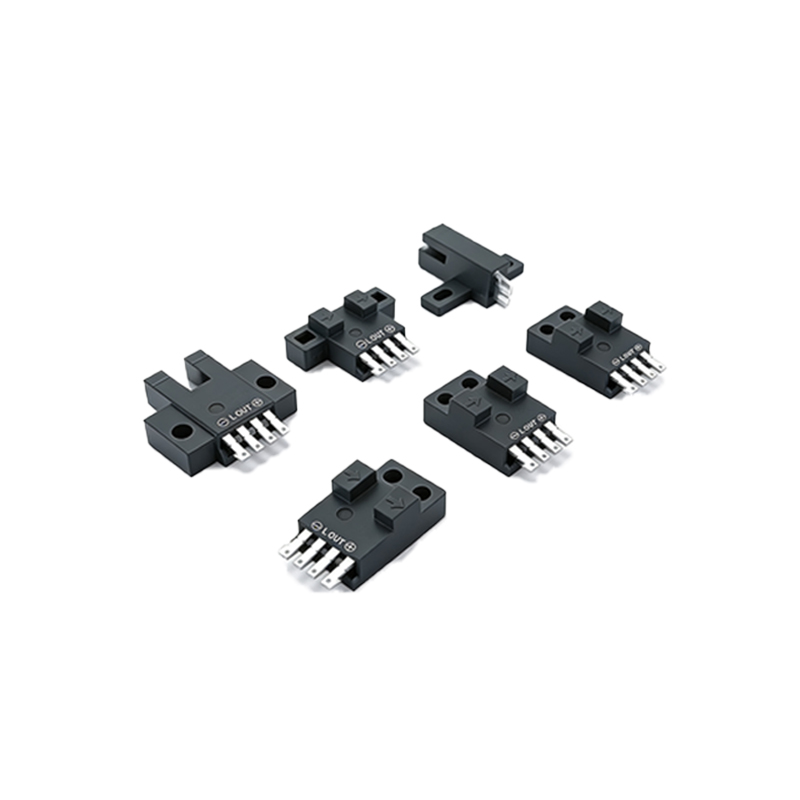
1. Through-Beam Sensors with Adjustable Range
Through-beam sensors consist of a separate emitter and receiver. Adjustable versions allow users to modify the detection distance, often up to 30 meters, by altering the emitted light intensity or receiver gain. These sensors are ideal for long-range, high-accuracy applications like conveyor belt object counting or warehouse portal detection. The adjustability ensures reliable performance even under dust or vibration.
2. Retro-Reflective Sensors with Sensitivity Control
Retro-reflective sensors integrate emitter and receiver in one housing, using a reflector to bounce light back. Adjustable models feature a potentiometer to fine-tune the sensitivity, reducing false triggers from shiny backgrounds or transparent objects. This type excels in packaging lines for detecting clear bottles or plastic films, where standard sensors struggle.
3. Diffuse Reflective Sensors with Background Suppression
Diffuse reflective sensors detect light reflected directly from the target. Adjustable versions offer background suppression, allowing engineers to set a cut-off distance and ignore objects beyond that point. By rotating a screw or using a teach-in button, the sensor ignores backgrounds like conveyor belts or machine frames. Common uses include level detection in hoppers and small part presence in assembly stations.
4. Fiber Optic Adjustable Sensors
Fiber optic sensors use flexible cables to guide light to hard-to-reach areas. Adjustable models provide gain control for different fiber tip types (e.g., parallel, coaxial). Engineers can adjust sensitivity via a dial or digital display to compensate for tip wear or contamination. They are popular in semiconductor manufacturing, where space is limited and precision is paramount.
5. Laser-Based Adjustable Sensors
Laser photoelectric sensors emit a collimated beam for ultra-precise detection. Adjustable versions allow fine-tuning of spot size and class (e.g., Class 1 or Class 2). With a range of up to 100 meters in some models, they are used in automated guided vehicles (AGVs) and robotic guidance systems. The laser power must be adjusted for safety standards.
6. Color and Contrast Sensors with Adjustable Thresholds
These sensors detect color or contrast differences on objects. Adjustable models let users set thresholds via a teach button or software for specific hues or brightness levels. They are key in printing, labeling, and food processing industries for quality control, such as checking cap color or label alignment.
7. Ultrasonic Adjustable Sensors (Alternative to Optical)
While not strictly photoelectric, ultrasonic sensors with adjustable detection zones are often used alongside photoelectric types in dusty or wet environments. They offer adjustable sound frequency and range via potentiometers, making them suitable for liquid level monitoring and transparent material detection.
Selection Criteria and Application Tips
When choosing an adjustable photoelectric sensor, consider factors like ambient light interference, target material reflectivity, and environmental conditions (e.g., humidity, temperature). For dusty areas, retro-reflective or fiber optic types with adjustable gain are preferred. For long distances, through-beam with adjustable range ensures reliability. Always verify the sensor's IP rating and output type (e.g., NPN, PNP, analog) to match your control system.
Conclusion
Adjustable photoelectric sensors offer flexibility and precision that fixed sensors cannot match. By understanding the unique capabilities of through-beam, retro-reflective, diffuse, fiber optic, laser, and color sensors, engineers can optimize detection systems for diverse industrial challenges. Proper selection and calibration lead to reduced downtime and improved productivity.