Introduction to Reflective Photoelectric Sensors
Reflective photoelectric sensors are critical components in industrial automation, offering non-contact detection of objects by emitting a light beam (typically infrared, red, or laser) and measuring the reflected signal. Their specifications determine performance in diverse environments, from factory floors to packaging lines. This article provides a technical overview of essential specifications engineers must evaluate when selecting these sensors.
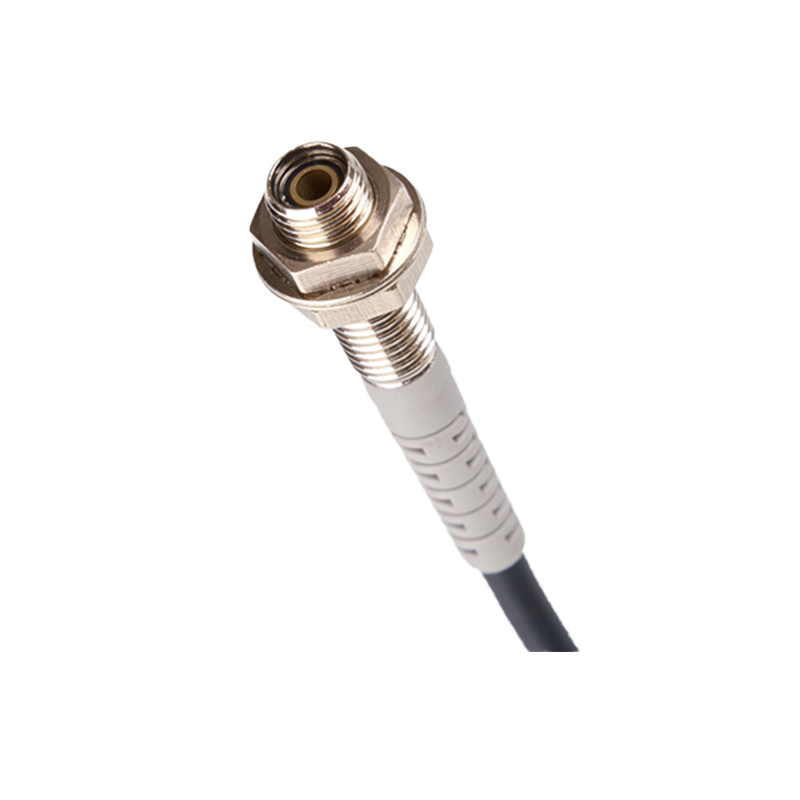
Detection Range and Sensing Distance
The maximum detection range is a primary specification, typically measured in meters or millimeters. For reflective sensors, this range depends on the target's reflectivity (e.g., white paper vs. black rubber). Standard models offer ranges from 50 mm to 10 m, while high-power laser sensors can exceed 30 m. Engineers should consider the minimum and maximum distances with a margin for environmental factors like dust or misalignment.
Light Source Type and Wavelength
The emitter type directly impacts reliability. Common sources include infrared (850 nm or 940 nm) for cost-effective solutions, red visible light (660 nm) for easy alignment, and laser diodes (e.g., 650 nm) for precise, long-range sensing. Laser sensors offer smaller spot sizes (e.g.,<1 mm at 1 m), ideal for small objects, but may require safety class considerations (Class 1 or 2).
Output Type and Switching Logic
Outputs define integration with control systems. Key options are NPN (sinking), PNP (sourcing), push-pull, or analog outputs (e.g., 4-20 mA or 0-10 V). Switching logic includes light-on (activated when light is received) and dark-on (activated when light is absent). For high-speed applications, response time (e.g.,<0.5 ms) and output current capacity (e.g., 100 mA) are critical.
Sensing Method and Background Suppression
Reflective sensors use either diffused reflection (light reflected from target) or retro-reflective (with reflector). Advanced models feature background suppression using triangulation or time-of-flight (ToF) technology. Triangulation-based sensors ignore objects beyond a set threshold, while ToF sensors measure distance directly, enabling consistent detection regardless of target color or texture.
Environmental Protection and Enclosure Rating
Industrial sensors must withstand harsh conditions. IP ratings (e.g., IP67 for dust and water immersion) and operating temperature ranges (e.g., -25°C to +55°C) are standard. For outdoor or washdown applications, stainless steel housings (e.g., 304 or 316L) and corrosion-resistant lenses are recommended. Additional features include vibration resistance (e.g., 10-55 Hz) and shock protection.
Electrical Specifications and Wiring
Supply voltage is typically 10-30 VDC, with low-voltage variants for battery systems. Current consumption (e.g.,<30 mA) affects power budgeting. Wiring options include 3-wire (V+, GND, output), 4-wire (with alarm), or M12 connectors for easy installation. Reverse polarity and short-circuit protection are essential for rugged environments.
Special Features and Adjustability
Modern sensors offer teach-in buttons, potentiometers, or IO-Link communication for dynamic parameter adjustment. Adjustable sensitivity via a potentiometer or digital interface allows fine-tuning for challenging targets. For networked systems, IO-Link provides diagnostic data (e.g., contamination level, temperature).
Conclusion
Selecting the right reflective photoelectric sensor requires balancing range, light source, output, and environmental resilience. By understanding these specifications, engineers can optimize system reliability and reduce downtime. Always consult manufacturer datasheets for detailed performance curves and application notes.