Introduction to Two-Wire Photoelectric Sensors
Two-wire photoelectric sensors are a fundamental component in industrial automation, offering a compact and cost-effective solution for object detection. Unlike traditional three-wire sensors that require separate power and signal lines, two-wire sensors integrate power supply and output signal into a single pair of wires, simplifying wiring and reducing installation costs. These sensors operate on the principle of modulating a small current on the loop to transmit detection status, typically using a sinking or sourcing output configuration. For electrical engineers, understanding the electrical characteristics, such as voltage drop, leakage current, and load compatibility, is critical for proper integration into control systems.
Operating Principles and Electrical Characteristics
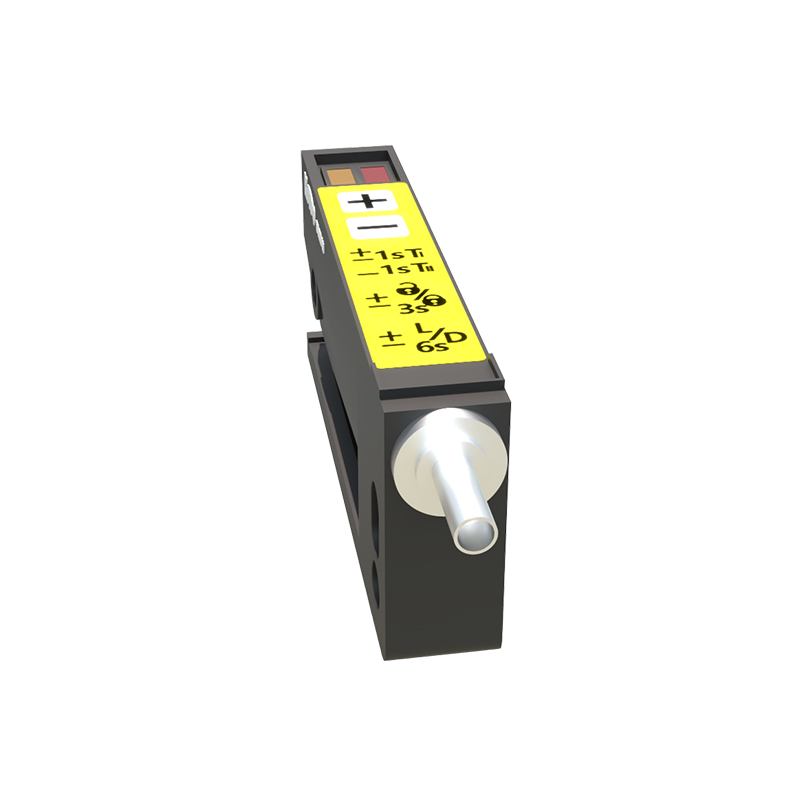
A two-wire photoelectric sensor functions by drawing a small standby current (typically 1-3 mA) when in the non-detected state, and a higher operational current (e.g., 10-20 mA) when an object is detected. This current variation is interpreted by a PLC or relay as a logic signal. Key electrical parameters include the maximum voltage drop (usually 2-4 VDC) and the minimum leakage current (e.g., 0.8 mA), which must be considered to avoid false triggering. Engineers must also account for the sensor's load impedance, as improper matching can lead to sensor malfunction or component damage. For AC power systems, two-wire sensors often incorporate a triac output, which requires careful management of off-state leakage to prevent unintended activation.
Common Applications in Industrial Automation
Two-wire photoelectric sensors are widely used in material handling, packaging, and conveyor systems due to their simple wiring and durability. They excel in applications where space is limited, such as in machinery with confined wiring channels, or in retrofitting existing systems with two-wire cabling. Typical use cases include detecting product presence on assembly lines, counting objects on high-speed conveyors, and monitoring level in hoppers. Their robust design, often with IP67 or higher ratings, makes them suitable for harsh environments with dust, moisture, or vibration. However, engineers should avoid using two-wire sensors in applications requiring high-speed switching (above 1 kHz) due to inherent response time limitations.
Design and Selection Criteria for Engineers
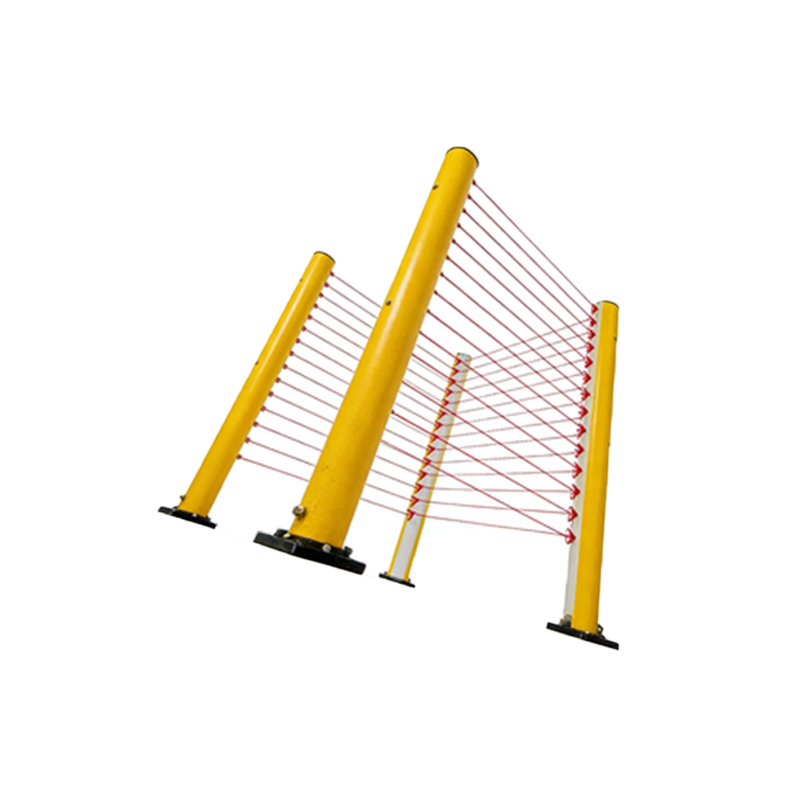
When selecting a two-wire photoelectric sensor, engineers must evaluate several factors: sensing distance, output type (NPN/PNP for DC, or triac for AC), ambient light immunity, and temperature range. For through-beam models, ensure the emitter and receiver alignment is stable to prevent false signals. Diffuse reflective sensors are ideal for detecting transparent or shiny objects, but require careful consideration of background suppression. Additionally, engineers should verify the sensor's compatibility with the load, such as a PLC input module or relay coil, by checking the minimum load current specification. A common pitfall is assuming all two-wire sensors have identical electrical profiles; always consult the datasheet for exact values.
Troubleshooting and Common Pitfalls
Common issues with two-wire photoelectric sensors include false triggering due to leakage current, voltage drop causing insufficient power to the load, and output oscillation from improper load impedance. To troubleshoot, first measure the voltage at the sensor terminals under both on and off conditions to ensure it remains within the operational range. If leakage current triggers a relay, add a bleeder resistor across the load to increase the minimum holding current. For AC systems, ensure the triac's off-state leakage does not exceed the load's dropout current. Engineers should also verify wiring polarity and check for short circuits in the cable, as two-wire sensors are sensitive to wiring faults.
Future Trends and Innovations
The evolution of two-wire photoelectric sensors is driven by the demand for smarter and more energy-efficient automation. Recent advancements include sensors with IO-Link compatibility, enabling two-wire systems to transmit diagnostic data and configuration parameters over the same pair. This reduces complexity while adding intelligence. Additionally, the development of low-power photodiodes and advanced microcontrollers allows for longer sensing distances and faster response times without compromising the two-wire simplicity. As industrial IoT expands, two-wire sensors will likely integrate wireless interfaces for predictive maintenance, further enhancing their role in Industry 4.0 environments.