Introduction to Photoelectric Sensors
Photoelectric sensors are essential devices in industrial automation, widely used for object detection, distance measurement, and material handling. These sensors operate by emitting a light beam and detecting changes in the received light signal. As an electrical engineer, understanding the key components and their principles is critical for system design. This article explores the primary equipment types and their operational mechanisms in a professional context.
Light Emitters: LEDs and Laser Diodes
The core of any photoelectric sensor is its light source. Common emitters include Light Emitting Diodes (LEDs) and laser diodes. LEDs are cost-effective and suitable for general-purpose detection, offering various wavelengths such as infrared, red, or blue. Laser diodes, on the other hand, provide collimated, high-intensity beams for precision applications like micro-object detection. The emitter’s modulation frequency and power output directly influence sensor range and immunity to ambient light interference.
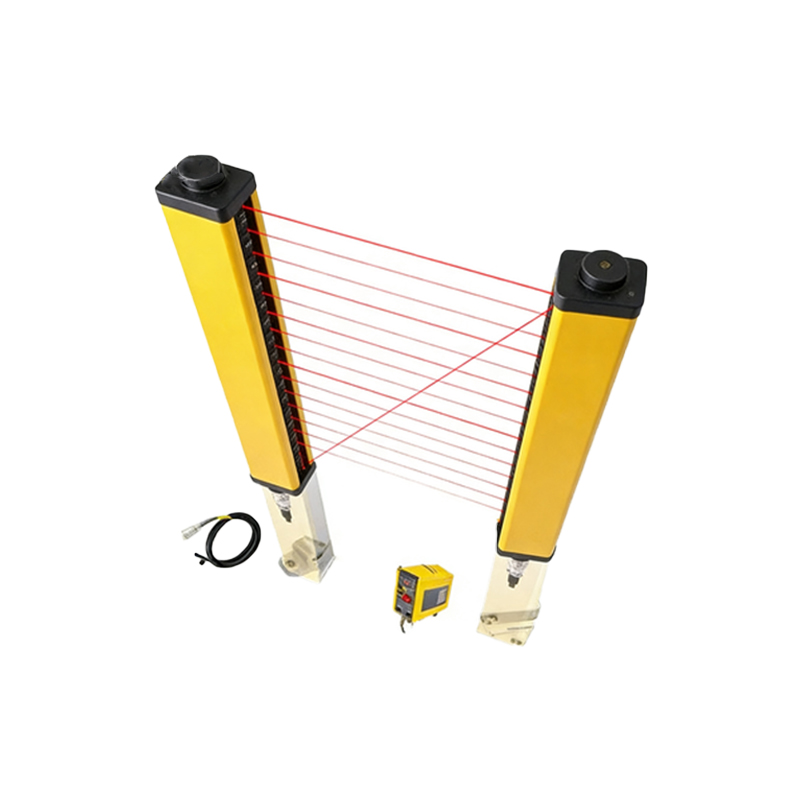
Photodetectors: Types and Sensitivity
Photodetectors convert light into electrical signals. Key types include photodiodes, phototransistors, and photoelectric integrated circuits. Photodiodes offer fast response times, ideal for high-speed counting. Phototransistors provide higher sensitivity but slower switching. Advanced sensors often employ PIN photodiodes for enhanced linearity. The detector’s spectral response must match the emitter’s wavelength to ensure optimal energy transfer.
Lens and Optical Systems
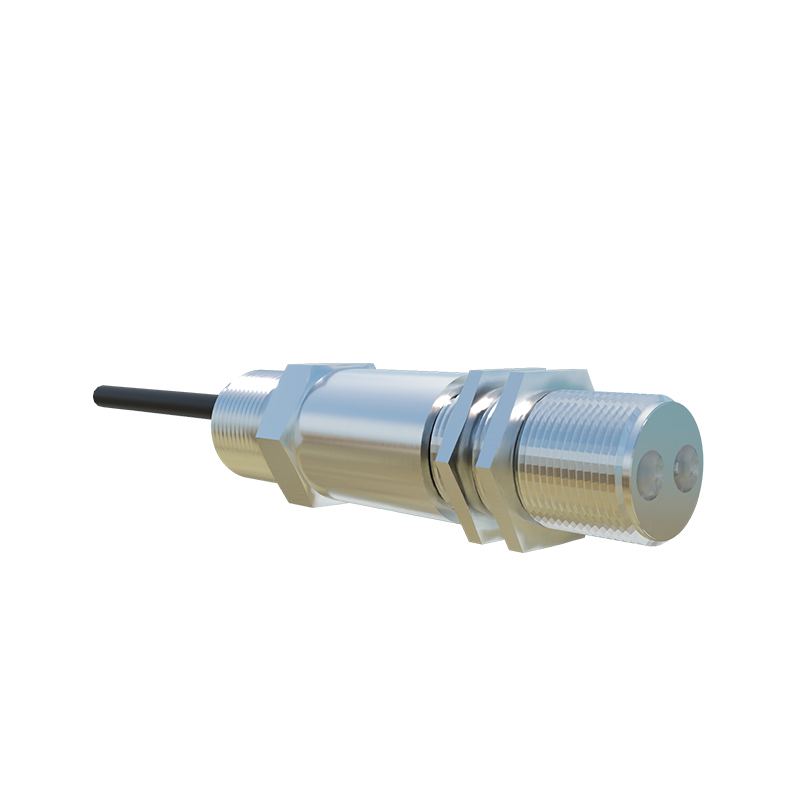
Lenses, reflectors, and apertures shape the light beam and define the sensor’s field of view. Convex lenses focus the beam for long-range sensing, while Fresnel lenses reduce cost and size. Optical filters, such as daylight filters, block extraneous light. In retro-reflective sensors, corner-cube reflectors return the beam effectively. Proper optical alignment is crucial to avoid false triggers in dusty or vibrating environments.
Amplifier and Signal Processing Circuits
The raw signal from the photodetector is weak and noisy. An internal amplifier strengthens it, typically using operational amplifiers with gain stages. Signal processing circuits include comparators for threshold detection and filters to suppress high-frequency noise. Some designs incorporate microcontrollers for adaptive gain control, enabling the sensor to compensate for lens contamination or temperature drift.
Housing and Environmental Protection
Industrial housings are rated by Ingress Protection (IP) standards, such as IP67 for washdown environments. Materials include stainless steel for corrosive areas and polycarbonate for impact resistance. Gas-tight seals prevent moisture ingress. In high-temperature zones, cooling fins or heat sinks are integrated. The housing design also affects mounting flexibility and cable strain relief.
Output Interfaces: Transistor, Relay, and IO-Link
Output interfaces transmit detection results to PLCs or controllers. NPN/PNP transistor outputs are common for DC circuits, while relay outputs handle AC loads. Modern sensors increasingly feature IO-Link for bidirectional data exchange, offering diagnostics and parameter configuration. For safety-critical applications, OSSD (Output Signal Switching Device) outputs ensure fail-safe operation.
Conclusion and Application Insights
Selecting the right photoelectric sensor equipment requires matching emitter-detector pairs, optical design, and signal processing to the application. In packaging lines, laser-based sensors excel for small object detection. In liquid level monitoring, diffuse-reflective types are preferred. Engineers must verify sensor ratings against target material, distance, and environmental factors for reliable automation performance.