Introduction to Photoelectric Sensor Modes
In industrial automation, photoelectric sensors are critical for object detection, positioning, and counting. A common question among engineers is why sensors offer both D (Dark-On) and L (Light-On) modes. This distinction is not arbitrary; it stems from practical application requirements, environmental conditions, and signal reliability. Understanding these modes helps optimize sensor performance in diverse manufacturing environments.
Fundamental Working Principle
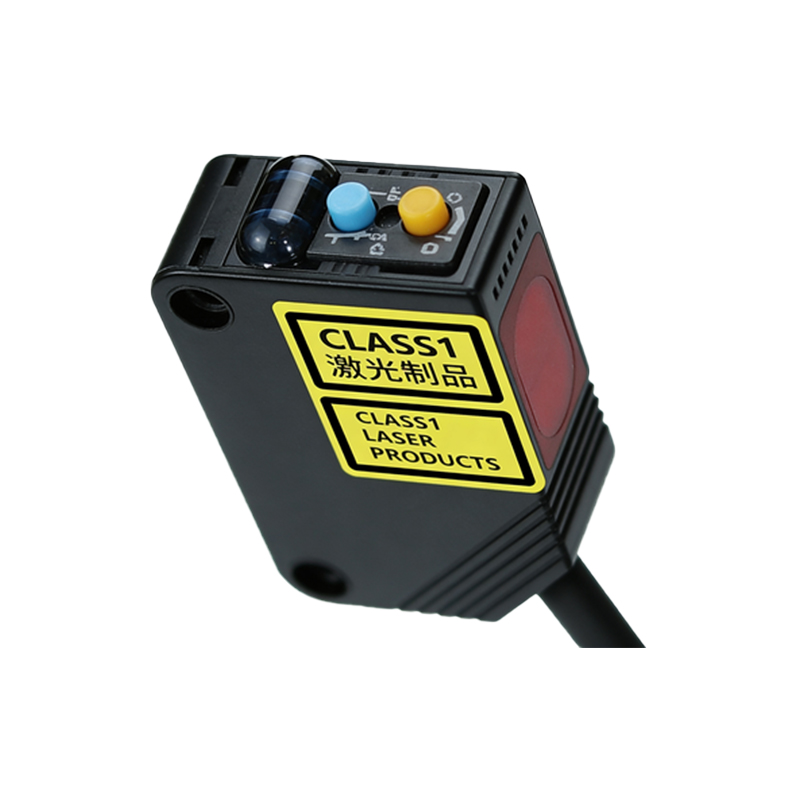
Photoelectric sensors operate by emitting a light beam (typically infrared, visible red, or laser) and detecting changes in reflected or interrupted light. In L mode, the sensor’s output is activated when it receives sufficient light. Conversely, in D mode, the output is triggered when light is absent or below a threshold. This binary logic mirrors the electrical state: L mode is normally open (NO) under light, while D mode is normally closed (NC) under light.
Why D Mode Matters in Noisy Environments
In factories with high ambient light, dust, or reflective surfaces, false triggers can occur. D mode offers inherent immunity to such interference. Since the sensor remains inactive under constant light, ambient light fluctuations rarely cause unintended output. For example, in a conveyor system with bright overhead lighting, L mode may misdetect a reflective object, whereas D mode only activates when the beam is broken—ensuring reliable operation.
L Mode for Direct Detection Tasks
L mode excels in applications requiring precise presence detection, such as counting transparent bottles or glossy packages. A clear object may not fully block the beam, but it reduces light intensity. In L mode, the sensor triggers when light drops below a threshold, making it sensitive to partial obstructions. This is ideal for detecting translucent materials that would be missed in D mode.
Fault Safety and Fail-Safe Design
Safety is paramount in industrial systems. D mode provides a fail-safe advantage: if the emitter fails or power loss occurs, the sensor defaults to its “on” state (output active), alerting the control system. In L mode, a light path failure would deactivate the output, potentially masking a fault. For critical safety interlocks (e.g., guarding robot cells), D mode ensures that any interruption—whether from an object or sensor failure—stops the machine.
Application-Specific Examples
Consider a packaging line: L mode detects a clear film wrapper by measuring light attenuation, while D mode is used for opaque box detection where beam interruption is clear. In material handling, D mode prevents false triggers caused by shiny surfaces, as the sensor only responds to beam blockage. For alignment tasks, L mode simplifies setup by indicating a continuous light path.
Conclusion
The distinction between D and L modes in photoelectric sensors is a deliberate design choice addressing noise immunity, fault safety, and material properties. Engineers must evaluate environmental conditions, object characteristics, and safety requirements to select the appropriate mode. Mastering this choice enhances system robustness and reduces maintenance in industrial automation.