Introduction to Five-Wire Diffuse Photoelectric Sensors
Five-wire diffuse photoelectric sensors are critical components in modern industrial automation systems, designed to detect objects without physical contact. Unlike through-beam or retro-reflective sensors, diffuse sensors use a single housing for both emitter and receiver, relying on light reflected directly from the target. The five-wire configuration typically includes two wires for power supply (e.g., 24V DC and ground), two for output signals (normally open and normally closed), and one for a common or shield connection. This setup provides enhanced flexibility for integration into complex control circuits, making them ideal for applications ranging from conveyor belt monitoring to packaging machinery.
Working Principle of Diffuse Photoelectric Sensors
The operational mechanism of a five-wire diffuse photoelectric sensor is based on the detection of reflected light. The sensor emits a pulsed beam from its LED or laser source, which travels toward the target object. When the object is within the sensing range, it scatters part of the light back to the receiver. The sensor's internal circuitry compares the intensity of the received light against a preset threshold. If the light level exceeds this threshold, the output switches state, indicating the presence of the object. The five-wire design allows for both NPN and PNP output configurations, accommodating various PLC input requirements. Key factors affecting performance include target surface reflectivity, color, and ambient light interference.
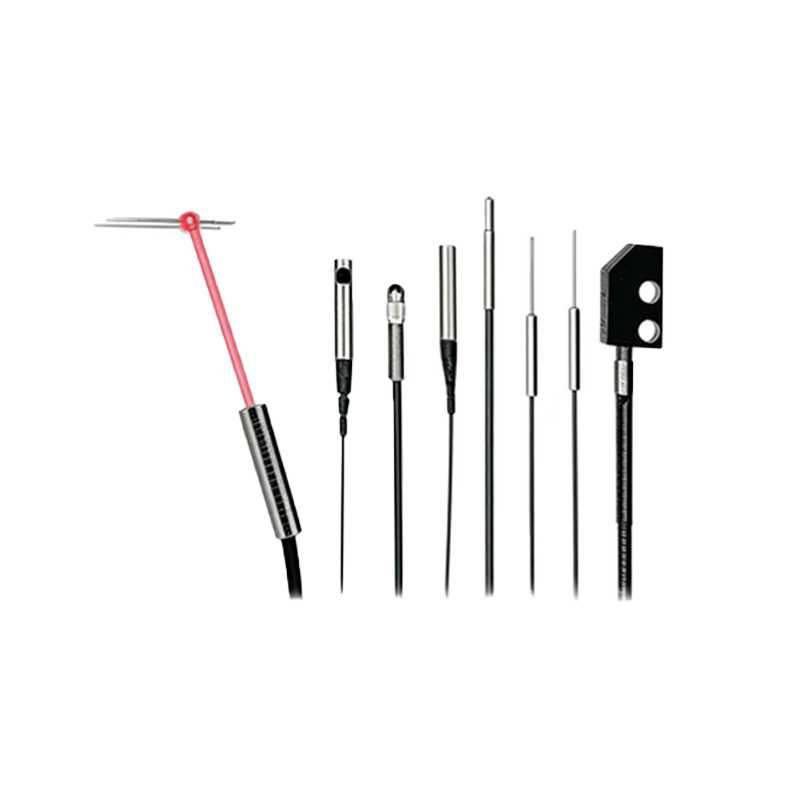
Key Advantages of Five-Wire Configuration
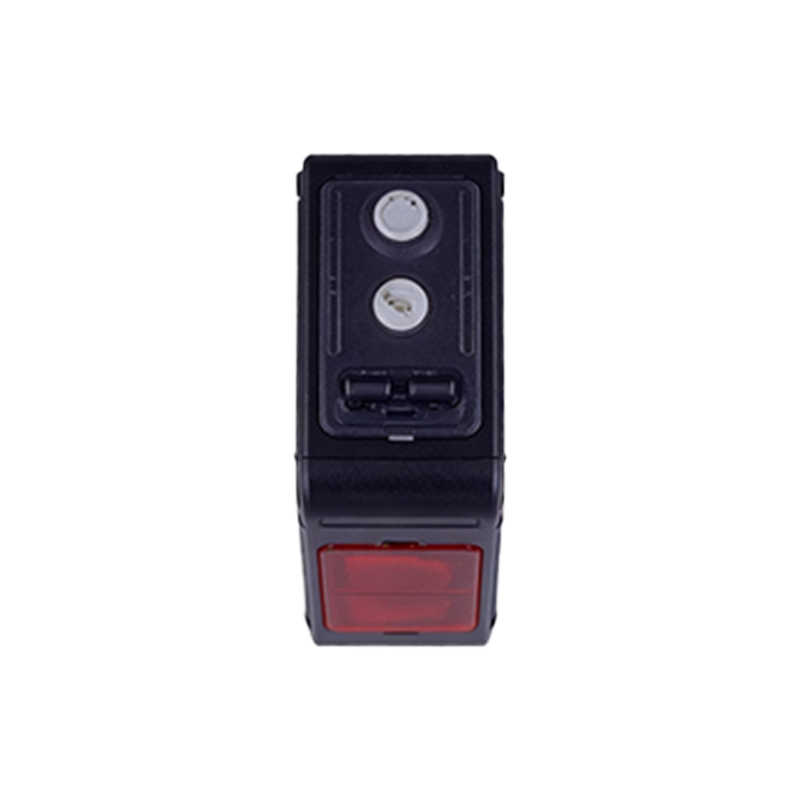
The five-wire design offers distinct advantages over simpler three-wire or four-wire sensors. Firstly, it provides both normally open (NO) and normally closed (NC) output signals simultaneously, eliminating the need for external inverters or logic gates. This dual-output capability simplifies wiring in fail-safe systems, where redundant signals are required for safety applications. Secondly, the separate common wire reduces electrical noise interference, improving signal integrity in environments with high electromagnetic interference (EMI), such as near motors or variable frequency drives. Additionally, the five-wire layout supports longer cable runs without signal degradation, making it suitable for large-scale industrial installations.
Common Applications in Industry
Five-wire diffuse photoelectric sensors are widely deployed in manufacturing, logistics, and material handling sectors. In conveyor systems, they detect product presence for sorting, counting, or jam prevention. For example, in a bottling plant, these sensors can identify transparent or opaque containers regardless of color, ensuring consistent flow. They are also used in automated storage and retrieval systems (AS/RS) to detect pallet positions or bin levels. In packaging machinery, sensors monitor film alignment or label placement. The five-wire configuration is especially beneficial in safety circuits, such as guarding robot work cells, where both NO and NC outputs provide redundant verification of object detection.
Selection Criteria and Installation Tips
When selecting a five-wire diffuse photoelectric sensor, consider sensing distance, light source type, and environmental rating. For short-range detection (up to 1 meter), LED-based sensors are cost-effective, while laser types offer precision for longer distances or small targets. Ensure the sensor is rated for IP67 or higher if exposed to dust or moisture. During installation, align the sensor perpendicular to the target surface to maximize reflected light. Avoid mounting near reflective backgrounds, which can cause false triggers. Use shielded cables for the five wires to minimize EMI, and follow the manufacturer’s wiring diagram to connect power, NO, NC, and common terminals correctly. Regular cleaning of the lens prevents dust accumulation that reduces sensitivity.
Troubleshooting Common Issues
Common problems with five-wire diffuse photoelectric sensors include intermittent detection, false triggering, or no output. First, verify power supply voltage and polarity—many sensors operate on 10-30V DC. Check the wiring for loose connections or shorts, especially on the shield wire. If the sensor is unstable, adjust the sensitivity potentiometer or use a teach-in function to set the threshold. For reflective targets, consider using a background suppression sensor to ignore distant objects. In high ambient light, add a hood or select a modulated light source to reject interference. If both NO and NC outputs are stuck in one state, inspect the target’s reflectivity or distance from the sensor.
Future Trends in Sensor Technology
The evolution of five-wire diffuse photoelectric sensors is driven by Industry 4.0 demands. Emerging models incorporate IO-Link communication, enabling real-time data exchange for predictive maintenance and parameter adjustments. Miniaturization allows integration into compact robotic end-effectors. Enhanced algorithms, such as multi-pulse processing, improve detection of transparent or low-reflectivity materials. Additionally, sensors with built-in Ethernet interfaces reduce wiring complexity in smart factories. As automation advances, these sensors will continue to offer robust, flexible solutions for object detection, supporting higher efficiency and reliability in industrial processes.