Basic Principle of Operation
Retro-reflective photoelectric sensors are a critical component in industrial automation, used for object detection without physical contact. Unlike through-beam sensors that require separate transmitter and receiver units, retro-reflective sensors combine the emitter and receiver in a single housing. The key differentiator is the use of a reflector, typically a corner-cube prism or reflective tape, placed opposite the sensor. The sensor emits a modulated beam of light, often infrared or visible red, toward the reflector. When an object interrupts this beam, the light path is broken, triggering a change in the sensor’s output state.
Optical Path and Reflector Design
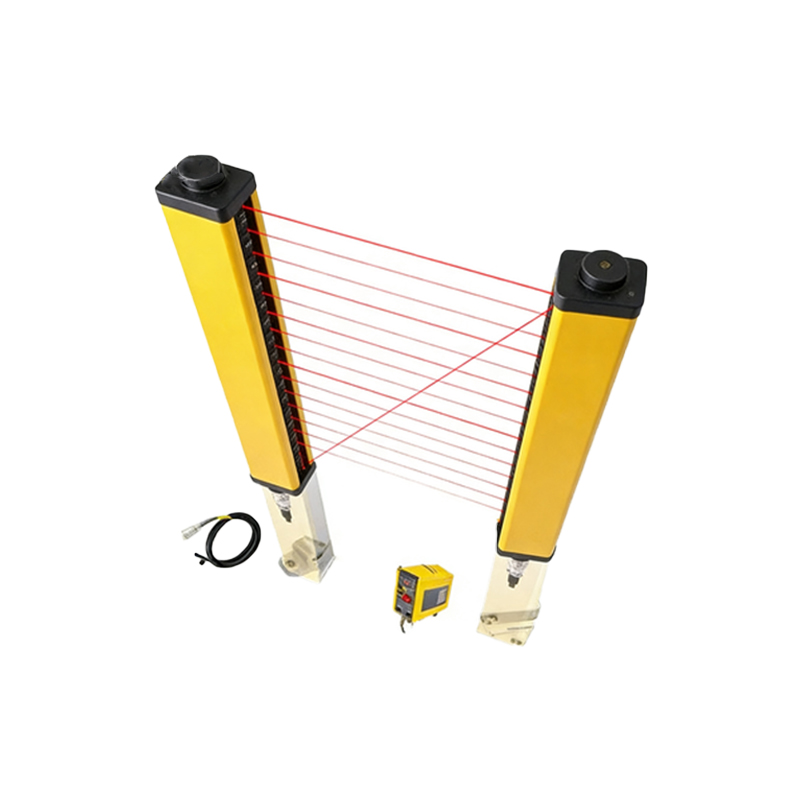
The reflector is not a standard mirror; it is designed to return light directly back to the source, regardless of the angle of incidence. This is achieved through the principle of retro-reflection, often using a series of tiny corner-cube reflectors or microprisms. Each corner cube consists of three mutually perpendicular reflective surfaces. Incoming light enters the cube, reflects off each surface sequentially, and exits parallel to its incoming path but in the opposite direction. This ensures that the sensor’s receiver detects a strong, focused signal even if the sensor and reflector are misaligned within a certain tolerance.
Modulation and Noise Immunity
To prevent interference from ambient light, such as sunlight or nearby lighting fixtures, retro-reflective sensors employ modulated light pulses. The emitter sends a high-frequency, pulsed light signal, and the receiver is tuned to detect only this specific frequency. Any continuous light source is ignored. This modulation also allows the sensor to distinguish between the reflected signal from the intended reflector and reflections from other shiny surfaces. Advanced models use digital signal processing to filter out noise, ensuring reliable detection in harsh industrial environments.
Polarized Light for Specular Surfaces
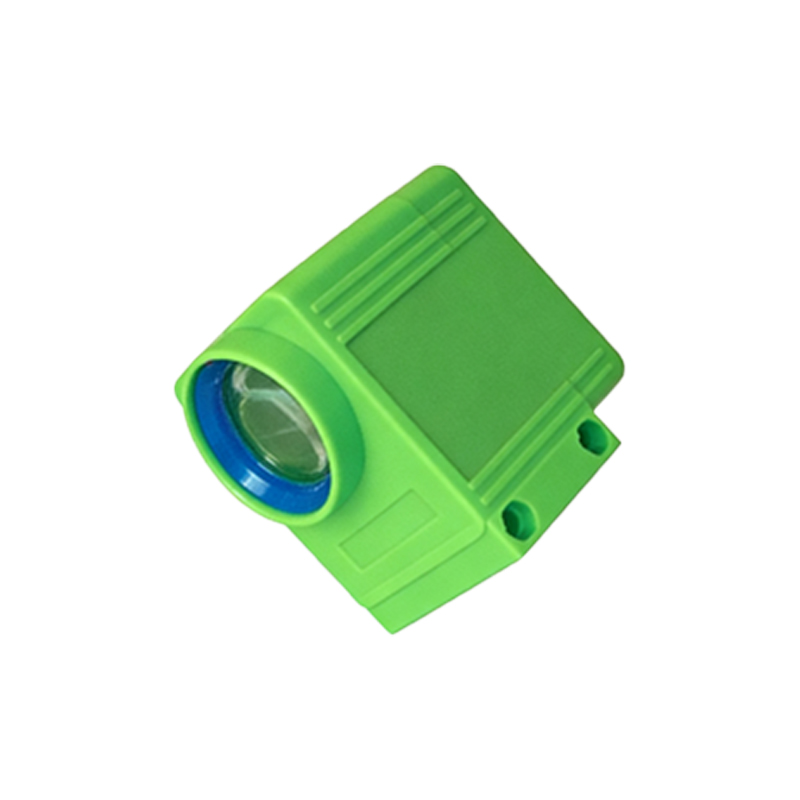
A common challenge with standard retro-reflective sensors is false triggering when detecting shiny or reflective objects, like polished metal or glass. These objects can act as mirrors, reflecting the emitted light back to the receiver even when no reflector is present. To solve this, many sensors use polarized light. A polarizing filter is placed over the emitter, allowing only light waves vibrating in a specific plane to be emitted. The reflector is designed to rotate the polarization of the returned light by 90 degrees. The receiver has a filter that only allows light with this rotated polarization to pass. A shiny object, however, reflects the light without polarization rotation, so the receiver filter blocks it, preventing false detections.
Detection Range and Application Considerations
The sensing range of retro-reflective sensors is typically limited by the reflector size and the ambient light conditions, but they can detect objects from a few centimeters up to several meters, e.g., 0.1 m to 10 m. The effective range is reduced if the object is small, transparent, or highly absorbent. For transparent objects like clear glass or plastic bottles, special models with background suppression or specific reflector designs are used. These sensors are widely applied in packaging lines, conveyor systems, elevator doors, and automated guided vehicles (AGVs) due to their compact size, easy installation, and reliability.
Installation and Alignment Tips
Proper alignment is crucial for optimal performance. The sensor and reflector must be aligned so that the light beam is perpendicular to the reflector’s surface. While retro-reflective designs offer some angular tolerance, excessive misalignment reduces the signal strength. It is recommended to use the sensor’s alignment indicator (often an LED) during setup. Ensure the reflector is clean and free from dust, oil, or scratches. Avoid mounting the sensor near highly reflective backgrounds or other sensors that emit similar wavelengths to prevent crosstalk.
Advantages Over Other Sensor Types
Compared to through-beam sensors, retro-reflective units simplify wiring and reduce installation space since only one device needs to be mounted and wired. They are more robust than diffuse reflective sensors because the defined light path is less susceptible to background interference. This makes them an ideal choice for applications where a consistent detection point is needed, such as counting objects on a conveyor or detecting pallet presence. Their sensitivity can be adjusted via a built-in potentiometer or digital settings, allowing fine-tuning for different object sizes and speeds.