Introduction to Photoelectric Sensor Radiant Types
Photoelectric sensors are fundamental components in industrial automation, relying on light emission and detection to perform non-contact object sensing. Among the key classifications, the radiation pattern—how the sensor emits and receives light—determines its operational range, environmental tolerance, and application suitability. This article examines the two primary radiation configurations: through-beam and diffuse reflective sensors, focusing on their engineering principles, performance characteristics, and practical deployment in manufacturing environments.
Through-Beam Photoelectric Sensors: Separate Emitter and Receiver
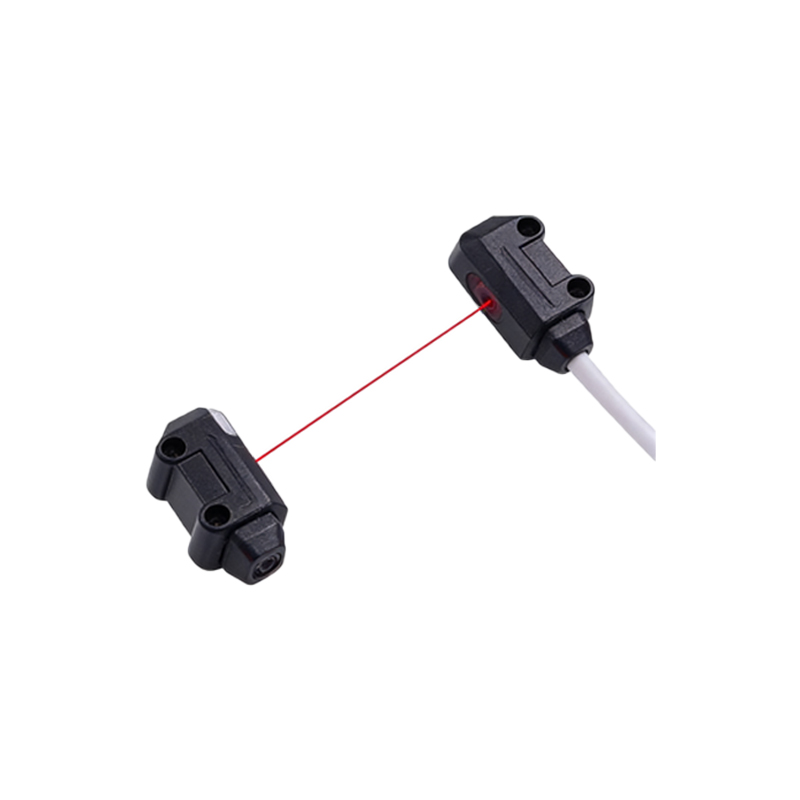
In a through-beam sensor configuration, the emitter and receiver are housed in separate units, aligned directly opposite each other. The emitter generates a continuous or pulsed light beam, typically infrared or visible red laser, which travels across the sensing gap to the receiver. When an object interrupts the beam, the receiver signal changes, triggering an output. This design offers the longest sensing range among photoelectric types, often exceeding 30 meters for standard industrial units, and provides high immunity to ambient light and dust due to the focused beam path. However, installation requires precise alignment of both components, increasing setup time and cost. Practical applications include long-range presence detection in conveyor systems, safety light curtains, and automated warehouse gates where reliability is critical.
Diffuse Reflective Sensors: Single Housing with Target Reflection
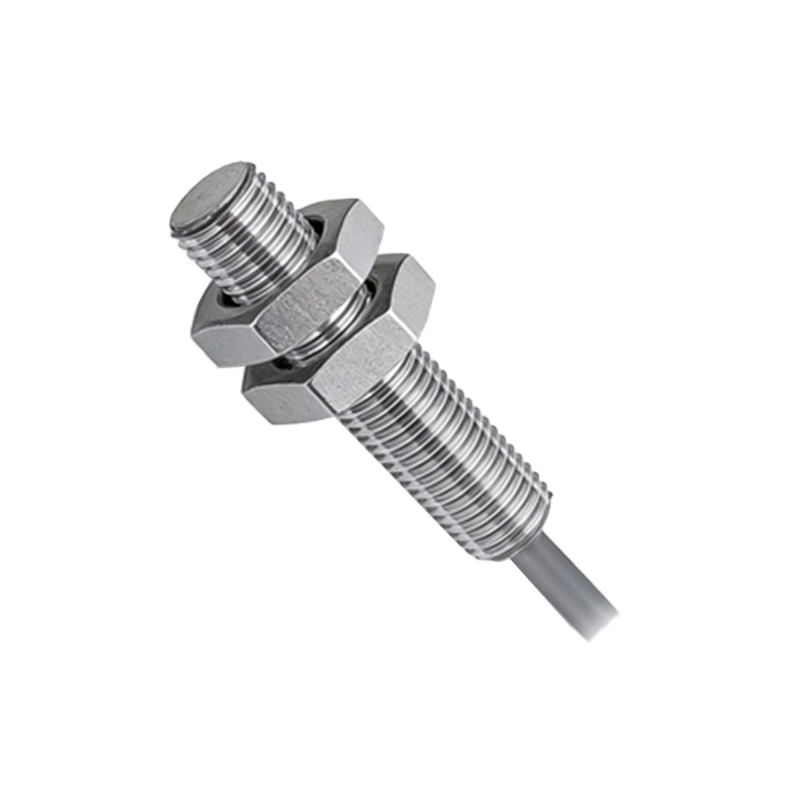
Diffuse reflective sensors integrate both the emitter and receiver within a single housing, simplifying installation and wiring. The sensor emits a light beam that travels to the target object; the object's surface reflects the light back to the receiver. Only when sufficient reflected light is detected does the sensor switch states. The effective sensing range is limited by target surface reflectivity, typically from a few centimeters up to about 2 meters for standard models. These sensors are ideal for detecting objects with varying shapes, colors, and materials, such as boxes on a conveyor belt or parts in a pick-and-place station. The key trade-off is sensitivity to background objects and glossy surfaces, which can cause false triggers. Engineers often select diffuse sensors for cost-effective, short-range applications in packaging lines and material handling systems.
Engineering Considerations for Radiation Mode Selection
When specifying a photoelectric sensor, the radiation mode directly impacts performance. For through-beam sensors, the clear path requirement means they perform well in dusty or steamy environments, as the beam penetrates particulates without significant loss. Conversely, diffuse sensors may suffer from reduced range in such conditions due to light scattering. For applications requiring high precision, such as detecting small parts in a narrow gap, diffuse sensors with background suppression provide enhanced accuracy by analyzing the angle of reflected light. Additionally, the choice of light source—infrared for immunity to visible light, or laser for pinpoint accuracy—must align with the radiation mode. Engineers must also consider cable length, output type (PNP or NPN), and response time to match the controller logic and production speed.
Future Trends in Radiant Sensor Technology
The evolution of photoelectric sensors continues with advancements in radiation sources and detection algorithms. Modern sensors increasingly incorporate laser diodes for ultra-long through-beam ranges or visible red LEDs for easier alignment in diffuse models. Smart sensors with IO-Link communication enable real-time adjustment of radiation parameters, such as sensitivity and beam width, to adapt to changing production conditions. In harsh environments, sealed housings with IP67 or IP69K ratings protect the optical components from washdown and moisture. As automation demands higher speed and accuracy, the radiant design of photoelectric sensors will remain a critical factor in system performance, driving innovation in miniaturization and multi-beam array configurations.