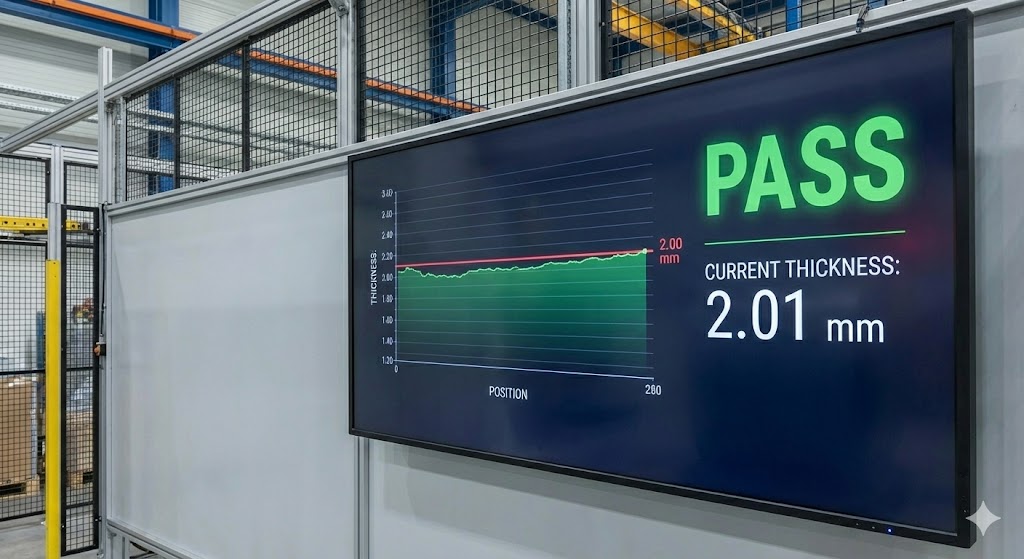
In the world of industrial automation and precision measurement, old style laser sensors hold a unique place. These devices, often characterized by their robust construction and straightforward operation, were foundational in many applications long before modern digital alternatives became widespread. Unlike contemporary sensors that may rely heavily on integrated software or complex algorithms, traditional laser sensors typically operate on basic principles of optics and photoelectric detection.
At their core, old style laser sensors emit a focused beam of coherent light—usually from a helium-neon (HeNe) gas laser or an early semiconductor laser diode. When this beam strikes a target object, it is either reflected, absorbed, or scattered. A photodetector within the sensor captures the returning light, and the system interprets changes in the light's properties, such as intensity or time-of-flight, to determine parameters like distance, presence, or thickness. One common method is triangulation: the emitted laser beam and the reflected beam form a triangle with the sensor's receiver, allowing precise distance calculations based on the angle of reflection. Another method involves simple interruption sensing, where an object breaking the laser beam triggers a response.
These sensors gained popularity in the 1970s and 1980s, particularly in manufacturing environments. Their advantages were clear: they offered non-contact measurement, reducing wear and tear, and provided high accuracy over relatively long ranges compared to mechanical or ultrasonic sensors of the era. Industries such as automotive assembly, semiconductor fabrication, and packaging relied on them for tasks like part alignment, edge detection, and fill-level monitoring. Their durability was notable; many units were housed in metal casings with simple electrical interfaces, capable of withstanding harsh conditions like dust, vibration, and temperature fluctuations.
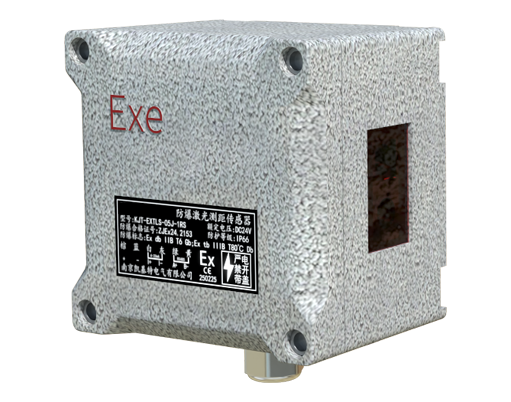
Despite the advent of newer technologies like CMOS-based vision systems or smart LiDAR, old style laser sensors are still in use today. Their continued relevance stems from several factors. First, they are often highly reliable for specific, well-defined tasks. In settings where the environment or target material is consistent, these sensors perform predictably without the need for frequent recalibration. Second, they can be more cost-effective for simple applications. Retrofitting an entire production line with advanced sensors may not be economically justifiable if existing laser units meet the required specifications. Third, in some high-precision niches, such as certain laboratory metrology setups or specialized machinery, the simplicity and proven track record of older laser designs are preferred over potentially more complex modern alternatives.
Maintenance of these sensors generally involves keeping lenses clean, checking power supplies, and ensuring alignment. Unlike digital sensors, they rarely suffer from software glitches or compatibility issues, though finding replacement parts can sometimes be a challenge as manufacturers phase out older models. Enthusiasts and technicians often source components from surplus inventories or adapt similar modern lasers to fit legacy systems.

Looking ahead, while old style laser sensors may not dominate new installations, they exemplify a principle of engineering: robustness and simplicity often yield longevity. They serve as a reminder that technology does not always need to be cutting-edge to be effective. In factories, research labs, and even some consumer devices, these venerable tools continue to operate silently, proving that good design stands the test of time. For engineers and hobbyists alike, understanding how they work provides insight into the evolution of automation and the enduring value of fundamental physical principles in measurement technology.