Optical design is a cornerstone of photoelectric sensor performance, directly influencing detection range, accuracy, and reliability in industrial automation. Photoelectric sensors use light-emitting diodes (LEDs) or laser diodes to emit a beam, which is then received by a photodetector. The optical system—including lenses, reflectors, and apertures—must be precisely engineered to focus, collimate, or diffuse the light for specific applications. For example, in through-beam sensors, a collimated beam ensures long-range detection up to tens of meters, while in diffuse reflective sensors, a wide-angle lens captures scattered light from targets. Mastering these design principles is essential for optimizing sensor behavior in harsh environments like dusty factories or high-speed assembly lines.
Key Optical Components and Their Functions
Three critical components define the optical path: the emitter optics, receiver optics, and optical filter. The emitter optics, often a convex lens or a parabolic reflector, shapes the light beam. For instance, a Fresnel lens reduces weight and cost while maintaining focus for short-range sensors. The receiver optics, typically a photodiode with a converging lens, collects and concentrates incoming light onto the detector surface. Optical filters, such as band-pass or polarizing filters, block ambient light interference—like sunlight or fluorescent flicker—enhancing signal-to-noise ratio. A common design uses a 940 nm infrared LED with a matching filter to minimize visible light noise, achieving stable detection in bright outdoor conditions.
Beam Shaping Techniques for Diverse Applications
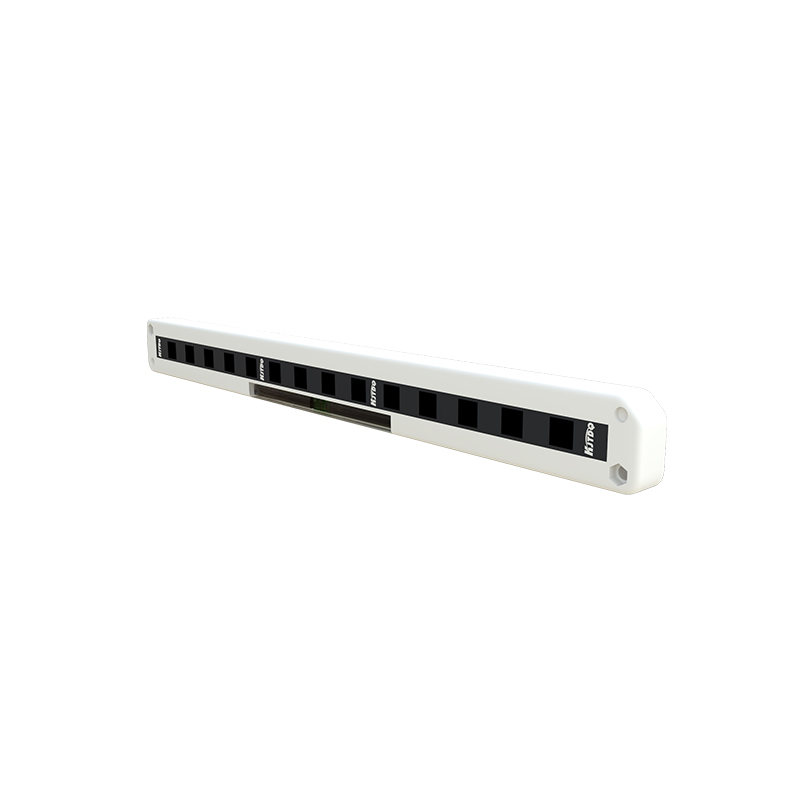
Beam shaping is tailored to application needs. For long-range detection, a collimated beam is achieved using a laser diode with a collimating lens, producing a narrow, parallel beam with minimal divergence. In contrast, for wide-area coverage, a diffuse beam is created by a frosted lens or a reflector with a textured surface, spreading light over a 30-degree to 60-degree angle. Background suppression sensors employ a triangulation-based optical design, where a receiver lens array and a segmented photodiode measure the angle of reflected light, enabling precise detection regardless of target color or reflectivity. This technique is vital in packaging lines where shiny or black objects must be distinguished.
Managing Ambient Light and Environmental Interference
Ambient light, such as sunlight or artificial lighting, can degrade sensor performance. Optical design mitigates this through modulation and filtering. The emitter is pulsed at a specific frequency (e.g., 1 kHz to 100 kHz), and the receiver’s electronics synchronize to detect only that frequency, rejecting steady-state background light. Additionally, optical coatings on lenses, like anti-reflective (AR) coatings, reduce glare and internal reflections. For outdoor installations, a hood or baffle blocks direct sunlight, while a sealed optical chamber prevents dust and moisture from altering the beam path. These measures ensure consistent operation in industries like automotive manufacturing or outdoor logistics.
Advanced Optical Design for High-Speed and Miniaturized Sensors
Modern trends demand miniaturized sensors with faster response times. This requires compact optical paths, such as using micro-lenses or light guides made from polymethyl methacrylate (PMMA). For example, in fiber optic sensors, a plastic or glass fiber bundle transmits light to and from a remote target, allowing the sensor electronics to be placed away from harsh environments. High-speed applications, like counting objects on a conveyor at 10,000 items per minute, use a focused laser spot and a fast photodiode with a small active area to minimize capacitance and rise time. The optical design must also account for chromatic aberration, especially with multi-wavelength LEDs, to maintain a sharp focal point across the detection range.
Future Trends in Optical Design for Photoelectric Sensors
Emerging technologies are reshaping optical design. Solid-state lighting, such as vertical-cavity surface-emitting lasers (VCSELs), offers higher efficiency and narrower beam divergence, enabling longer ranges in smaller packages. Adaptive optics, using liquid lenses or MEMS mirrors, can dynamically adjust the beam shape for varying target distances and textures. Additionally, multi-spectral sensors combine visible and infrared optics to detect transparent or colored objects, like clear glass bottles on a production line. As Industry 4.0 demands smarter sensors, optical design will integrate with AI-driven algorithms to optimize detection in real time, reducing false triggers and improving throughput.
Introduction to Optical Design in Photoelectric Sensors
Optical design is a cornerstone of photoelectric sensor performance, directly influencing detection range, accuracy, and reliability in industrial automation. Photoelectric sensors use light-emitting diodes (LEDs) or laser diodes to emit a beam, which is then received by a photodetector. The optical system—including lenses, reflectors, and apertures—must be precisely engineered to focus, collimate, or diffuse the light for specific applications. For example, in through-beam sensors, a collimated beam ensures long-range detection up to tens of meters, while in diffuse reflective sensors, a wide-angle lens captures scattered light from targets. Mastering these design principles is essential for optimizing sensor behavior in harsh environments like dusty factories or high-speed assembly lines.
Key Optical Components and Their Functions
Three critical components define the optical path: the emitter optics, receiver optics, and optical filter. The emitter optics, often a convex lens or a parabolic reflector, shapes the light beam. For instance, a Fresnel lens reduces weight and cost while maintaining focus for short-range sensors. The receiver optics, typically a photodiode with a converging lens, collects and concentrates incoming light onto the detector surface. Optical filters, such as band-pass or polarizing filters, block ambient light interference—like sunlight or fluorescent flicker—enhancing signal-to-noise ratio. A common design uses a 940 nm infrared LED with a matching filter to minimize visible light noise, achieving stable detection in bright outdoor conditions.
Beam Shaping Techniques for Diverse Applications
Beam shaping is tailored to application needs. For long-range detection, a collimated beam is achieved using a laser diode with a collimating lens, producing a narrow, parallel beam with minimal divergence. In contrast, for wide-area coverage, a diffuse beam is created by a frosted lens or a reflector with a textured surface, spreading light over a 30-degree to 60-degree angle. Background suppression sensors employ a triangulation-based optical design, where a receiver lens array and a segmented photodiode measure the angle of reflected light, enabling precise detection regardless of target color or reflectivity. This technique is vital in packaging lines where shiny or black objects must be distinguished.
Managing Ambient Light and Environmental Interference
Ambient light, such as sunlight or artificial lighting, can degrade sensor performance. Optical design mitigates this through modulation and filtering. The emitter is pulsed at a specific frequency (e.g., 1 kHz to 100 kHz), and the receiver’s electronics synchronize to detect only that frequency, rejecting steady-state background light. Additionally, optical coatings on lenses, like anti-reflective (AR