Introduction to Photoelectric Sensors in Industrial Automation
Photoelectric sensors are critical components in modern industrial automation, offering non-contact detection of objects, materials, and positions. These sensors utilize light beams—typically infrared, visible red, or laser—to sense the presence, absence, or distance of targets. Their reliability, speed, and adaptability make them indispensable in manufacturing lines, packaging systems, and quality control processes. As an electrical engineer, I have witnessed how these tools streamline operations, reduce downtime, and enhance overall productivity. This article provides a technical overview of photoelectric sensors as high-efficiency detection tools, focusing on their types, applications, and best practices for implementation.
Types of Photoelectric Sensors and Their Working Principles
Understanding the main types of photoelectric sensors is essential for selecting the right tool. The three primary categories are through-beam, retro-reflective, and diffuse sensors. Through-beam sensors consist of a separate emitter and receiver; when the light beam is interrupted by an object, the sensor triggers. This design offers the longest detection range and highest accuracy, ideal for clean environments. Retro-reflective sensors combine emitter and receiver in one unit, using a reflector to bounce light back; they are cost-effective and easy to install but require careful alignment. Diffuse sensors detect light reflected directly from the target, making them suitable for short-range applications and uneven surfaces. Additionally, advanced models incorporate background suppression for precise detection in cluttered settings.
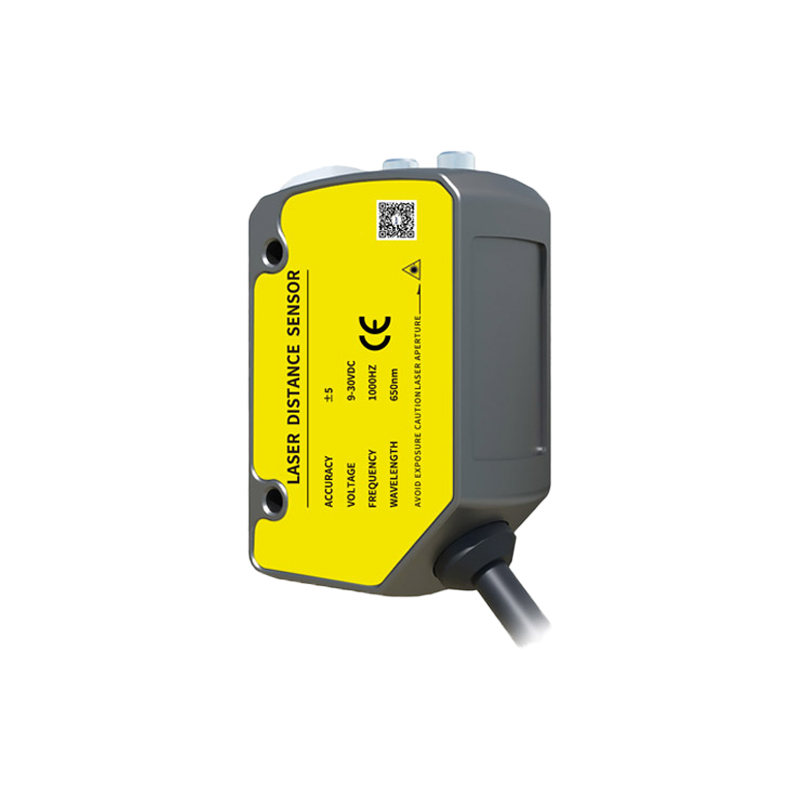
Key Performance Metrics for High-Efficiency Detection
To evaluate photoelectric sensors as efficient tools, engineers must consider several metrics: response time, sensing distance, ambient light immunity, and output type. Response time, often in microseconds, determines how quickly the sensor can detect fast-moving objects on high-speed lines. Sensing distance varies from millimeters to tens of meters, depending on the sensor type and optics. Ambient light immunity ensures reliable operation under factory lighting, while outputs like NPN, PNP, or IO-Link facilitate integration with PLCs and control systems. For instance, IO-Link sensors provide real-time diagnostics and parameter adjustments, significantly improving maintenance efficiency. Selecting sensors with these optimized features reduces false triggers and enhances system uptime.
Applications in Manufacturing and Quality Control
Photoelectric sensors excel in diverse applications, from detecting small components in electronics assembly to monitoring pallet positions in logistics. In automotive manufacturing, they verify part presence on assembly lines, ensuring every fastener is in place. In food and beverage packaging, diffuse sensors with background suppression detect transparent bottles or shrink-wrapped products without interference. Quality control benefits from laser-based sensors that measure surface flatness or count items with sub-millimeter precision. For example, in a recent project, I implemented retro-reflective sensors with polarized filters to detect shiny metal parts, reducing false signals by 30%. These real-world examples demonstrate how photoelectric sensors serve as versatile and reliable detection tools.
Best Practices for Installation and Maintenance
Proper installation is key to maximizing sensor efficiency. Begin by selecting the correct sensor type based on target material, color, and environment. For dusty or wet areas, use sensors with IP67 or higher ratings and ensure proper lens cleaning schedules. Alignment is critical; for through-beam sensors, use alignment tools or lasers to secure the emitter and receiver in parallel. For retro-reflective sensors, avoid reflective backgrounds that can cause false triggers. Regular maintenance includes inspecting cables for wear, checking for lens fogging, and updating firmware for smart sensors. Implementing a predictive maintenance strategy using IO-Link data can anticipate failures, reducing unplanned downtime by up to 20%.
Future Trends and Technological Advancements
The evolution of photoelectric sensors continues with integration into Industry 4.0. Smart sensors with IO-Link communication enable remote monitoring and automatic parameter adjustments based on production changes. Miniaturization allows for placement in tight spaces, while multi-beam arrays offer wide-area detection without moving parts. Additionally, sensors with integrated machine learning algorithms can adapt to varying target shapes and backgrounds, improving robustness. As an engineer, I recommend staying updated with these advancements to leverage high-efficiency detection in smart factories. The future lies in combining photoelectric sensors with IIoT platforms for real-time analytics and predictive maintenance, driving further productivity gains.
Conclusion: Optimizing Operations with Photoelectric Sensors
Photoelectric sensors are indispensable high-efficiency detection tools in industrial settings. By selecting the right type—through-beam for long-range precision, retro-reflective for cost-effective solutions, or diffuse for versatile applications—engineers can dramatically improve system reliability and throughput. Incorporating advanced features like IO-Link and background suppression further enhances performance. With proper installation, alignment, and maintenance, these sensors reduce downtime and ensure consistent quality. As technology advances, embracing smart sensors will unlock new levels of automation efficiency. For any electrical engineer, mastering photoelectric sensors is a strategic investment in operational excellence.