Simultaneous Localization and Mapping, commonly known as SLAM, represents a foundational technology enabling machines to understand and navigate their environment autonomously. At the heart of many modern SLAM implementations lies the laser sensor, a precise and reliable tool for perceiving the world in high detail. This article delves into the principles, types, and applications of SLAM laser sensors, explaining their critical role in robotics and beyond.
A laser sensor, in the context of SLAM, typically refers to a Light Detection and Ranging (LiDAR) sensor. It operates by emitting rapid pulses of laser light and measuring the time it takes for each pulse to reflect off a surface and return to the sensor. This time-of-flight data is then used to calculate precise distances. By scanning the laser beam across a field of view—often 360 degrees in horizontal planes—the sensor generates a dense cloud of distance points, known as a point cloud. This point cloud is a real-time, three-dimensional snapshot of the surrounding environment, capturing the shape and location of walls, objects, and obstacles with centimeter-level accuracy.
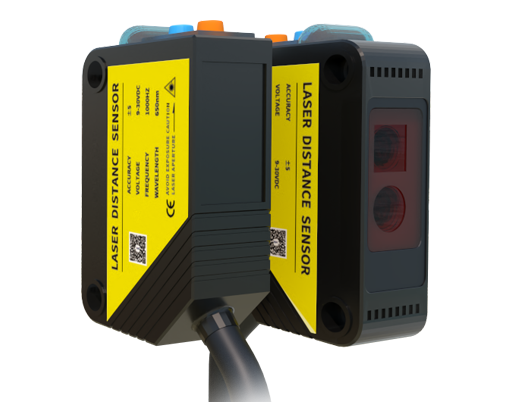
The SLAM algorithm works in concert with this sensor data. As a robot equipped with a laser sensor moves, it continuously captures new point clouds from different positions. The core challenge of SLAM is twofold: it must use these sequential scans to construct a consistent and accurate map of the unknown environment (Mapping), while simultaneously using the evolving map to deduce the robot's own position within it (Localization). This is a chicken-and-egg problem; you need a map to locate yourself, and you need to know your location to build a map. Advanced algorithms, such as iterative closest point (ICP) or graph-based optimization, solve this by identifying common features (like corners, edges, or planar surfaces) across successive scans. By matching these features, the algorithm can estimate the robot's movement and incrementally stitch the point clouds into a cohesive map.
Several types of laser sensors are employed in SLAM systems, each with distinct characteristics. 2D LiDAR sensors scan in a single plane, usually horizontally, creating a flat, top-down map of the environment. They are cost-effective, reliable, and form the backbone of many indoor robotic applications like automated guided vehicles (AGVs) and domestic vacuum cleaners. For more complex environments, 3D LiDAR sensors are essential. These can use multiple stacked laser beams or a rotating mirror mechanism to capture height information, generating full 3D point clouds. This capability is crucial for outdoor autonomous vehicles navigating uneven terrain, or drones inspecting infrastructure, where understanding vertical structures is vital. Solid-state LiDAR is an emerging technology that uses no moving mechanical parts, offering greater durability, smaller form factors, and potentially lower costs for mass-market applications.
The advantages of using laser sensors for SLAM are significant. They provide high accuracy and resolution at long ranges, perform reliably in varying lighting conditions (unlike cameras which struggle in darkness or extreme light), and directly output precise geometric data. However, challenges persist. Traditional mechanical LiDAR units can be expensive and contain fragile moving parts. Performance can degrade in certain conditions, such as heavy rain, fog, or when scanning highly reflective or absorbent surfaces. Furthermore, processing the vast amounts of point cloud data requires substantial computational power.
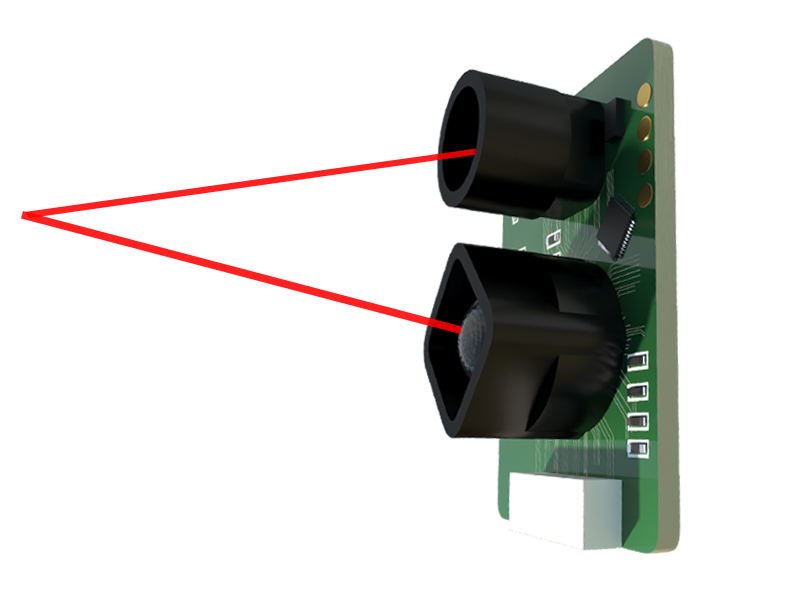
The applications of SLAM laser sensors are vast and growing. In industrial automation, they enable forklifts and mobile robots to navigate dynamic warehouses safely. The autonomous vehicle industry relies heavily on 3D LiDAR-SLAM systems for perception and localization, often fused with camera and radar data. In agriculture, autonomous tractors use SLAM for precise field navigation. Other fields include archaeology for site mapping, logistics for inventory management in large facilities, and even consumer electronics in next-generation augmented reality devices that need to understand room geometry.
Looking forward, the evolution of SLAM laser sensors is geared towards higher performance, lower cost, and increased robustness. The development of more sophisticated solid-state designs, improved algorithms for handling dynamic objects (like moving people), and better sensor fusion techniques will continue to push the boundaries. As these technologies mature, SLAM powered by laser sensors will become even more ubiquitous, forming the essential "eyes" for a new generation of intelligent machines that seamlessly operate in our shared spaces.
