Introduction to Photoelectric Sensors and Filters
Photoelectric sensors are widely used in industrial automation for detecting objects, distances, and material presence. A common question among engineers is whether these sensors can be enhanced with filters. The short answer is yes, but the application and type of filter depend on the sensor's operating principle, environment, and specific detection needs. Filters can modify the light source characteristics, reduce ambient interference, or refine signal processing.
Types of Filters for Photoelectric Sensors
Filters for photoelectric sensors generally fall into three categories: optical filters, electronic filters, and software-based filters. Optical filters, such as polarizing or color filters, are placed in front of the emitter or receiver to block unwanted wavelengths or reduce ambient light. Electronic filters, like low-pass or band-pass circuits, are integrated into the sensor's electronics to suppress noise. Software filters, often implemented via microcontroller algorithms, allow adaptive thresholding and signal averaging. Each type serves distinct purposes and must be selected based on the sensor model and application.
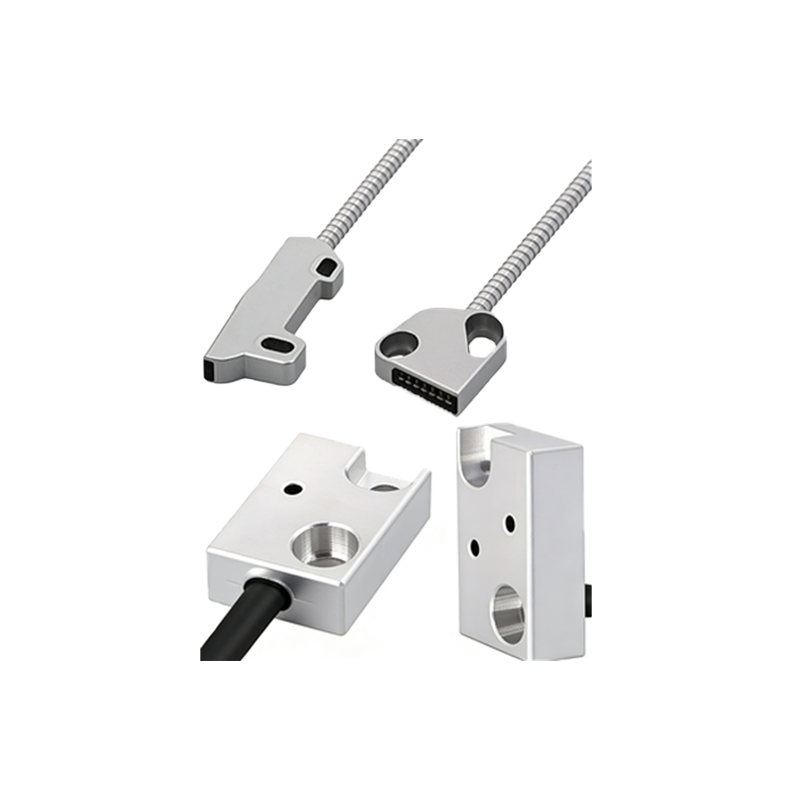
Optical Filters: Enhancing Specificity
Optical filters are the most direct way to modify sensor behavior. For example, polarizing filters reduce glare from shiny surfaces like metal or glass, improving detection reliability in packaging lines. Infrared filters can be used in sensors operating in near-IR spectra to block visible light interference from welding arcs or sunlight. However, adding an optical filter may reduce the sensor's effective range or sensitivity, so engineers must recalibrate the system after installation. Manufacturers often provide filter kits or guidelines for compatible models.
Electronic and Software Filters: Signal Conditioning
Electronic filters are integrated into the sensor's circuitry to remove high-frequency noise from motors or power lines. For instance, a low-pass filter can smooth out rapid fluctuations in detection signals caused by vibration. Software filters, like median or moving average filters, are programmable in advanced sensors. These are particularly useful in dusty or humid environments where optical clarity varies. Engineers should note that software filters introduce latency, which can affect high-speed applications like conveyor sorting.
Practical Considerations for Adding Filters
Before adding a filter, assess the sensor's operating environment. Outdoor applications may require UV or visible-light blocking filters to prevent false triggering from sunlight. In cleanroom settings, filters must be non-outgassing and resistant to chemicals. Additionally, consider the sensor's response time: filters can delay reaction by microseconds to milliseconds, which might be critical in safety-critical systems like robotic arms. Always test the modified sensor in real-world conditions to validate performance.
Limitations and Alternatives
Not all sensors are filter-friendly. Some compact models lack physical space for optical filters or have sealed housings that prevent modification. In such cases, alternatives like using a sensor with built-in filtering capabilities or upgrading to a laser-based sensor with narrow beam technology may be better. For extreme environments, consider ultrasonic sensors as a non-optical alternative. Engineers should consult the sensor datasheet for filter compatibility or contact the manufacturer.