Introduction to J-Type Photoelectric Sensors
J-type photoelectric sensors are specialized optoelectronic devices designed for precise object detection in harsh industrial environments. These sensors utilize modulated infrared or visible light beams to detect the presence, absence, or position of targets without physical contact. Their robust construction and high immunity to ambient light make them ideal for applications in manufacturing, packaging, and material handling systems.
Working Principle and Key Features
J-type sensors operate on the principle of light emission and reception. An emitter sends a pulsed beam toward a receiver, and the sensor logic determines target presence based on beam interruption or reflection. Key features include a compact cylindrical housing with M18 or M30 threading, IP67 protection rating for dust and water resistance, and a sensing range from 30 mm to 10 meters depending on the model. The "J" designation often refers to a specific connector type (e.g., M12 4-pin) or mounting configuration suitable for confined spaces.
Common Operating Modes
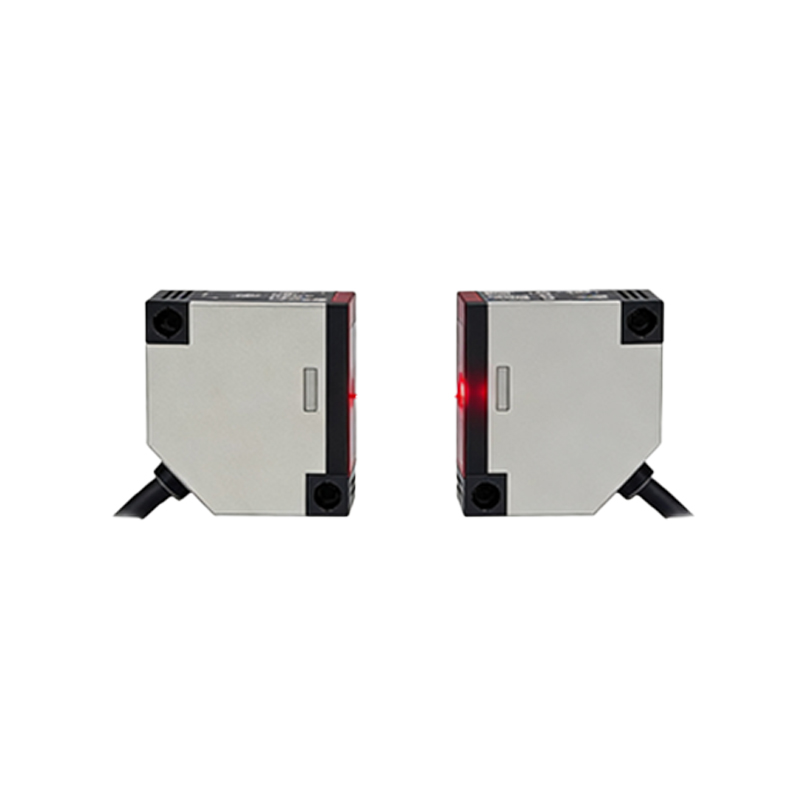
Three primary modes are used for J-type sensors: through-beam, retro-reflective, and diffuse reflective. In through-beam mode, the emitter and receiver are separate units, offering the longest range (up to 10 m) and highest reliability. Retro-reflective mode uses a reflector to bounce the beam back, simplifying wiring and reducing sensor count. Diffuse reflective mode detects objects directly by sensing reflected light from the target surface, making it suitable for close-range applications (up to 1 m). Each mode has distinct advantages for different industrial tasks.
Installation and Wiring Considerations
Proper installation is critical for reliable performance. J-type sensors typically come with a 2-meter PVC cable or an M12 connector. Ensure the sensor is aligned perpendicular to the target path. For through-beam pairs, maintain a clear line-of-sight between emitter and receiver. Avoid mounting near high-voltage cables to prevent electromagnetic interference. Use shielded cables for long runs exceeding 10 meters. The power supply voltage should be within 10–30 VDC, with a maximum load current of 100 mA for NPN/PNP outputs.
Application Examples in Manufacturing
In automotive assembly lines, J-type sensors detect car body panels on conveyor belts, triggering robotic welding arms. In food packaging, they verify bottle caps are sealed correctly before labeling. In warehouse logistics, these sensors count items passing through a chute, integrating with PLCs for inventory management. Their resistance to washdown environments in cleanrooms makes them suitable for pharmaceutical production.
Troubleshooting Common Issues
Common problems include false triggering due to dust accumulation on the lens. Regular cleaning with a soft cloth and alcohol solution is recommended. If the sensor fails to detect transparent objects, switch to a polarized retro-reflective model. For fluctuating output signals, check the power source for voltage drops or ripple. Replace damaged cables or connectors if intermittent faults occur. Always refer to the manufacturer's datasheet for specific fault codes.
Selection Criteria for New Installations
When choosing a J-type sensor, consider the target material (opaque, transparent, or reflective), ambient light conditions, and required response time (typically 0.5–1 ms). For high-speed applications, select a sensor with a fast switching frequency (e.g., 1 kHz). Verify the temperature range (usually -25°C to +55°C) matches your environment. Cost considerations include initial purchase price versus maintenance expenses over the lifecycle.