Introduction to Photoelectric Sensors in Calculation Tasks
Photoelectric sensors are widely recognized for their role in detecting objects, measuring distances, and counting items in industrial automation. However, their application as a "calculator" might seem unconventional. By leveraging their optical properties and digital output, these sensors can perform simple arithmetic operations like addition, subtraction, and even sequential counting, making them a cost-effective tool for basic computation tasks on the factory floor.
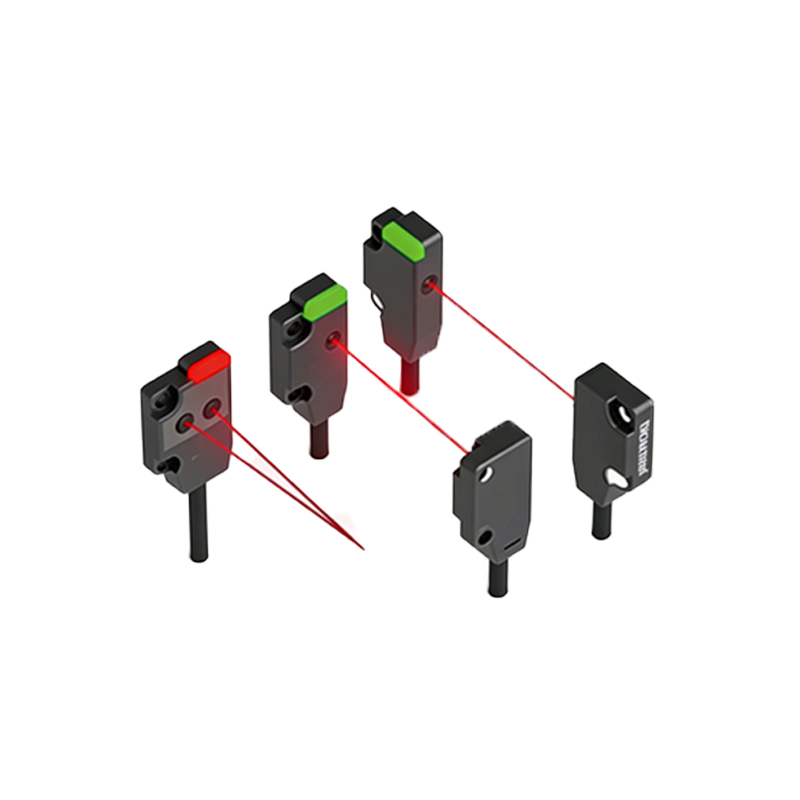
Working Principle: From Detection to Calculation
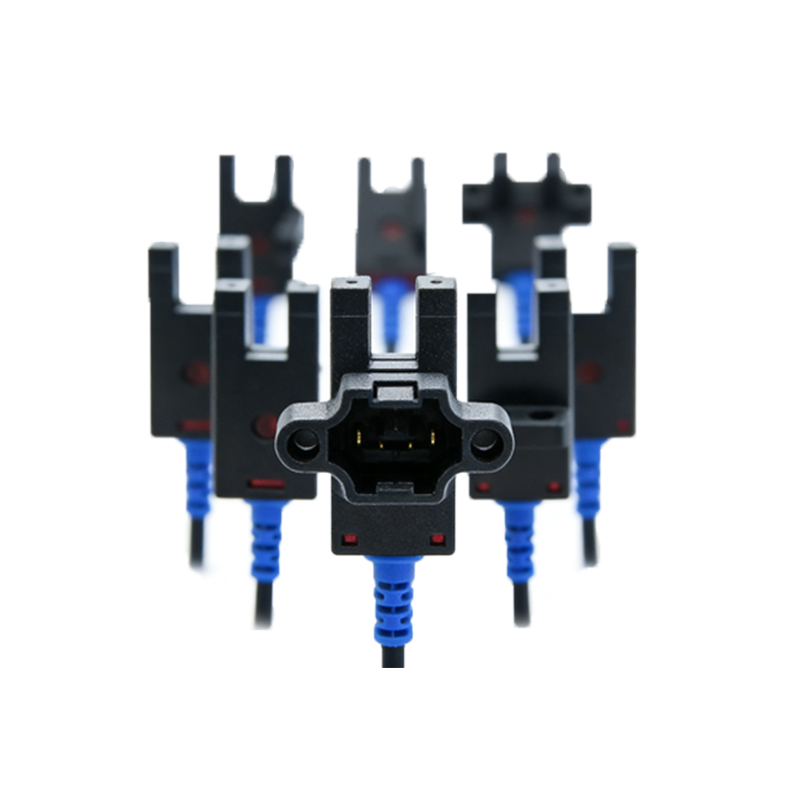
The core mechanism involves converting light interruption into electrical signals. A photoelectric sensor emits a beam, and when an object blocks it, the sensor triggers a pulse. By using multiple sensors in a synchronized array, each pulse can represent a unit value (e.g., 1). Through logic controllers or programmable logic controllers (PLCs), these pulses can be summed or subtracted, effectively turning the sensor network into a rudimentary calculator. For example, three sensors can count items on a conveyor belt and output a total count, which is a form of addition.
Practical Application: Counting as Basic Arithmetic
In a manufacturing line, consider a scenario where parts pass through two separate lanes. One lane has a sensor set to count incoming parts (addition), while another sensor on a rejection line counts defective parts (subtraction). The net count is calculated by the PLC: (incoming parts) minus (rejected parts). This is a real-time calculation using photoelectric sensors as input devices. The sensor itself does not compute, but the system it feeds acts as a calculator, with the sensor providing the raw data.
Advanced Calculation: Sequential Logic and Thresholds
For more complex operations, such as multiplication or division, you can use multiple sensor pairs with timing logic. For instance, if a sensor detects a batch of 10 items every second, and you need to calculate the total over a minute, the PLC multiplies the count by 60. Similarly, by setting threshold levels on sensor outputs (e.g., detecting when a stack reaches a certain height), you can perform division: total items divided by stack capacity equals number of stacks. This requires careful calibration of sensor sensitivity and timing.
Benefits Over Traditional Calculators
Using photoelectric sensors as part of a calculation system offers robustness in harsh industrial environments where standard electronic calculators might fail due to dust, vibration, or moisture. They provide non-contact operation, high speed, and low maintenance. Additionally, they integrate seamlessly with existing automation systems, reducing the need for separate computing hardware. However, they are not suitable for complex mathematical functions like trigonometry or logarithms.
Limitations and Considerations
While innovative, this approach has limitations. Photoelectric sensors cannot perform abstract calculations without external logic. Their accuracy depends on sensor alignment, ambient light interference, and object reflectivity. For high-precision calculations, dedicated computing devices are recommended. Also, the calculation speed is limited by sensor response time (typically in milliseconds), which may be insufficient for certain high-speed applications.
Conclusion: A Niche but Viable Tool
In summary, photoelectric sensors can indeed serve as functional calculators in specific industrial scenarios, particularly for counting and basic arithmetic. They offer a durable, cost-effective solution for real-time data collection and simple computation. For engineers looking to minimize electronic components in automated systems, this approach is worth considering. However, it is crucial to evaluate the task complexity and environmental factors before implementation.