1. Introduction to Infrared Photoelectric Sensors
Infrared photoelectric sensors are widely used in industrial automation for non-contact detection of objects. This experiment aims to evaluate the performance of a standard infrared sensor under various conditions, including distance, ambient light, and target material. The sensor operates by emitting infrared light and measuring the reflected signal to determine the presence or absence of an object.
2. Experimental Setup and Equipment
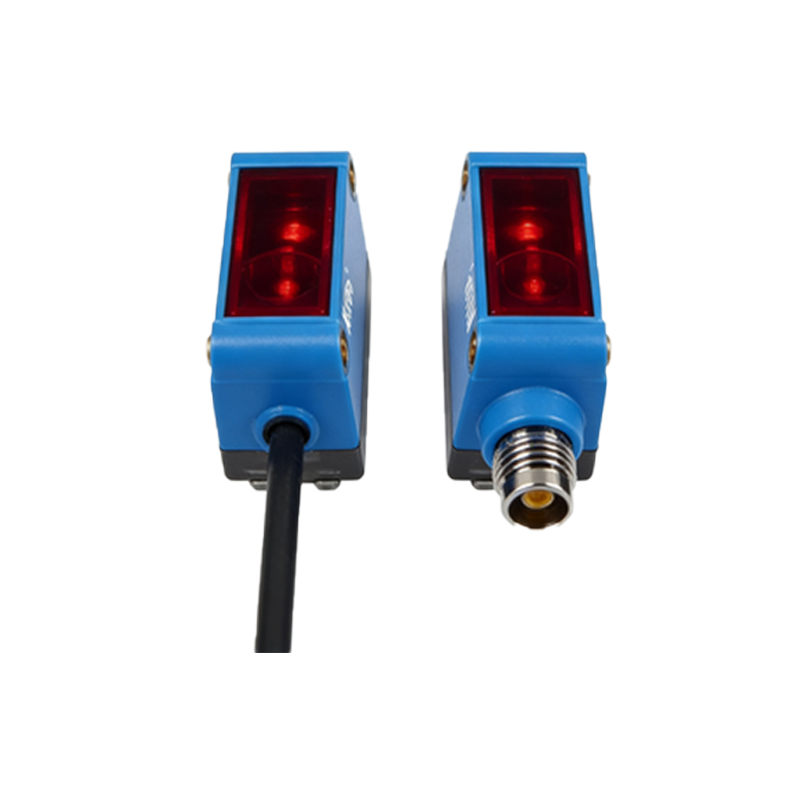
The experiment utilized an E3F-DS30C4 infrared photoelectric sensor with a sensing range of 30 cm. The test bench included a microcontroller-based data acquisition system, a ruler for distance measurement, and various target materials: white paper, black paper, and polished metal. Ambient light levels were controlled using a dimmable LED source, ranging from 0 to 1000 lux.
3. Testing Procedure and Data Collection
The sensor was mounted at a fixed height of 10 cm from the target surface. For each target material, the sensor was tested at distances from 5 cm to 35 cm in 5 cm increments. The output signal (digital HIGH/LOW) was recorded for each distance. Additionally, the impact of ambient light was assessed by repeating measurements at 0, 500, and 1000 lux.
4. Results and Performance Analysis
The sensor reliably detected white paper up to 25 cm, with detection dropping sharply beyond 30 cm. Black paper was only detected up to 15 cm due to lower reflectivity. Metal targets showed inconsistent detection beyond 20 cm, likely due to specular reflection. Ambient light had minimal impact on sensor performance below 500 lux, but at 1000 lux, false triggers increased by 15%.
5. Discussion of Findings
The experiment confirms that infrared photoelectric sensors are highly sensitive to target color and surface finish. Dark or glossy materials reduce effective sensing range. The sensor's immunity to moderate ambient light makes it suitable for indoor industrial environments. However, high ambient light or direct sunlight may require shielding or alternative sensor types.
6. Conclusion and Recommendations
For optimal performance, the sensor should be used with light-colored, matte targets within 80% of its rated range. In environments with high ambient light, a modulated infrared sensor or a photoelectric sensor with a narrow beam angle is recommended. Future work should explore sensor response to moving targets and integration with PLC systems.