In the realm of modern automation and precision measurement, laser sensors have become indispensable tools. But what exactly are laser sensors classified as? Fundamentally, a laser sensor is a type of photoelectric sensor. It belongs to the broader category of non-contact measurement and detection devices. These sensors utilize the unique properties of laser light—coherence, monochromaticity, and directionality—to perform tasks with exceptional accuracy and reliability that are often unattainable with other sensing technologies.
The core principle behind most laser sensors involves emitting a focused beam of light towards a target. The sensor then analyzes the interaction of this beam with the target. This interaction can be measured in several ways, leading to different primary types of laser sensors. The most common categories include triangulation sensors, time-of-flight (ToF) sensors, and laser contrast sensors.
Triangulation laser sensors are renowned for their high precision in distance and displacement measurement. In this method, a laser diode projects a spot onto the target surface. The reflected light is focused onto a position-sensitive detector, such as a CCD or PSD array. As the target's distance changes, the position of the reflected spot on the detector shifts. Using trigonometric calculations, the sensor's processor determines the exact distance. These sensors excel in applications requiring micron-level resolution, such as checking part thickness, monitoring vibration, or profiling surface contours.
Time-of-Flight (ToF) laser sensors, on the other hand, measure distance by calculating the time it takes for a laser pulse to travel to the target and back. The formula is straightforward: distance = (speed of light × time) / 2. While traditionally offering slightly lower resolution than triangulation sensors over short distances, modern ToF sensors provide excellent performance for longer ranges, from a few meters to several hundred meters. They are the technology of choice for applications like vehicle LiDAR, bulk level monitoring in silos, and robotic navigation.

Laser contrast sensors are designed for reliable detection and differentiation based on surface characteristics. They evaluate the intensity of the reflected laser light. A dark surface absorbs more light and reflects less, while a bright, shiny surface reflects a strong signal. By setting a threshold, these sensors can distinguish between different materials, colors, or marks, making them perfect for label detection, print registration, or sorting tasks on high-speed production lines.
The advantages of using laser sensors are manifold. Their non-contact nature means there is no wear and tear from physical touch, and they can measure delicate, hot, or moving objects without interference. The focused laser beam allows for precise detection of very small objects or edges. Furthermore, they are largely immune to ambient light interference when properly configured, ensuring stable operation in various industrial environments.
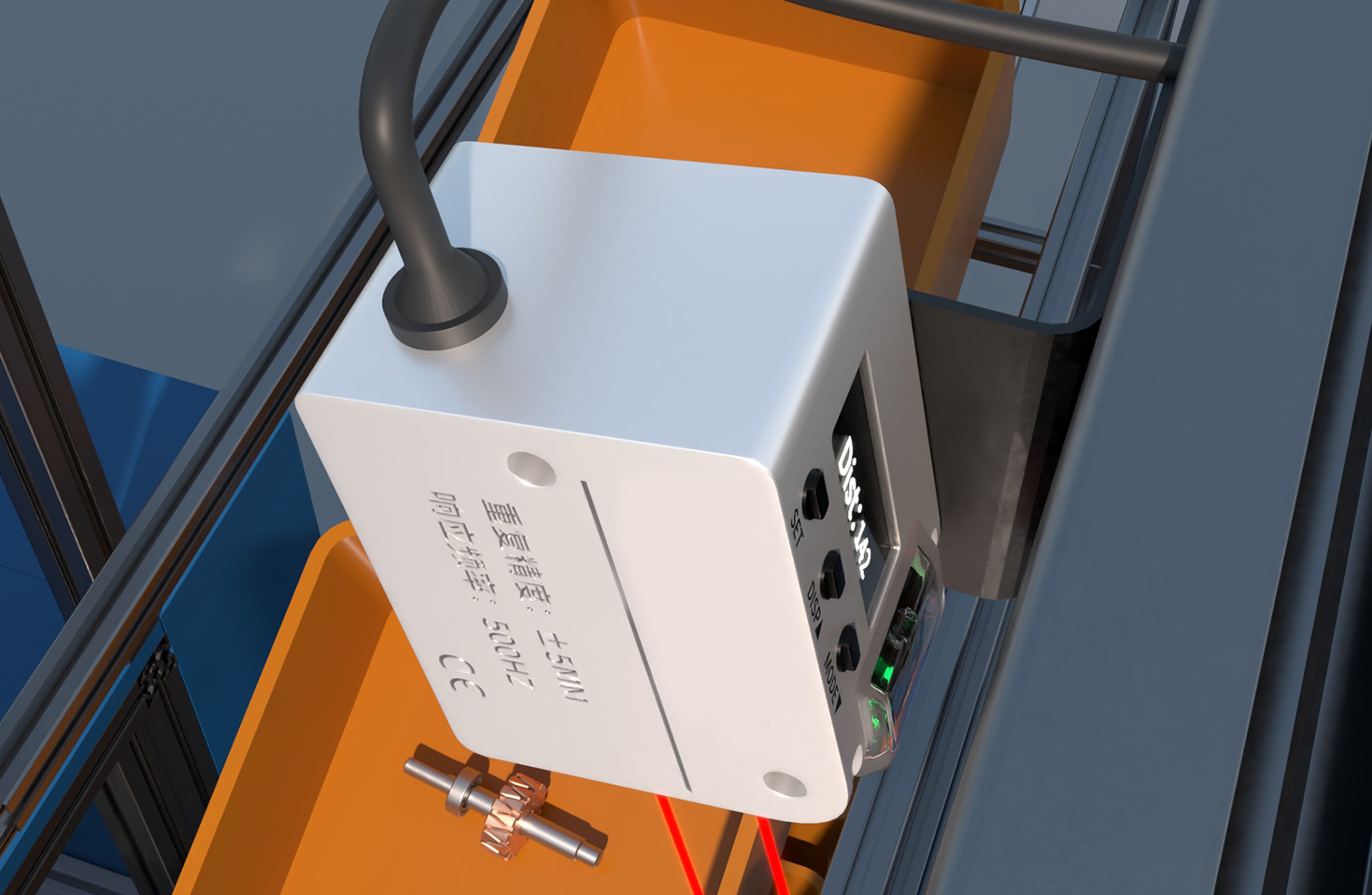
The applications of laser sensors span virtually every industry. In manufacturing, they are used for precise positioning, dimensional gauging, and defect detection. In automotive assembly, they ensure components are fitted correctly. In electronics, they measure solder paste height and component placement. Beyond the factory floor, laser sensors are critical in aerospace for alignment, in logistics for warehouse automation and dimensioning packages, and in agriculture for guidance and yield monitoring. Even consumer electronics, like smartphones featuring facial recognition or autofocus cameras, incorporate miniature laser sensors.
When selecting a laser sensor, key parameters must be considered. These include measuring range, resolution, spot size, response time, and the material or color of the target. Environmental factors like dust, steam, or extreme temperatures also dictate the need for sensors with appropriate ingress protection (IP) ratings.
In conclusion, laser sensors belong to the advanced frontier of photoelectric and optoelectronic sensing. They are not a single device but a family of technologies built upon the principles of laser light interaction. From ensuring the quality of microscopic semiconductor chips to guiding autonomous vehicles across vast distances, laser sensors provide the critical eyes for machines, enabling higher levels of automation, quality control, and innovation across the globe. Their integration into systems continues to evolve, driven by demands for greater speed, precision, and intelligence in an increasingly automated world.