In the realm of industrial automation, robotics, and precision measurement, laser sensors have become indispensable tools. Their ability to provide accurate, non-contact detection and measurement is foundational to modern systems. A critical, yet sometimes overlooked, aspect of ensuring these sensors perform reliably is the proper management of their power supply, commonly referred to by the term VCC. This article delves into the significance of VCC for laser sensors, explaining its role, requirements, and the consequences of improper power management.
VCC, in electronic circuits, traditionally denotes the positive supply voltage for an integrated circuit. For laser sensors, VCC is the primary power input pin that provides the necessary electrical energy for the entire device to function. This includes powering the laser diode itself, the internal photodetector or receiver, the signal processing circuitry, and the output interface (whether digital, analog, or serial). The specified VCC voltage is a fundamental parameter found in every sensor's datasheet, typically expressed as a range, such as 12-24 VDC or 5 VDC ±10%.
The stability and quality of the VCC supply are paramount. A laser sensor is a sensitive electro-optical device. Fluctuations, noise, or voltage spikes on the VCC line can have direct and adverse effects. An unstable VCC can lead to inconsistent laser diode output, causing variations in the emitted light's intensity. This, in turn, affects the sensor's sensitivity and accuracy, as the received signal strength may fluctuate even if the target distance or reflectivity remains constant. In severe cases, undervoltage can cause the sensor to reset or fail to operate, while overvoltage can cause permanent damage to its internal components.
Furthermore, electrical noise on the power line can be introduced by other equipment on the same circuit, such as motors, solenoids, or relays. This noise can couple into the sensor's sensitive analog measurement circuits, manifesting as signal jitter or erroneous readings. Therefore, adhering to the manufacturer's specified VCC range is not merely a suggestion but a critical requirement for guaranteed performance and longevity.

Best practices for VCC connection and management start with careful system design. Always use a power supply that matches the sensor's voltage and current requirements, with sufficient headroom. For instance, if a sensor draws 100mA, a power supply rated for 1A or more is advisable to ensure stability, especially when multiple devices are connected. Employing a dedicated, regulated power supply for sensitive measurement equipment like laser sensors is highly recommended to isolate them from noisy power domains.
Wiring is equally crucial. Use wires with an appropriate gauge to minimize voltage drop over distance, especially in 24V systems with long cable runs. Twisted-pair cables for power can help reduce electromagnetic interference. Implementing proper filtering at the power entry point of the sensor or the control cabinet, using capacitors or ferrite beads, can suppress high-frequency noise. In environments with significant electrical noise, an isolated DC-DC converter can provide a clean, separate VCC rail for the sensor.
The connection between the sensor's VCC pin and the system ground (GND) must be secure and low-impedance. A poor ground connection is a frequent source of erratic behavior. It is also essential to follow the sensor's wiring diagram precisely, as the pin labeled VCC may be adjacent to pins for output signals or communication lines. Accidental miswiring, such as applying VCC to a signal output pin, can instantly destroy the device.
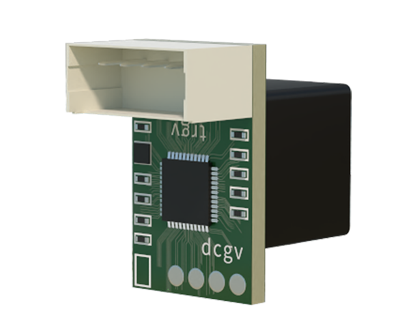
In summary, VCC is far more than just a "power wire" for a laser sensor. It is the lifeblood that determines the stability, accuracy, and reliability of the entire sensing system. Treating the power supply as a critical design element—by selecting a quality supply, implementing noise suppression techniques, and adhering to proper wiring practices—will prevent a host of potential issues and ensure that the laser sensor delivers the precise, consistent performance that modern applications demand. Neglecting these fundamentals often leads to costly downtime, troubleshooting, and premature sensor failure, undermining the very benefits these advanced devices are meant to provide.
