Introduction to Through-Beam Photoelectric Sensors
Through-beam photoelectric sensors, also known as through-beam or opposed-mode sensors, consist of a separate emitter and receiver unit. These components are placed opposite each other, with a beam of light—typically infrared or visible red—transmitted from the emitter to the receiver. When an object interrupts this light beam, the sensor detects the presence of the object. This design offers high reliability in detecting opaque objects, making it a staple in industrial automation applications such as conveyor systems, packaging lines, and safety barriers.
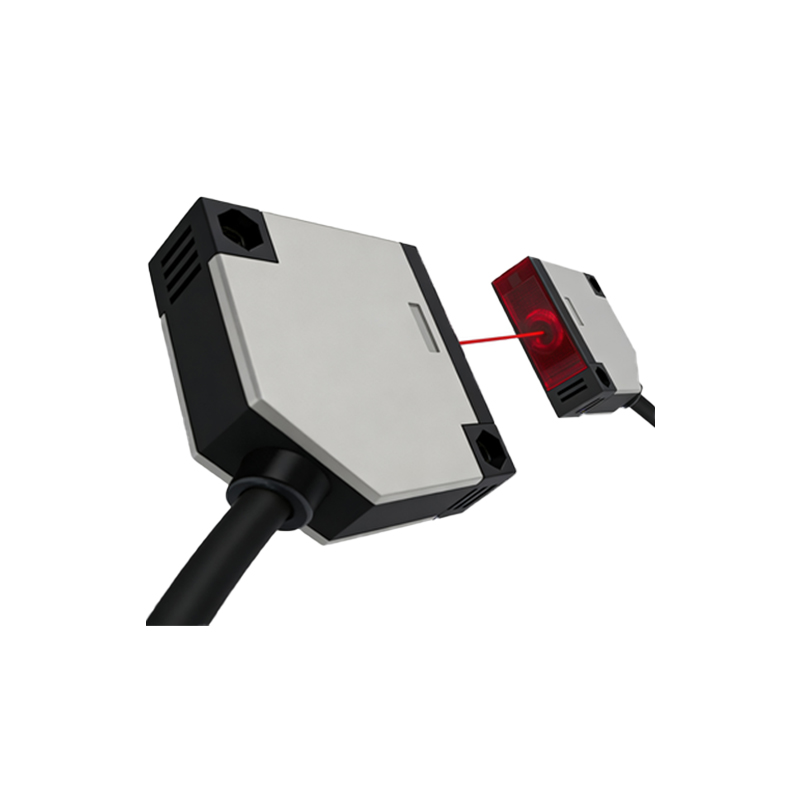
Key Operating Principles
The fundamental principle involves a continuous light beam between the emitter and receiver. In a clean, unobstructed environment, the receiver constantly senses the light. Once an object enters the detection zone and blocks the beam, the receiver output changes state, signaling the object's presence. Importantly, through-beam sensors provide the longest sensing range among photoelectric types, often exceeding 30 meters. They are immune to background interference because the receiver only responds to the direct light from its paired emitter, not reflected light from surfaces.
Advantages in Industrial Settings
Through-beam sensors excel in harsh industrial environments. Their separate housing design allows for greater tolerance to dust, dirt, and condensation compared to diffuse or retro-reflective sensors. Since the receiver only sees the emitter, contamination on the lens has minimal impact until it completely blocks the light path. This ensures stable performance in sawmills, automotive assembly plants, and food processing facilities. Additionally, they offer precise object detection with high repeatability, crucial for counting or positioning tasks.
Applications and Use Cases
Typical applications include long-range presence detection in automated storage and retrieval systems, door and gate control, and vehicle detection in parking lots. In packaging, they monitor product flow on conveyor belts, detecting jams or missing items. For safety, they create invisible light curtains around machinery, activating alarms or stopping equipment when the beam is broken. Their ability to detect small diameters (down to 1 mm) also makes them suitable for small part detection in electronics manufacturing.
Selection Criteria for Engineers
When specifying a through-beam sensor, consider the required sensing range, environmental conditions (temperature, humidity, vibration), and the target object's material and size. For long distances, choose models with high-power emitters. In dirty environments, opt for sensors with IP67 or higher ingress protection. Also, evaluate output types (NPN, PNP, or relay) to match your controller input. Specialized variants with fiber optic heads can extend capability into confined spaces or extreme temperatures.
Installation and Alignment Tips
Proper alignment is critical for optimal performance. Use a laser alignment tool for long-range installations. Ensure the emitter and receiver face each other precisely, with no angular deviation. When mounting on moving equipment, use flexible brackets to absorb vibration. For outdoor use, consider sun shields to prevent false triggering from direct sunlight. Regularly clean the lens surfaces with a soft cloth to maintain signal integrity.
Conclusion and Future Trends
Through-beam photoelectric sensors remain a robust choice for demanding industrial applications. Emerging trends include integration with IoT protocols for predictive maintenance, digital diagnostics for real-time monitoring of signal strength, and miniaturization for compact robotic systems. Engineers should stay informed about advances in optical technology to leverage these sensors for enhanced automation efficiency and safety.