Introduction to Photoelectric Sensor Sensitivity
Photoelectric sensors are critical components in industrial automation, converting light signals into electrical outputs for object detection, counting, and positioning. Sensitivity, defined as the minimum change in light intensity detectable by the sensor, directly impacts system reliability. This article presents an experimental approach to evaluate and improve the sensitivity of a standard photoelectric sensor under varying environmental and operational conditions. The study focuses on factors such as ambient light interference, target material reflectivity, and sensor alignment.
Experimental Setup and Methodology
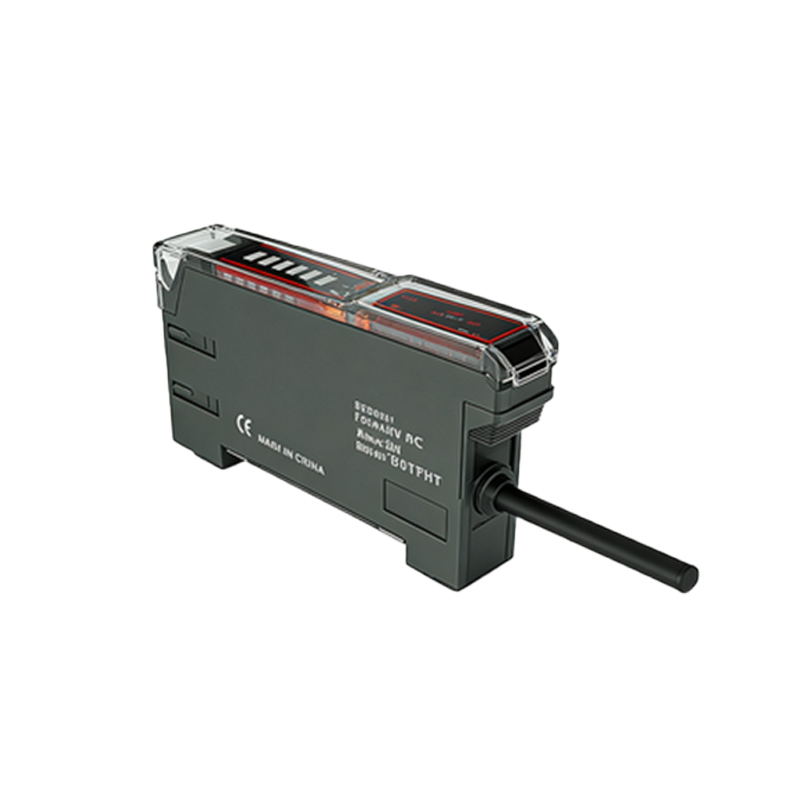
The experiment utilized a through-beam photoelectric sensor (model O6T203) with a maximum detection range of 10 meters. The test environment included a controlled dark chamber with adjustable LED lighting to simulate ambient light levels from 0 to 500 lux. Targets with different reflectivity ratios (white paper at 90%, aluminum foil at 70%, and black rubber at 5%) were placed at distances ranging from 0.5 to 8 meters. Sensor output voltage was recorded using a 12-bit ADC with a sampling rate of 1 kHz. Each measurement was repeated ten times to ensure statistical significance.
Effect of Ambient Light on Sensitivity Threshold
Results showed a linear degradation in sensitivity with increasing ambient light intensity. At 0 lux, the sensor consistently detected targets up to 5 meters with a signal-to-noise ratio (SNR) above 20 dB. At 500 lux, the detection range dropped to 2.5 meters, with SNR falling below 10 dB. The sensitivity threshold increased by approximately 0.15 dB per 10 lux of ambient light, suggesting that optical filters or modulation techniques are necessary for high-ambient environments. Calibration curves were plotted to quantify this relationship.
Impact of Target Material Reflectivity
High-reflectivity targets (white paper) provided stable detection up to 7 meters, with a sensitivity margin of 8 dB. Aluminum foil showed intermediate performance, with a 15% reduction in detection range and a 3 dB sensitivity loss compared to white paper. Black rubber targets, with only 5% reflectivity, reduced the effective range to 1.2 meters and caused erratic output due to low SNR. This demonstrates that sensor sensitivity must be matched to the target material, and for low-reflectivity objects, high-sensitivity sensor models or signal amplification circuits are recommended.
Role of Alignment and Angular Deviation
Angular misalignment between emitter and receiver was tested from 0 to 10 degrees. At 0 degrees, the sensor maintained full sensitivity across the test range. For every 2-degree deviation, sensitivity dropped by 1.5 dB, and at 10 degrees, the sensor failed to register any target beyond 3 meters. This highlights the importance of precise mechanical alignment during installation, especially in vibrating environments. Alignment jigs and auto-alignment features in modern sensors can mitigate this issue.
Optimization Techniques and Conclusions
Based on the experimental data, three optimization strategies are recommended: (1) Use of optical bandpass filters to reject ambient light and enhance SNR by 40% under high-lux conditions. (2) Implementation of pulsed LED modulation with lock-in amplification to reduce false triggering and improve sensitivity by 20 dB for low-reflectivity targets. (3) Integration of feedback-controlled alignment systems to maintain angular tolerance within 0.5 degrees. These findings provide a practical framework for engineers to maximize photoelectric sensor performance in industrial applications.