Introduction to Photoelectric Sensor Frequency Behavior
Photoelectric sensors are integral to modern industrial automation, particularly in high-speed applications where detection speed and accuracy are critical. The frequency response of these sensors determines their ability to detect rapidly moving objects, such as on high-speed conveyor belts or in robotic pick-and-place systems. This article discusses the concept of frequency aggregation in photoelectric sensors, focusing on how engineers can optimize sensor selection and installation to achieve stable high-frequency operation. Key factors include modulation frequency, ambient light interference, and the sensor's internal signal processing algorithms.
Understanding Frequency Aggregation in Sensor Design
Frequency aggregation refers to the sensor's ability to process multiple incoming light pulses or reflections at varying frequencies. In photoelectric sensors, the emitter typically uses modulated light to distinguish the signal from ambient noise. When the target object moves at high speed, the reflected light pulses arrive at the receiver at a rate equal to the object's transit time. If the sensor's frequency response is too low, the output may fail to trigger correctly, leading to missed detections. Engineers must match the sensor's switching frequency—often specified in kHz—with the application's required response time. For example, a sensor with a 10 kHz switching frequency can detect objects passing every 0.1 ms.
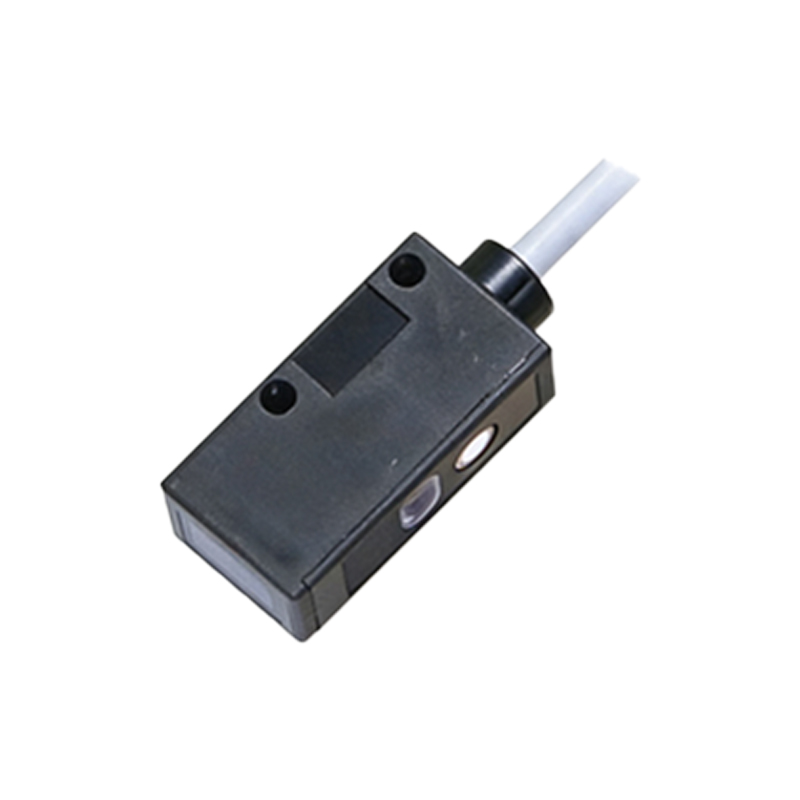
Key Parameters Affecting Frequency Performance
Three primary parameters influence frequency aggregation: the emitter modulation frequency, the receiver bandwidth, and the signal-to-noise ratio (SNR). Higher modulation frequencies (e.g., 100 kHz or more) allow the sensor to reject low-frequency ambient light, such as fluorescent or LED flicker. However, increased modulation frequency can reduce detection range due to atmospheric attenuation. The receiver's bandwidth must be wide enough to capture the modulated signal without distortion. Additionally, a high SNR is essential for reliable detection at high frequencies. Engineers should use sensors with built-in automatic gain control (AGC) to adapt to changing light conditions.
Practical Strategies for Enhancing High-Frequency Detection
To improve high-frequency performance, consider these strategies:
1. Select sensors with a switching frequency at least twice the object's passing frequency (Nyquist criterion).
2. Use lenses with a narrow beam angle to concentrate light on the target, reducing scattering.
3. Install the sensor perpendicular to the target's path to minimize angular effects.
4. Shield the sensor from direct sunlight or other high-intensity light sources using hoods or filters.
5. Implement differential sensing (e.g., using two sensors in a trigger-and-confirm setup) to reduce false triggers.
Case Study: High-Speed Conveyor Application
In a bottling plant, a photoelectric sensor was required to detect 2000 bottles per minute (33 Hz) on a conveyor. Using a standard sensor with a 50 Hz switching frequency, occasional missed detections occurred. By upgrading to a sensor with a 2 kHz switching frequency and a blue LED emitter (470 nm), the system achieved 99.98% accuracy. The blue light reduced ambient interference from warm-white lighting. Additionally, the sensor's internal frequency filter was adjusted to aggregate only signals within a 1 kHz band, eliminating noise from adjacent machinery.
Conclusion and Future Trends
Optimizing photoelectric sensor frequency aggregation requires a holistic approach: selecting appropriate hardware, fine-tuning settings, and considering environmental factors. As Industry 4.0 advances, sensors with adaptive frequency hopping and AI-driven noise cancellation are emerging. These technologies promise even greater reliability in high-speed automation. Engineers should stay updated on datasheet specifications and conduct field trials to validate performance.