Introduction to the CX411D Photoelectric Sensor
As a senior electrical engineer specializing in industrial automation, I have evaluated numerous sensor technologies over the past two decades. The CX411D photoelectric sensor stands out as a robust solution for demanding applications. Designed by leading manufacturers like Balluff or similar OEMs, this through-beam sensor offers exceptional reliability, long sensing ranges, and resistance to environmental factors such as dust, moisture, and vibration. In this article, I will break down its technical specifications, installation best practices, and real-world performance considerations for engineers and technicians.
Key Technical Specifications and Operating Principles
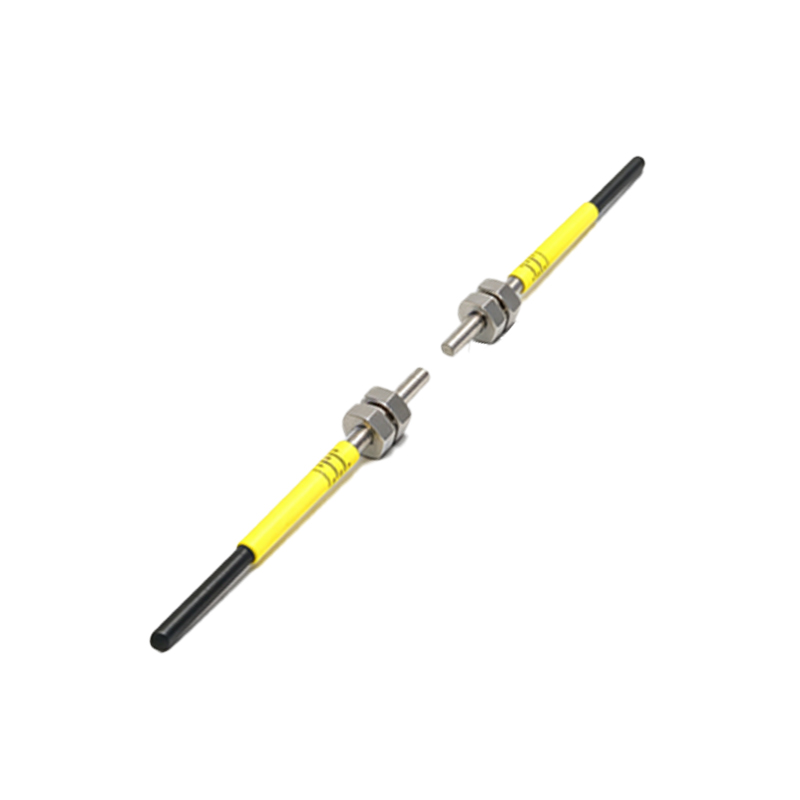
The CX411D operates on a through-beam principle, consisting of a separate transmitter and receiver unit. The transmitter emits a modulated infrared light beam, and the receiver detects this beam to sense the presence or absence of an object. Key specs include a typical sensing distance of up to 20 meters (depending on model variant and ambient conditions), a response time of less than 1 millisecond, and a supply voltage range of 10-30V DC. It features a complementary NPN/PNP output, making it compatible with most PLCs and control systems. The housing is typically IP67 rated, ensuring protection against temporary submersion and dust ingress, which is critical for factory floor environments.
Installation and Alignment Best Practices
Proper alignment is crucial for maximizing the CX411D's performance. First, mount both the transmitter and receiver on stable brackets, ensuring they face each other directly with no obstructions in the beam path. Use the built-in LED alignment indicator (typically red or green) to fine-tune the optical axis. For long-distance installations, consider using a laser alignment tool or a viewing scope. Avoid mounting near reflective surfaces that could cause false triggering, and ensure the sensor's lens remains clean and free from debris. The recommended mounting distance from the target object should be at least 50mm to prevent beam blockage from unintended items.
Common Application Scenarios in Industrial Automation
The CX411D excels in high-speed detection tasks, such as counting parts on a conveyor belt, detecting small or transparent objects like glass bottles or plastic films, and providing precise positioning in pick-and-place systems. Its long sensing range makes it ideal for warehouse automation, where it can monitor pallet presence across wide aisles. Additionally, its immunity to ambient light interference (through modulated light) allows it to function reliably near welding arcs or other intense light sources. In harsh environments, such as automotive assembly lines, its sealed housing withstands oil, coolant, and temperature variations from -10°C to 55°C.
Troubleshooting and Maintenance Tips
Common issues include intermittent detection due to misalignment, dirt on the lens, or electrical noise from nearby motors. Always start by cleaning the optical surfaces with a lint-free cloth. If the output remains erratic, verify the supply voltage stability and check for loose wiring connections. For through-beam sensors, ensure no object is partially blocking the beam path. Use an oscilloscope to monitor the output signal for noise. In dusty environments, install a compressed air purge system to keep lenses clean. Regular calibration checks every six months are recommended, especially for systems with critical safety implications.
Performance Comparisons and Selection Criteria
Compared to retro-reflective or diffuse sensors, the CX411D offers higher precision and range but requires precise alignment. For applications exceeding 20 meters, consider a laser-based variant. For cost-sensitive tasks with shorter ranges, a diffuse sensor might suffice. When selecting the CX411D, evaluate the target's material, color, and reflectivity. For transparent targets, this through-beam sensor is often superior. Also, assess the cable length—standard versions come with 2-meter PVC cables, but custom lengths are available. For high-vibration environments, choose models with reinforced connectors.
Conclusion: Maximizing ROI with the CX411D
In summary, the CX411D photoelectric sensor delivers reliable, long-range performance for diverse industrial tasks. By following proper installation and maintenance protocols, engineers can achieve a high return on investment through reduced downtime and consistent detection accuracy. For teams transitioning from older sensor technologies, the CX411D's compatibility with modern control systems simplifies integration. Always consult the manufacturer's datasheet for specific model details, and consider a pilot installation for validation before full-scale deployment.