Introduction to Sensor Types in Automation
In the field of industrial automation, sensors are broadly categorized into two main types: contact and non-contact. Contact sensors, such as limit switches and pressure pads, require physical touch to detect an object. Non-contact sensors, on the other hand, use various forms of energy—like light, sound, or magnetic fields—to sense presence without mechanical interaction. This distinction is crucial for engineers selecting the right component for applications involving fragile targets, high-speed processes, or harsh environments.
What Is a Photoelectric Sensor?
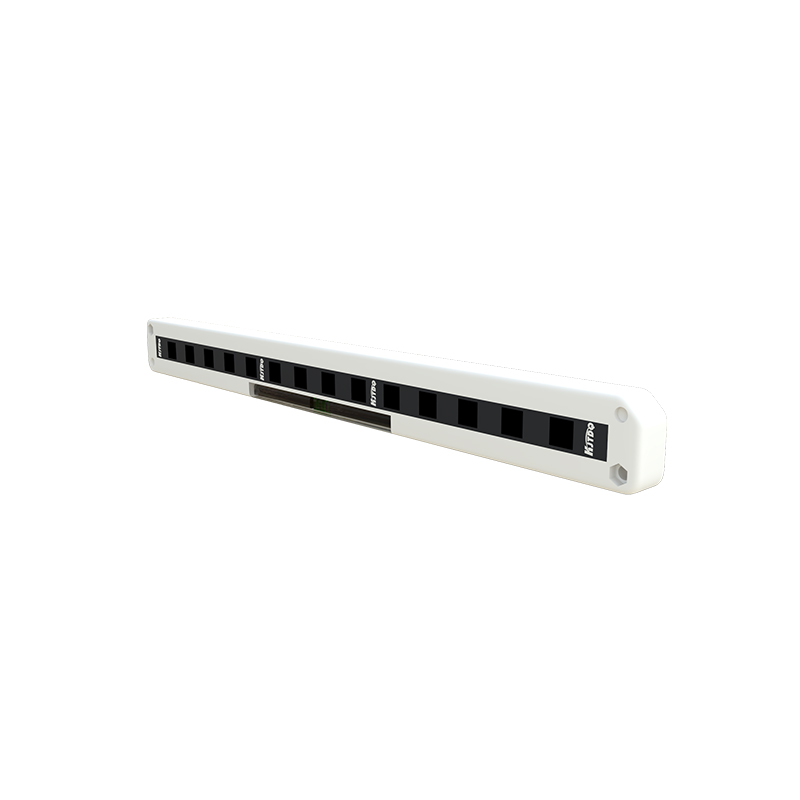
A photoelectric sensor is an electronic device that uses a beam of light (typically visible, infrared, or laser) to detect the presence, absence, or distance of an object. It consists of an emitter (light source) and a receiver (photodetector). The basic operating principle involves a change in the light intensity reaching the receiver when an object interrupts or reflects the beam. Common configurations include through-beam, retro-reflective, and diffuse reflective modes.
Photoelectric Sensors Are Non-Contact Devices
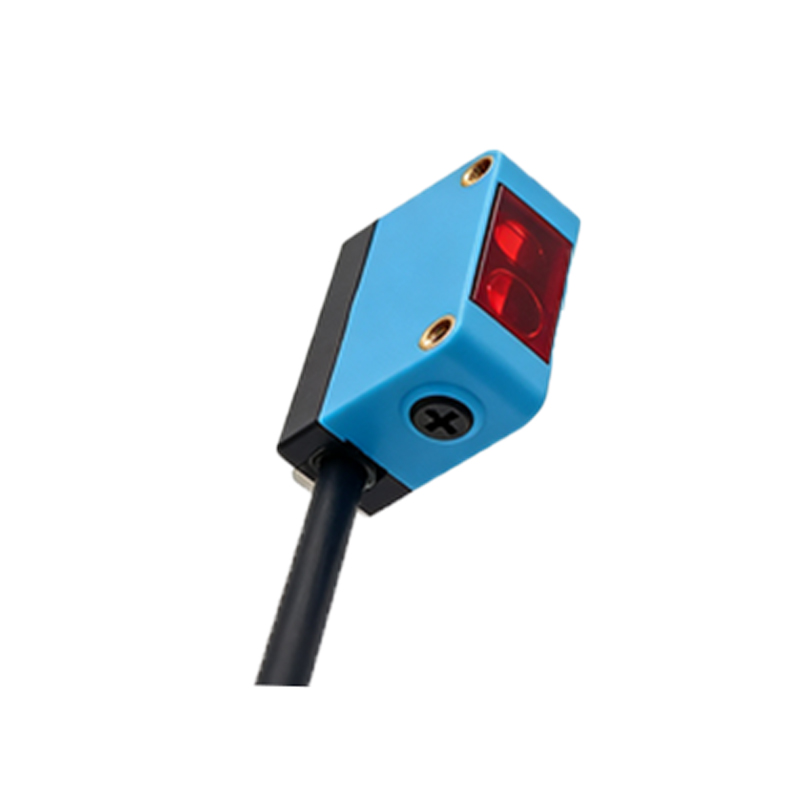
The definitive answer to the question "Is a photoelectric sensor contact-type?" is no. Photoelectric sensors are inherently non-contact. They do not require any physical contact between the sensor and the target object to trigger a detection event. The detection is achieved solely through optical means. For example, in a through-beam sensor, the object breaks the light path between the emitter and receiver without touching either component. This non-contact nature is a key advantage in applications where wear, contamination, or damage must be minimized.
Comparison with Contact Sensors
Contact sensors, such as mechanical limit switches, rely on physical actuation—a plunger or lever must be pressed by the target. This mechanical interaction leads to wear over time, reduced lifespan, and limitations in high-speed or clean environments. In contrast, photoelectric sensors offer longer service life, faster response times (down to microseconds), and the ability to detect transparent, delicate, or hot objects. For instance, in a bottling plant, a photoelectric sensor can detect glass bottles without touching them, preventing scratches and breakage.
Advantages of Non-Contact Detection in Industry
The non-contact principle of photoelectric sensors provides multiple benefits in industrial settings. First, it eliminates mechanical wear, reducing maintenance costs and downtime. Second, it enables detection of objects at high speeds, such as on a conveyor running at thousands of products per minute. Third, it allows sensing in harsh conditions—dust, moisture, or vibration—where contact sensors might fail. Engineers often choose photoelectric sensors for applications like packaging, material handling, and automotive assembly lines.
Common Misconceptions and Clarifications
Some professionals may confuse photoelectric sensors with capacitive or inductive sensors, which are also non-contact but use different physical principles. Unlike inductive sensors that detect metals, or capacitive sensors that sense dielectric materials, photoelectric sensors rely solely on light. Another misconception is that ambient light interference can cause false readings, but modern sensors incorporate modulated light (pulsed at a specific frequency) to filter out background illumination. Proper alignment and selection of the correct mode (e.g., background suppression) further ensure reliable operation.
Practical Considerations for Engineers
When implementing photoelectric sensors, engineers must consider factors like sensing range, target material, and environmental conditions. For example, a retro-reflective sensor is ideal for long-range detection of opaque objects, while a diffuse sensor is suitable for short-range detection of reflective surfaces. In dirty environments, a through-beam sensor provides the most reliable performance because the emitter and receiver are separate, minimizing contamination effects. Always verify the sensor's IP rating (e.g., IP67) for washdown areas.
Conclusion: The Non-Contact Nature of Photoelectric Sensors
To summarize, photoelectric sensors are definitively non-contact devices. They use light to detect objects without physical interaction, offering superior durability and versatility compared to contact-based alternatives. For engineers designing automation systems, understanding this principle is essential for optimizing performance, reducing maintenance, and achieving high efficiency. Whether for simple presence detection or complex positioning tasks, photoelectric sensors remain a foundational component in modern industrial control.