Ultra-thin photoelectric sensors represent a critical advancement in industrial automation. These compact devices, often measuring less than 10 mm in thickness, provide reliable object detection in space-constrained environments. Unlike traditional sensors, their slim profile allows integration into tight machinery gaps, conveyor systems, and robotic arms without compromising performance. Engineers value them for their high precision, fast response times, and durability in harsh conditions, such as dust, moisture, or vibration.
Key Technical Features
The design of ultra-thin photoelectric sensors focuses on minimizing size while maximizing functionality. They typically utilize through-beam, retro-reflective, or diffuse sensing modes. The emitter and receiver are housed in a single, slim casing, reducing installation complexity. Advanced models feature background suppression and adjustable sensitivity, enabling accurate detection of transparent, shiny, or small objects. With IP67 or higher ratings, these sensors withstand industrial washdowns and temperature extremes from -25°C to 60°C.
Installation and Wiring Benefits
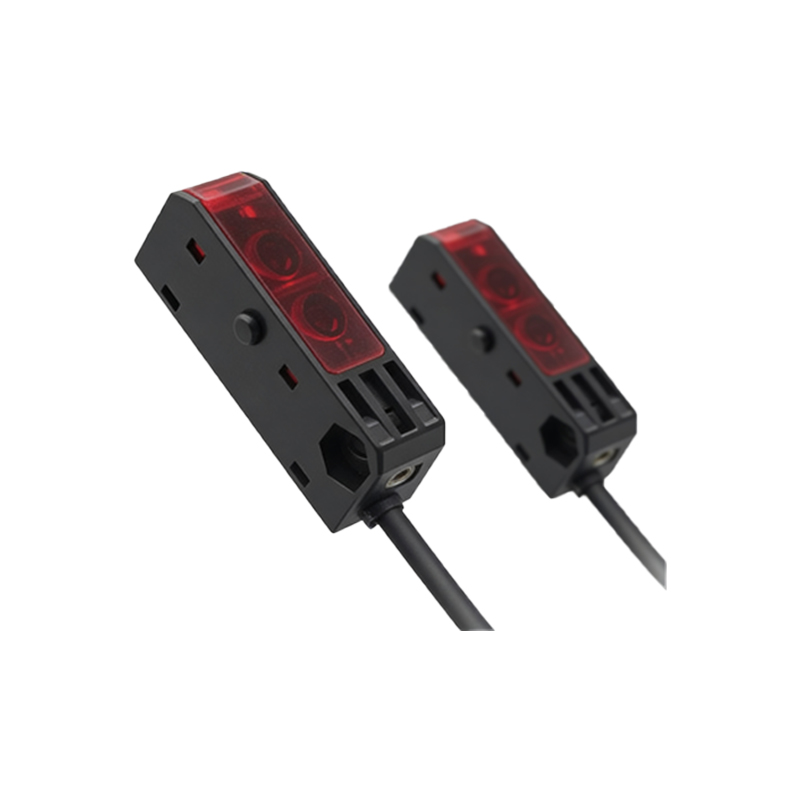
Space savings are the primary advantage. In automated assembly lines or packaging machines, every millimeter counts. Ultra-thin sensors can be mounted directly on moving parts or in narrow rails, eliminating the need for bulky brackets. Wiring is simplified with pre-cabled connectors or M8/M12 quick-disconnect options, reducing downtime during setup. Engineers appreciate the ability to daisy-chain multiple sensors in a network, streamlining maintenance.
Applications in Factory Automation
These sensors excel in applications such as detecting product presence on conveyor belts, counting items in high-speed sorting systems, and monitoring component placement in pick-and-place robots. In the automotive industry, they verify part alignment in engine assembly. In electronics manufacturing, they confirm circuit board positioning. Their slim profile also suits cleanroom environments, where minimal contamination risk is essential.
Performance and Reliability
Performance metrics include a sensing range up to 15 meters for through-beam models and 2 meters for diffuse types, depending on the target material. Response times as low as 0.5 milliseconds ensure accurate detection at high speeds. Reliability is enhanced by self-diagnostic LEDs and solid-state outputs, reducing false signals. Regular calibration is minimal, with many sensors featuring auto-adjustment for ambient light changes.
Selection Criteria for Engineers
When choosing an ultra-thin photoelectric sensor, consider the target object’s size, color, and transparency. For reflective surfaces, a polarized retro-reflective model prevents false triggers. Evaluate environmental factors like ambient light, temperature, and humidity. Output types include NPN, PNP, or IO-Link for data communication. Cost-effectiveness is balanced by long service life, with many sensors lasting over 100,000 hours in normal operation.
Future Trends and Innovations
The industry is moving toward smart sensors with integrated IoT capabilities, allowing real-time monitoring and predictive maintenance. Ultra-thin designs are evolving with flexible materials and wireless connectivity, enabling deployment in dynamic applications like collaborative robots. Engineers should anticipate increased adoption in food processing, logistics, and medical device manufacturing, where hygiene and space efficiency are paramount.
Introduction to Ultra-Thin Photoelectric Sensors
Ultra-thin photoelectric sensors represent a critical advancement in industrial automation. These compact devices, often measuring less than 10 mm in thickness, provide reliable object detection in space-constrained environments. Unlike traditional sensors, their slim profile allows integration into tight machinery gaps, conveyor systems, and robotic arms without compromising performance. Engineers value them for their high precision, fast response times, and durability in harsh conditions, such as dust, moisture, or vibration.
Key Technical Features
The design of ultra-thin photoelectric sensors focuses on minimizing size while maximizing functionality. They typically utilize through-beam, retro-reflective, or diffuse sensing modes. The emitter and receiver are housed in a single, slim casing, reducing installation complexity. Advanced models feature background suppression and adjustable sensitivity, enabling accurate detection of transparent, shiny, or small objects. With IP67 or higher ratings, these sensors withstand industrial washdowns and temperature extremes from -25°C to 60°C.
Installation and Wiring Benefits
Space savings are the primary advantage. In automated assembly lines or packaging machines, every millimeter counts. Ultra-thin sensors can be mounted directly on moving parts or in narrow rails, eliminating the need for bulky brackets. Wiring is simplified with pre-cabled connectors or M8/M12 quick-disconnect options, reducing downtime during setup. Engineers appreciate the ability to daisy-chain multiple sensors in a network, streamlining maintenance.
Applications in Factory Automation
These sensors excel in applications such as detecting product presence on conveyor belts, counting items in high-speed sorting systems, and monitoring component placement in pick-and-place robots. In the automotive industry, they verify part alignment in engine assembly. In electronics manufacturing, they confirm circuit board positioning. Their slim profile also suits cleanroom environments, where minimal contamination risk is essential.
Performance and Reliability
Performance metrics include a sensing range up to 15 meters for through-beam models and 2 meters for diffuse types, depending on the target material. Response times as low as 0.5 milliseconds ensure accurate detection at high speeds. Reliability is enhanced by self-diagnostic LEDs and solid-state outputs, reducing false signals. Regular calibration is minimal, with many sensors featuring auto-adjustment for ambient light changes.
Selection Criteria for Engineers
When choosing an ultra-thin photoelectric sensor, consider the target object’s size, color, and transparency. For reflective surfaces, a polarized retro-reflective model prevents false triggers. Evaluate environmental factors like ambient light, temperature, and humidity. Output types include NPN, PNP, or IO-Link for data communication. Cost-effectiveness is balanced by long service life, with many sensors lasting over 100,000 hours in normal operation.
Future Trends and Innovations
The industry is moving toward smart sensors with integrated IoT capabilities, allowing real-time monitoring and predictive maintenance. Ultra-thin designs are evolving with flexible materials and wireless connectivity, enabling deployment in dynamic applications like collaborative robots. Engineers should anticipate increased adoption in food processing, logistics, and medical device manufacturing, where hygiene and space efficiency are paramount.