In the realm of industrial laser marking, achieving precise and consistent marks is paramount. The focus sensor for laser marking machines plays a critical role in this process, acting as the eyes of the system to ensure the laser beam converges at the exact correct point on the workpiece surface. Unlike manual focusing, which is time-consuming and prone to human error, an automated focus sensor provides rapid, reliable, and repeatable height measurement, directly impacting mark quality, throughput, and overall system versatility.
The core function of a focus sensor is to measure the distance between the laser processing head and the target surface. This is typically achieved using non-contact measurement principles. Two prevalent technologies are confocal chromatic sensing and triangulation-based laser displacement sensing. Confocal sensors use a multi-wavelength light source; the different wavelengths focus at different distances, and the system analyzes the reflected spectrum to determine the precise working distance. This method offers high accuracy and is effective on a wide range of materials, including transparent or highly reflective surfaces. Triangulation sensors project a laser spot onto the target, and a receiver (like a CCD or CMOS sensor) detects the position of the reflected spot. The angle of reflection changes with distance, allowing the sensor to calculate the height. While often more cost-effective, their performance can be affected by surface color, texture, and reflectivity.

Integrating a focus sensor brings transformative benefits to laser marking operations. First and foremost, it guarantees consistent focal plane positioning. Variations in material thickness, warpage, or fixture inconsistencies are automatically compensated for. This is especially crucial for applications requiring deep engraving or fine details, where even a minor deviation from the focal point can result in blurred edges, insufficient depth, or variable line widths. Secondly, it dramatically enhances productivity. The sensor enables rapid autofocus routines, eliminating the need for manual height gauges or trial-and-error marking. For production lines with mixed parts or batches, the system can quickly recalibrate, minimizing downtime. Furthermore, it expands application possibilities. Marking on curved surfaces, uneven contours, or across multiple planes becomes feasible. The sensor can dynamically adjust the Z-axis in real-time during marking, following the surface topography to maintain optimal focus.
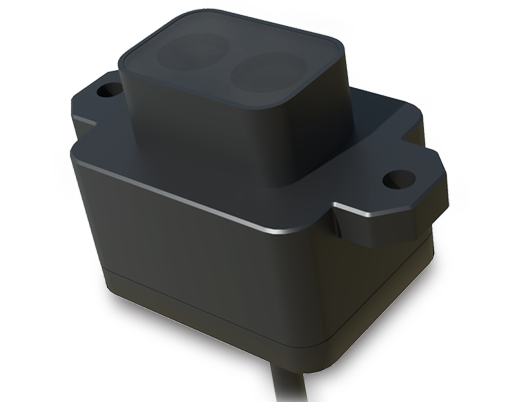
When selecting a focus sensor for a laser marking machine, several key specifications must be evaluated. Measurement range defines the distance over which the sensor can accurately operate. A larger range offers more flexibility but may come at the cost of resolution or speed. Resolution, or the smallest detectable distance change, determines how finely the system can track surface variations. Repeatability indicates the sensor's consistency in returning the same measurement for a static target. Speed, measured in sampling rate (Hz), is vital for high-speed marking or scanning on fast-moving production lines. The sensor must also be compatible with the machine's controller and software, allowing for seamless integration of height data into the marking path. Environmental factors like ambient light, dust, coolant mist, and vibrations in an industrial setting should also be considered, with many sensors featuring robust housings and filters to mitigate interference.

In practice, the workflow involves the sensor taking a series of height measurements across the workpiece, often before the marking cycle begins. This data is used to create a height map or to identify key reference points. The machine's software then adjusts the Z-axis position accordingly, either setting a uniform working height or programming a dynamic path that follows the contour. For 3D marking applications, this real-time feedback loop is continuous, ensuring the laser remains in perfect focus throughout the entire marking trajectory.
Maintenance of the focus sensor is generally minimal but essential. Keeping the sensor lens clean from dust and debris is critical to prevent measurement errors. Regular calibration checks against a known standard are recommended to ensure long-term accuracy. Users should also verify that the sensor's mounting is secure and free from vibrations that could affect its readings.
In conclusion, the focus sensor is an indispensable component for modern, high-performance laser marking systems. It transcends being a mere accessory and becomes a fundamental enabler of quality, efficiency, and capability. By automating the critical task of distance measurement and focal point control, it empowers manufacturers to achieve superior mark consistency, reduce scrap, handle complex part geometries, and fully automate their marking processes. Investing in a reliable, well-suited focus sensor technology is a strategic decision that pays dividends in operational excellence and expanded application potential.