Proximity sensors are fundamental components in modern automation, consumer electronics, and industrial systems. They detect the presence or absence of an object within a specific range without physical contact. While they share this core function, significant differences exist in their operating principles, capabilities, and ideal applications. Understanding these distinctions is crucial for selecting the right sensor for any project.
The most common types are inductive, capacitive, photoelectric, and ultrasonic sensors. Each interacts with the target object in a unique way.
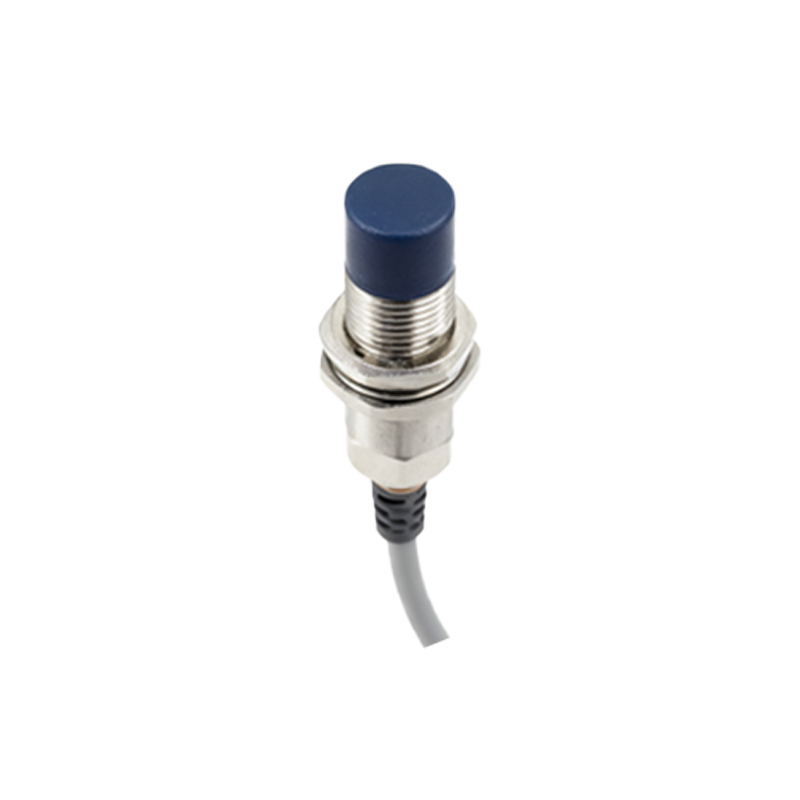
Inductive proximity sensors are workhorses in industrial settings. They generate an electromagnetic field. When a metallic object, typically ferrous metals like steel or iron, enters this field, it induces eddy currents within the metal. The sensor detects this change and triggers a switch. Their key strengths are robustness, high switching frequency, and immunity to environmental factors like dust, oil, or moisture. However, they only detect metals, and their sensing range is relatively short, often just a few millimeters to several centimeters. They are perfect for counting metal parts, determining valve positions, or as limit switches in machinery.

Capacitive proximity sensors operate on a different principle. They generate an electrostatic field. Any object that enters this field—whether metal, plastic, wood, liquid, or granules—alters the capacitance of the sensor's circuit, triggering detection. This makes them incredibly versatile for non-metallic targets. They can even detect materials through thin non-metallic barriers. Common applications include level detection for liquids or powders in tanks, material handling for plastics or wood, and touch-sensitive interfaces. Their sensing range is similar to inductive sensors but can be less precise as they are susceptible to humidity and temperature variations.
Photoelectric sensors use light, typically infrared or laser, to detect objects. They consist of an emitter and a receiver. There are three main configurations. Through-beam sensors have separate emitter and receiver units; an object is detected when it breaks the light beam. This type offers the longest sensing range and high reliability. Retro-reflective sensors house both emitter and receiver in one unit, using a reflector to bounce the light back; detection occurs when the beam is interrupted. Diffuse or proximity sensors also have a combined emitter and receiver, but they detect the light reflected directly from the target object itself. Photoelectric sensors work with almost any material and offer very long ranges (up to many meters for through-beam). They are ideal for packaging, conveyor systems, and object counting but can be affected by ambient light, color, and surface reflectivity.
Ultrasonic proximity sensors function like sonar. They emit high-frequency sound waves and measure the time it takes for the echo to return from an object. This time-of-flight measurement allows them to not only detect presence but also precisely gauge distance. They are excellent for detecting objects of any material, shape, or color, including transparent items that challenge photoelectric sensors. They perform well in challenging environments with dust, fog, or smoke. Typical uses include distance measurement, level sensing in bulk solids, and pallet detection in logistics. Limitations include potential interference from soft materials that absorb sound and variations in performance with temperature changes, which affects sound speed.
When choosing a sensor, several factors must be weighed beyond just the technology. Sensing distance, or range, varies greatly. Response time is critical for high-speed applications. The output type, such as NPN/PNP transistor, analog, or IO-Link, must match the control system. Environmental conditions like temperature extremes, washdown requirements, or exposure to chemicals dictate the required housing material and ingress protection (IP) rating. Finally, the object's properties—material, size, color, and surface—are the primary determinants.
In summary, inductive sensors are the go-to for robust metal detection. Capacitive sensors excel with non-metallics and through-barrier detection. Photoelectric sensors offer versatility and long range for clear object interruption. Ultrasonic sensors provide reliable detection and precise distance measurement for diverse materials in harsh conditions. By carefully matching the sensor's operating principle to the specific application requirements, engineers and designers can ensure reliable, efficient, and cost-effective automation solutions.