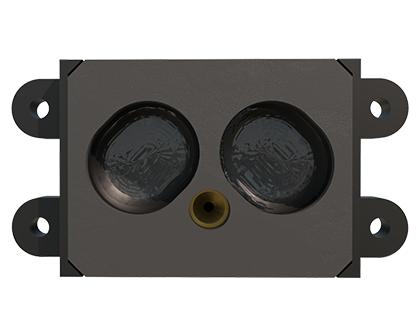
Laser sensor tools have revolutionized various industries by providing non-contact, high-precision measurement and detection capabilities. These tools utilize laser technology to measure distance, detect objects, monitor vibrations, and ensure quality control in manufacturing, construction, robotics, and automation. Unlike traditional mechanical sensors, laser sensors offer faster response times, higher accuracy, and minimal wear and tear due to their non-contact nature. Common types include laser distance sensors, laser displacement sensors, laser triangulation sensors, and laser photoelectric sensors. Each type serves specific applications, such as measuring thickness in production lines, aligning machinery, or detecting minute defects in materials. The core components of a laser sensor typically include a laser emitter, a receiver, and signal processing electronics. The emitter projects a focused laser beam onto a target, and the receiver captures the reflected light to calculate parameters like distance or position based on time-of-flight, phase shift, or triangulation principles. In industrial settings, laser sensors enhance efficiency by enabling real-time monitoring and automation. For example, in automotive assembly, they ensure precise part placement, while in logistics, they facilitate automated sorting and inventory management. Environmental factors like dust, humidity, or ambient light can affect performance, so modern laser sensors often incorporate features like adaptive filtering and robust housing to maintain reliability. When selecting a laser sensor tool, key considerations include measurement range, accuracy, resolution, response speed, and compatibility with existing systems. Advances in miniaturization and connectivity have led to the development of compact, IoT-enabled laser sensors that integrate seamlessly with smart factories and Industry 4.0 initiatives. Additionally, safety is paramount, as lasers can pose risks to eyes and skin. Most industrial laser sensors comply with international safety standards (e.g., IEC 60825) and use low-power Class 1 or Class 2 lasers to minimize hazards. Looking ahead, innovations in laser sensor technology focus on improving precision, reducing costs, and expanding applications in emerging fields like autonomous vehicles, medical diagnostics, and environmental monitoring. As industries continue to prioritize automation and data-driven decision-making, laser sensor tools will remain indispensable for achieving unparalleled accuracy and operational excellence. By understanding their principles and applications, professionals can leverage these tools to optimize processes, reduce errors, and drive innovation across sectors.