1. Through-Beam Mode (Opposed Mode)
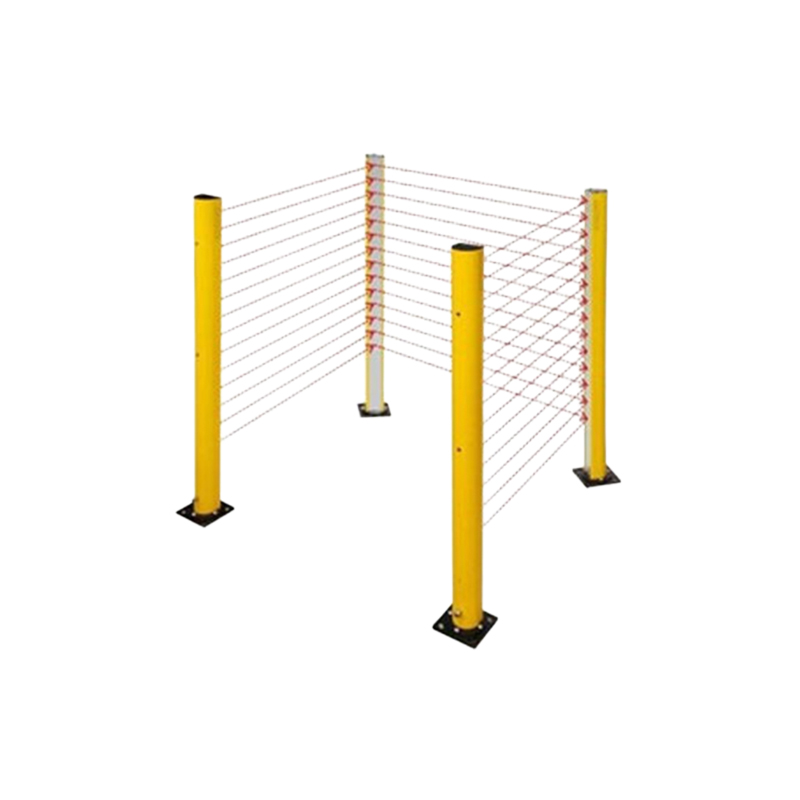
In through-beam mode, the emitter and receiver are housed in separate units and placed opposite each other. The emitter continuously sends a beam of light (typically infrared or visible red) directly to the receiver. When an object interrupts this beam, the receiver detects the absence of light and triggers an output signal. This mode offers the longest sensing range (up to 100 meters) and the highest immunity to contamination, such as dust, fog, or dirt. However, it requires alignment of both units and wiring at two locations, making installation more complex. Ideal for applications like conveyor belt object counting, security barriers, and long-range detection in warehouses.
2. Retro-Reflective Mode
Retro-reflective mode combines the emitter and receiver in a single housing, with a reflector placed opposite the sensor. The light beam is emitted, bounces off the reflector, and returns to the receiver. When an object passes between the sensor and reflector, it blocks the light beam, causing the receiver to detect a loss of signal and trigger an output. This mode is simpler to install than through-beam, as only one sensor unit needs wiring. Sensing ranges typically reach up to 10-20 meters. A key consideration is that highly reflective objects (e.g., shiny metal) can cause false detection, so polarized retro-reflective sensors are often used to filter out stray reflections. Common applications include conveyor systems, automated doors, and packaging machinery.
3. Diffuse Mode (Proximity Mode)
In diffuse mode, the emitter and receiver are housed together in a single unit. The light beam is directed toward the target object, and the receiver detects the light reflected directly from the object's surface. The sensor triggers an output when the reflected light intensity exceeds a threshold. This mode does not require a separate reflector or receiver unit, simplifying installation and reducing costs. However, the sensing range is shorter (typically up to 1-3 meters) and depends heavily on the object's color, size, and surface finish (e.g., a white object reflects more light than a black one). Ideal for detecting objects in confined spaces, such as on assembly lines, in material handling, or for presence detection in robotics.
4. Background Suppression Mode
Background suppression mode is an advanced variant of diffuse mode that uses a triangulation principle to detect objects at a precise distance while ignoring background objects. The sensor emits a light beam, and the receiver is split into two elements: one for near-field detection and one for far-field. When an object is within the set sensing distance, the reflected light hits the near-field element, triggering the output. If the object is beyond the distance, the light hits the far-field element, and the sensor ignores it. This provides high accuracy and reliability in environments with complex backgrounds, such as conveyor belts with varying distances or shiny surfaces. Sensing ranges are typically 0.1 to 2 meters, and the mode is common in packaging, printing, and automotive assembly.
5. Foreground Suppression Mode
Foreground suppression mode is the inverse of background suppression. It uses a similar triangulation principle but is designed to detect objects beyond a minimum distance while ignoring objects that are too close to the sensor. This is useful in applications where the sensor must ignore a nearby obstruction, such as a machine frame or a moving part, and only detect objects further away. The sensor's receiver elements are arranged to detect reflected light from the far field, while near-field reflections are ignored. The sensing range is typically adjustable from 0.1 to several meters. This mode is often applied in automated guided vehicles (AGVs), robotic grippers, and pick-and-place systems where proximity to the sensor must be avoided.
6. Fiber Optic Mode
Fiber optic mode uses a separate amplifier and fiber optic cables (either plastic or glass) to transmit and receive light. The amplifier unit generates the light signal and processes the return, while the fiber optic cable extends the sensing head to remote or confined locations. The fiber optic cable can be terminated with various lens or tip styles (e.g., through-beam, diffuse, or reflective) to adapt to different applications. This mode offers exceptional flexibility, allowing sensing in high-temperature, high-vibration, or explosive environments where conventional sensors cannot be placed. The sensing range varies widely (from a few millimeters to 10 meters) depending on the cable and lens type. Common uses include detecting small parts in electronics manufacturing, liquid level sensing, and precision positioning in medical devices.