Understanding the Role of ADC in Photoelectric Sensors
In modern industrial automation, photoelectric sensors rely on precise analog-to-digital conversion (ADC) to convert light intensity signals into digital data for processing. The ADC's resolution and sampling rate directly impact the sensor's ability to detect subtle changes in reflected or transmitted light, which is critical for applications like object detection, color sorting, and distance measurement. A typical photoelectric sensor uses a photodiode or phototransistor to generate an analog current proportional to light intensity. This signal must be conditioned and digitized by an ADC with minimal noise to ensure reliable operation in harsh factory environments.
Key ADC Parameters for Photoelectric Sensor Design
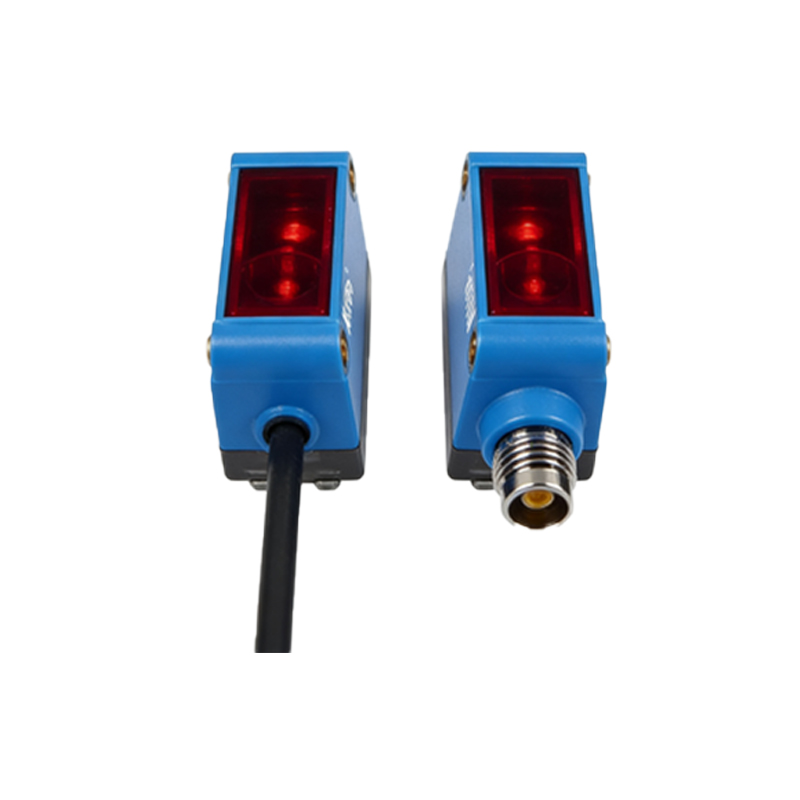
When selecting an ADC for a photoelectric sensor, engineers must consider resolution, signal-to-noise ratio (SNR), and conversion speed. A 12-bit to 16-bit ADC is common for high-precision tasks, such as distinguishing between similar color shades or measuring low-light levels. For example, in a through-beam sensor, a 14-bit ADC can detect a 0.01% change in light intensity, enabling accurate detection of transparent objects. Additionally, the ADC's input range must match the sensor's output voltage swing, which often requires a programmable gain amplifier (PGA) to amplify weak signals without saturating the ADC. The sampling rate should be at least twice the sensor's response bandwidth to avoid aliasing, per the Nyquist theorem.
Noise Mitigation Strategies in ADC Circuits
Noise from power supplies, electromagnetic interference (EMI), and thermal effects can degrade ADC performance in photoelectric sensors. To mitigate this, use differential input ADCs to reject common-mode noise, and implement low-pass filters before the ADC to attenuate high-frequency interference. For instance, a second-order Butterworth filter with a cutoff frequency of 10 kHz can effectively filter out 60 Hz power line hum and switching noise. Additionally, place decoupling capacitors close to the ADC power pins and use a dedicated analog ground plane to separate digital and analog circuitry. In high-speed sensors, oversampling and averaging techniques can further improve effective resolution by spreading quantization noise over a wider bandwidth.
Integrating ADC with Microcontrollers for Real-Time Processing
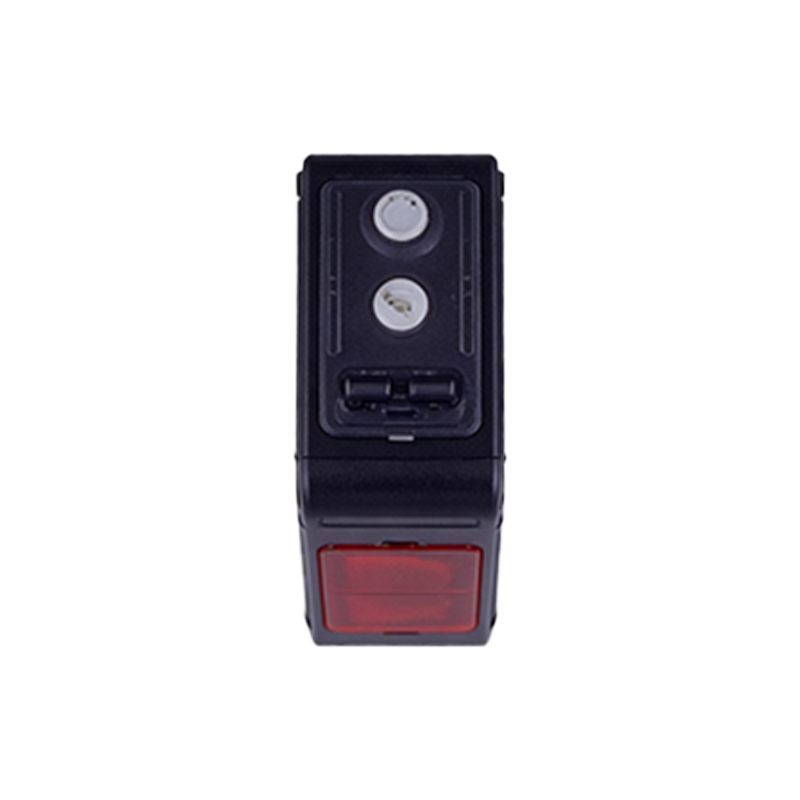
In embedded systems, the ADC output is typically interfaced with a microcontroller (MCU) via SPI or I2C for real-time data processing. For photoelectric sensors requiring fast response times, such as those in conveyor belt sorting systems, a SAR (successive approximation register) ADC with a conversion time of 1 µs is preferred over sigma-delta types, which offer higher resolution but slower throughput. The MCU should implement a digital filter, such as a moving average or median filter, to remove transient noise spikes before triggering an output action. For example, in a retro-reflective sensor, a 5-point moving average can smooth out flickering from ambient light while maintaining a 10 ms response time.
Calibration and Testing for Reliable Operation
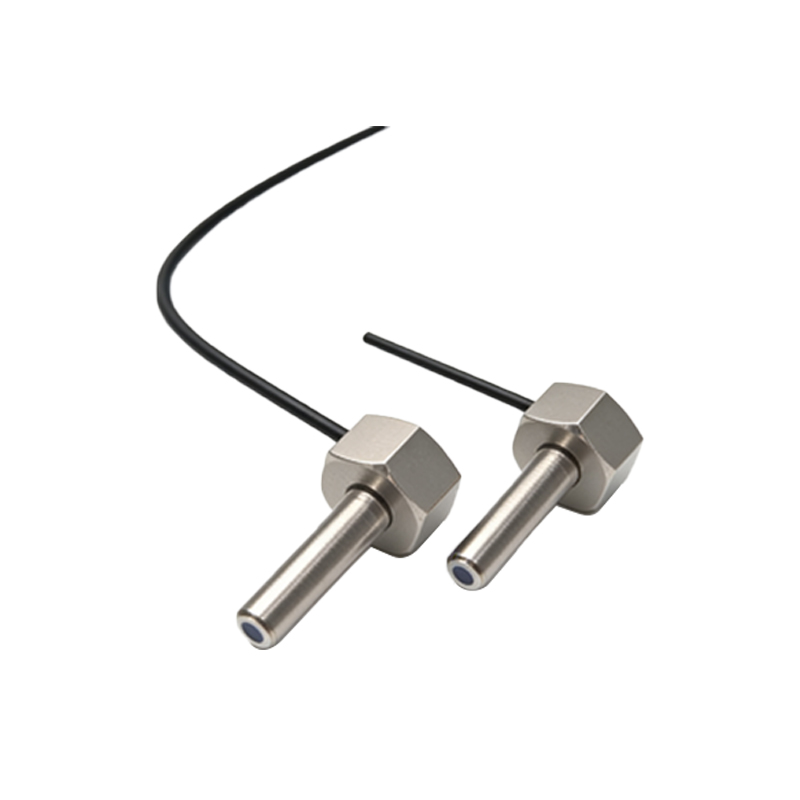
Calibration is essential to compensate for sensor aging, temperature drift, and ADC offset errors. Use a reference light source with known intensity to perform a two-point calibration, adjusting the ADC's zero and gain coefficients in firmware. In production testing, measure the ADC's integral non-linearity (INL) and differential non-linearity (DNL) to ensure they meet the sensor's accuracy budget. For a photoelectric sensor rated for 0.1 mm resolution, the ADC's DNL should be less than 0.5 LSB to avoid missing codes. Environmental testing under varying temperature and humidity conditions validates the ADC's stability, ensuring consistent performance from -20°C to 85°C in industrial settings.
Future Trends: Higher Resolution and Low-Power ADC for IoT Sensors
As Industry 4.0 and IoT adoption grow, photoelectric sensors demand ADCs with higher resolution (e.g., 24-bit) and ultra-low power consumption for battery-operated devices. Emerging technologies like continuous-time delta-sigma ADCs offer a balance of high resolution and low power, ideal for smart sensors that communicate wirelessly. Additionally, integrated ADCs with built-in digital signal processing (DSP) functions, such as automatic gain control and threshold detection, reduce MCU workload and enable edge computing. For example, a 24-bit ADC with a programmable digital filter can achieve 100 dB SNR while consuming only 50 µW, extending sensor node battery life beyond 5 years.