Introduction to Photoelectric Sensors
Photoelectric sensors are critical components in industrial automation, converting light signals into electrical outputs for object detection, distance measurement, and position monitoring. They operate based on light emission and reception, with typical configurations including through-beam, retro-reflective, and diffuse-reflective types. These sensors offer high precision, non-contact operation, and long service life, making them ideal for harsh environments in manufacturing, packaging, and material handling.
Through-Beam Sensor Configuration
In a through-beam setup, the emitter and receiver are housed separately, creating a direct line-of-sight path. When an object interrupts the light beam, the receiver detects the loss of signal, triggering an output. Example: A conveyor belt system where a box passes between emitter and receiver, stopping the belt when the beam is blocked. This design provides the longest sensing range (up to 30 meters) and highest immunity to contamination, but requires precise alignment.
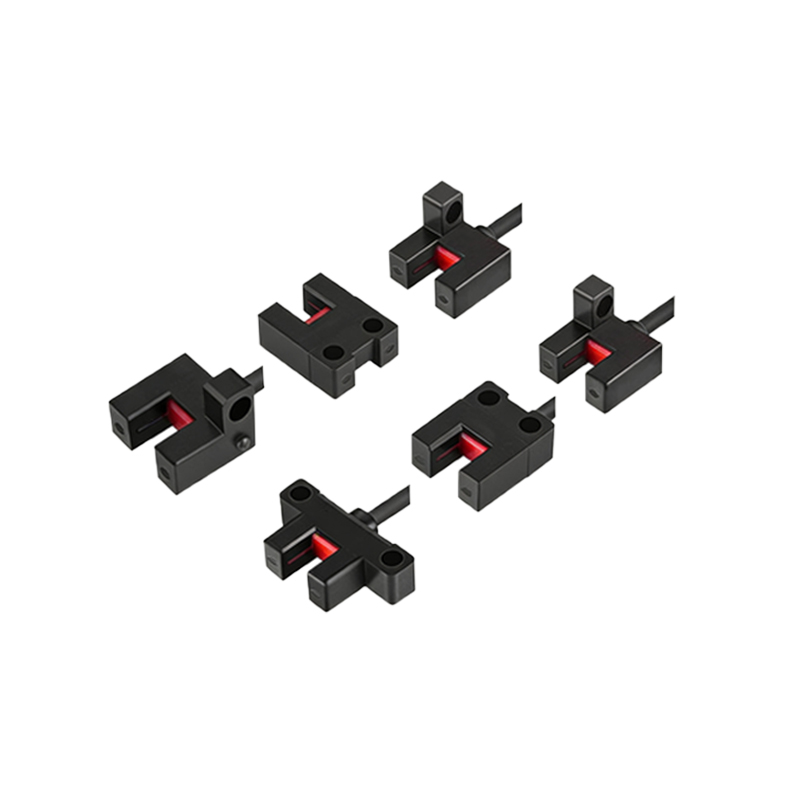
Retro-Reflective Sensor Illustration
Retro-reflective sensors combine the emitter and receiver in a single housing, using a reflector placed opposite. The light beam bounces off the reflector back to the receiver. When an object enters the path, it disrupts the return beam, activating the sensor. Example: A door automation system where the sensor detects a person walking through, triggering automatic opening. These sensors are easier to install than through-beam types, with sensing ranges up to 10 meters, but may be affected by shiny or reflective objects.
Diffuse-Reflective Sensor Application
Diffuse-reflective sensors also integrate emitter and receiver, but rely on the target object to reflect light back to the sensor. The receiver captures the scattered light from the object’s surface. Example: A robotic arm picking parts from a bin—the sensor detects the presence of a part based on its reflectivity. This setup is space-saving and alignment-friendly, with sensing ranges typically under 1 meter. However, performance depends on object color, surface finish, and ambient light.
Fiber Optic Photoelectric Sensor
Fiber optic sensors use flexible cables to transmit light, allowing detection in confined spaces or high-temperature zones. The fiber tip can be positioned near tiny objects. Example: Inspecting small electronic components on a PCB assembly line, where the sensor detects solder joint presence via light reflection. These sensors offer exceptional resolution and can be adapted to various environments with different fiber types.
Color Mark Sensor Example
A color mark sensor uses a focused light source to distinguish between different colored labels or marks on moving products. Example: A packaging machine that cuts film at a precise point by detecting a black registration mark on a white background. The sensor outputs a signal when the mark’s contrast reaches a threshold, enabling high-speed, accurate alignment.
Background Suppression Sensor
Background suppression sensors use triangulation or time-of-flight principles to ignore background objects and only detect targets within a defined range. Example: A warehouse AGV navigating along a path, where the sensor detects pallets at a fixed distance while ignoring floor and walls. This eliminates false triggers from non-target surfaces.
Conclusion and Selection Tips
Choosing the right photoelectric sensor involves considering range, object size, surface reflectivity, environmental conditions (dust, moisture, vibration), and installation constraints. For example, through-beam sensors suit long-range outdoor applications, while diffuse types excel in close-range indoor tasks. Always verify sensor specifications against application requirements to ensure reliable performance.