Understanding Photoelectric Sensor Basics
Photoelectric sensors are essential components in modern industrial automation, converting light signals into electrical outputs to detect objects, measure distances, or monitor presence. As an electrical engineer, selecting the right sensor depends on factors like target material, distance, environmental conditions, and response time. The three main types are through-beam, retro-reflective, and diffuse sensors, each with distinct advantages. For example, through-beam sensors offer the longest sensing range and highest reliability, but require separate emitter and receiver units, making installation more complex. Retro-reflective sensors combine emitter and receiver in one unit with a reflector, simplifying alignment, while diffuse sensors detect reflected light from the target itself, ideal for short-range applications.
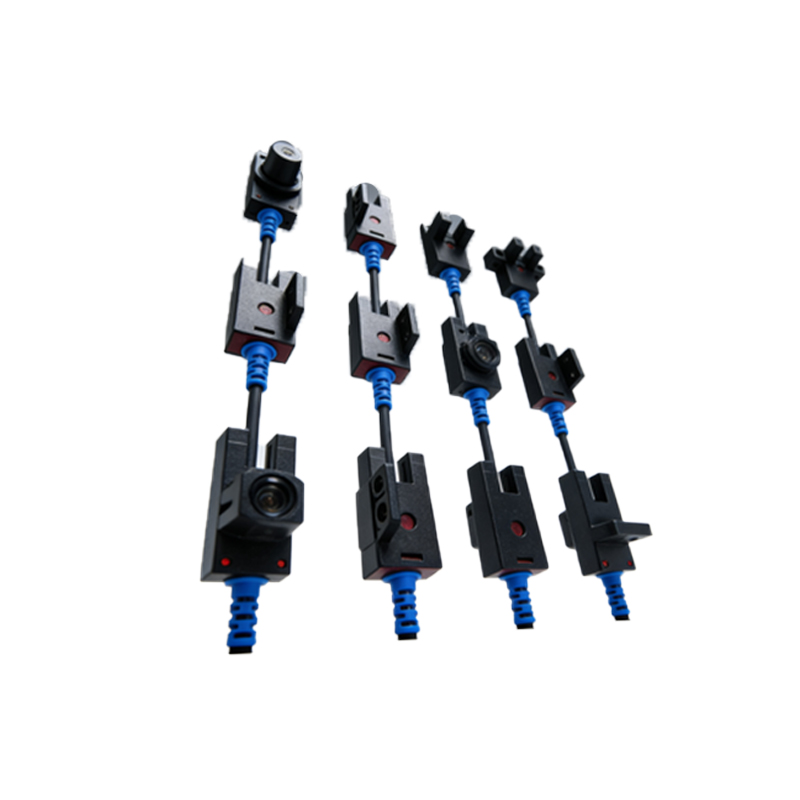
Through-Beam Sensors for Long-Range Detection
In high-speed assembly lines or conveyor systems, through-beam photoelectric sensors excel where precise detection over long distances is critical. These sensors consist of a light emitter and a receiver placed opposite each other, breaking the beam when an object interrupts the path. They are immune to background interference, making them suitable for dusty or humid environments. For instance, in a warehouse sorting system, through-beam sensors reliably detect pallets or boxes up to 30 meters away, ensuring accurate counting and positioning. However, they require careful alignment and may need additional mounting brackets, increasing initial setup time.
Retro-Reflective Sensors for Simplified Installation
Retro-reflective sensors are a practical choice when space is limited or when a single housing unit is preferred. They emit a beam toward a reflector, and the receiver detects the returning light when no object is present. A common industrial application is detecting transparent or shiny objects, such as glass bottles in a beverage filling line. These sensors can sense objects up to 10 meters away, depending on the reflector type, and polarization filters reduce false triggers from mirror-like surfaces. For best results, use a corner-cube reflector to ensure accurate beam return, even in vibrating environments.
Diffuse Sensors for Versatile Short-Range Tasks
Diffuse photoelectric sensors are ideal for detecting objects with varying colors, textures, or shapes at close range, typically under 2 meters. They work by emitting a light beam and measuring the reflected light from the target itself. In a robotic pick-and-place system, diffuse sensors with background suppression can distinguish between a white part on a dark conveyor belt, reducing false triggers. These sensors are cost-effective and easy to install, but performance may degrade with highly reflective or dark-colored materials. For enhanced reliability, choose sensors with infrared or laser light sources for better penetration through dust or steam.
Key Selection Criteria for Industrial Environments
When specifying a photoelectric sensor, consider the following factors: sensing distance (from centimeters to over 30 meters), target characteristics (size, color, transparency), and environmental conditions (temperature, humidity, vibration). For example, in a steel mill with high temperatures and metal dust, fiber-optic photoelectric sensors with separate amplifiers protect electronics from heat. Additionally, check IP ratings; IP67 or higher is recommended for washdown areas. Response time is crucial for high-speed applications—choose sensors with switching frequencies above 1 kHz. Finally, evaluate output types, such as PNP or NPN, based on your PLC or controller compatibility.
Recommendations for Common Industry Use Cases
For packaging lines handling transparent bottles, retro-reflective sensors with polarization filters are optimal. In automotive assembly, through-beam sensors ensure precise part positioning. For material handling in warehouses, diffuse sensors with adjustable width detection reduce false alarms. Always verify sensor certifications like CE or UL for global compliance. As a best practice, test sensors in real-world conditions, including ambient light interference from welding arcs or sunlight. Consulting datasheets for beam angle and excess gain curves will help fine-tune performance.