Introduction to Large Spot Photoelectric Sensors
In industrial automation, photoelectric sensors play a critical role in object detection, counting, and positioning. When engineers refer to a "large spot" sensor, they are typically describing a sensor with a beam diameter or spot size ranging from 10 mm to over 100 mm at a given distance. This is significantly larger than standard spot sensors (often 2-5 mm) and is designed for applications where the target is irregular, vibrating, or has a non-uniform surface. The large spot size enhances reliability by ensuring the beam covers a broader area, reducing the chance of missed detections.
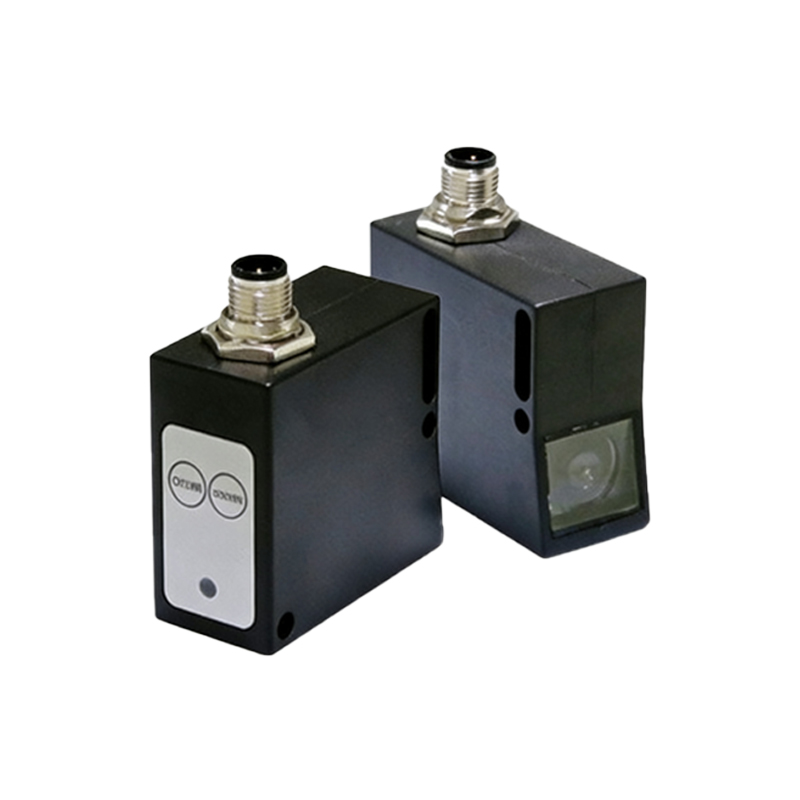
Typical Spot Size Ranges for Large Spot Sensors
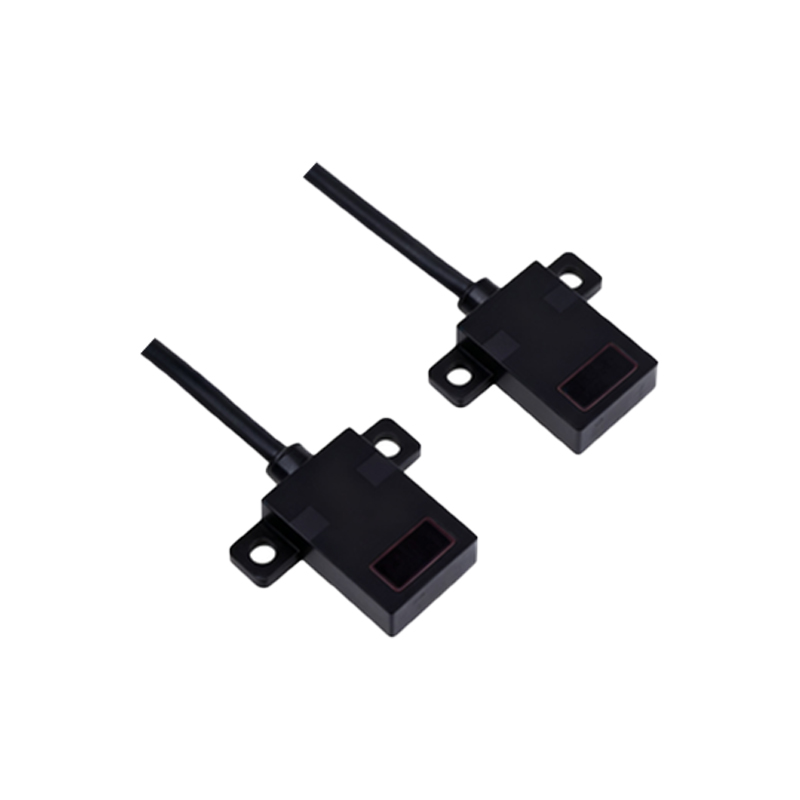
Large spot photoelectric sensors are not standardized to a single size; instead, they vary by manufacturer and application. Common spot diameters include: 20 mm, 50 mm, and 100 mm at sensing distances of 100 mm to 2000 mm. For example, in diffuse mode sensors, the spot size can expand proportionally with distance—a sensor with a 30 mm spot at 500 mm might grow to 60 mm at 1000 mm. In retro-reflective mode, the spot is often larger due to the reflector's surface, reaching up to 150 mm. Engineers should consult datasheets for specific beam divergence angles, which typically range from 2° to 10°.
Why Large Spot Size Matters in Industrial Settings
The primary advantage of a large spot is its tolerance to target misalignment. In conveyor systems, for instance, objects may shift or tilt due to vibration. A small spot sensor might fail to detect a tilted box corner, but a large spot sensor will still intercept the target. Additionally, large spots are ideal for detecting transparent, shiny, or dark objects (like black rubber) where a focused beam might reflect away or be absorbed. For dusty environments, a larger beam is less prone to blockage by debris, ensuring consistent operation.
Key Specifications to Evaluate
When selecting a large spot sensor, engineers must consider three factors: spot size at the maximum sensing distance, beam divergence angle, and output type. For example, a sensor with a 50 mm spot at 2 meters has a divergence angle of roughly 1.4° (using arctan(25/2000)). This is crucial for applications with long distances. Also, note that large spot sensors often use background suppression or teach-in modes to avoid false triggers from background objects. The sensing distance is typically shorter than for small spot sensors due to power distribution over a larger area.
Comparison with Small Spot Sensors
A practical comparison: a small spot sensor (e.g., 3 mm at 100 mm) is ideal for precise detection of small parts like electronic components. In contrast, a large spot sensor (e.g., 40 mm at 500 mm) is better for bulk material handling. The trade-off is resolution—large spots cannot distinguish closely spaced objects. For example, with a 60 mm spot, two targets less than 60 mm apart may be seen as one. Therefore, large spot sensors are chosen for presence/absence detection rather than counting.
Real-World Application Examples
In packaging lines, large spot sensors detect randomly oriented bottles or cans, where small spots might miss a skewed label. In woodworking, they sense rough lumber edges. In automotive assembly, they verify the presence of large parts like engine blocks on pallets. A typical setup uses a diffuse mode sensor with a 30 mm spot at 200 mm, ensuring the beam covers the target even if it shifts 15 mm laterally.
Conclusion and Engineering Recommendations
The size of a large spot photoelectric sensor can range from a few centimeters to over 10 cm, depending on the model and distance. Engineers should prioritize application requirements: for robust detection in harsh conditions, opt for sensors with spot sizes of 30-100 mm and verify the beam divergence angle. Always test the sensor in your specific environment to confirm that the spot covers the target's expected variations. Avoid using large spots for precise positioning tasks, as they lack the necessary resolution.