Introduction to Photoelectric Sensors in Modern Industry
Photoelectric sensors have become indispensable components in automation, robotics, and industrial control systems worldwide. As a senior electrical engineer, I have witnessed their evolution from simple light-activated switches to sophisticated, intelligent devices that enhance precision and efficiency. These sensors operate by emitting a light beam—typically infrared, visible red, or laser—and detecting changes in the received signal, enabling non-contact detection of objects, distances, and even material properties. Their versatility makes them crucial for applications ranging from packaging and material handling to automotive manufacturing and safety systems. In this article, I will explore the latest trends, technical specifications, and deployment strategies for photoelectric sensors across global industries, emphasizing reliability, accuracy, and cost-effectiveness.
Key Technical Specifications and Operating Principles
Modern photoelectric sensors offer multiple operating modes, including through-beam, retro-reflective, and diffuse reflection. Through-beam sensors provide the longest detection range, often exceeding 30 meters, by separating emitter and receiver units. Retro-reflective sensors use a reflector, achieving ranges up to 15 meters with easy installation. Diffuse sensors detect objects directly, ideal for short-range applications under 2 meters. Key parameters to consider include response time (as low as 0.5 ms), ambient light immunity (up to 100,000 lux), and IP67 or IP69K ratings for harsh environments. Advanced models now feature IO-Link communication, enabling real-time diagnostics, parameter adjustment, and predictive maintenance, which significantly reduces downtime. For high-precision tasks, laser-based sensors provide spot sizes as small as 0.2 mm, ensuring accurate detection of tiny components.
Global Market Trends and Leading Manufacturers
The global photoelectric sensor market is projected to grow at a CAGR of 7.2% from 2024 to 2030, driven by Industry 4.0 and the expansion of smart factories. Key regions include North America, Europe, and Asia-Pacific, with China, Germany, and the United States leading adoption. Prominent manufacturers such as SICK, Banner Engineering, Omron, and Keyence continue to innovate, introducing sensors with enhanced background suppression, color recognition, and multi-mode capabilities. For example, SICK’s new Photoelectric Sensor 5 series offers integrated distance measurement via Time-of-Flight technology, while Banner’s QS30 series provides robust performance in dusty or wet conditions. These developments align with industry demands for miniaturization, energy efficiency, and seamless integration with PLCs and cloud platforms.
Application Best Practices for Electrical Engineers
When specifying photoelectric sensors, engineers must consider environmental factors: temperature extremes, vibration, chemical exposure, and optical interference. For outdoor or high-humidity settings, sensors with heated optics or sealed housings prevent condensation and fogging. In high-speed production lines, selecting sensors with fast response times and adjustable sensitivity ensures accurate counting and positioning. It is also critical to align sensor wavelength with target material reflectivity; for example, dark or transparent objects may require polarizing filters or specialized detectors. Proper mounting techniques, such as using vibration-dampening brackets and avoiding direct sunlight, extend sensor life. Additionally, implementing redundancy through multiple sensors or safety-rated models (e.g., IEC 61496) enhances fail-safe operation in critical applications like robotic workcells.
Future Innovations and Integration with IoT
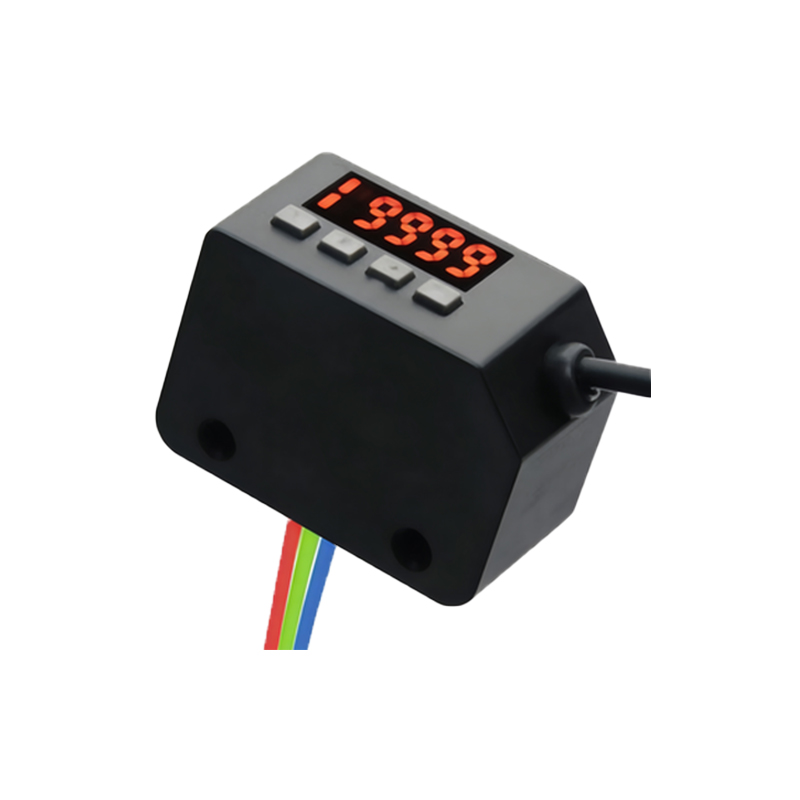
The next generation of photoelectric sensors will leverage artificial intelligence and edge computing for self-calibration and adaptive thresholding. Wireless connectivity via Bluetooth or 5G will enable remote monitoring and fleet management of sensor networks. Predictive analytics based on historical data can forecast sensor degradation, allowing proactive replacements. Furthermore, hybrid sensors combining photoelectric principles with ultrasonic or inductive technologies offer multi-modal detection for complex scenarios. As an engineer, staying updated with these trends through industry certifications, such as those from the International Society of Automation, and attending trade shows like SPS IPC Drives or Hannover Messe, is essential. Ultimately, the evolution of photoelectric sensors will continue to drive automation efficiency, safety, and intelligence in the global electrical industry.