Introduction to Intensity-Modulated Photoelectric Sensors
Intensity-modulated photoelectric sensors are a cornerstone of modern industrial automation. These devices measure changes in light intensity to detect objects, distances, or material properties. Unlike simple on-off photoelectric switches, intensity modulation allows for analog output signals that correspond to variations in light level. This makes them ideal for applications requiring precision, such as position sensing, surface inspection, or material sorting. As an electrical engineer, understanding their design, operation, and limitations is critical for optimizing system performance.
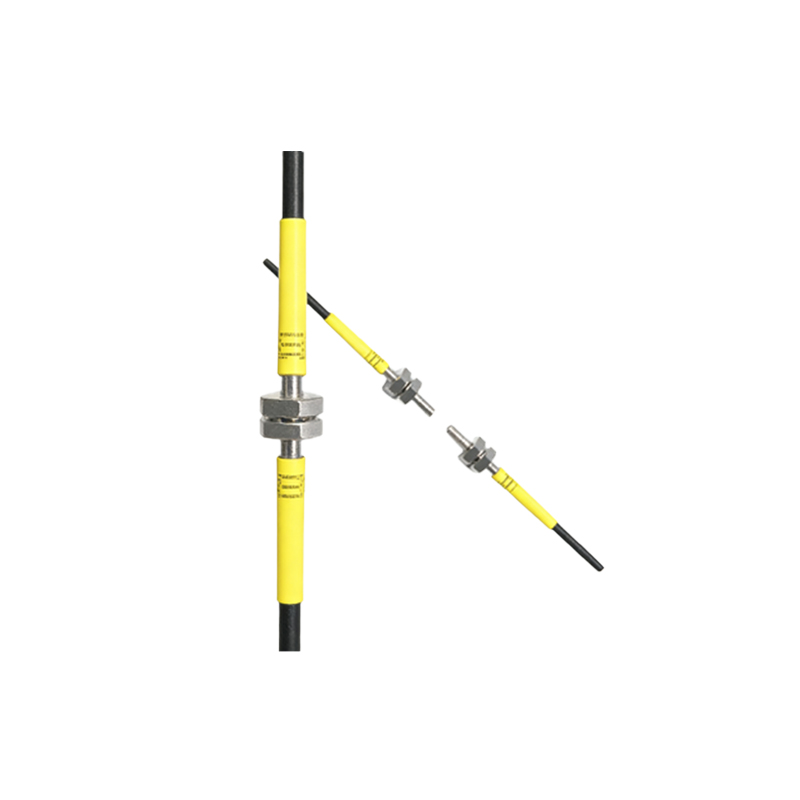
Operating Principle and Key Components
The core principle relies on modulating a light beam (often from an LED or laser) and analyzing the received intensity at a photodetector. The emitter produces a controlled light source, while the detector converts light to an electrical signal. Modulation (e.g., pulse-width or frequency modulation) helps reject ambient light interference. Key components include the emitter (e.g., 850 nm or 940 nm LEDs), a photodiode or phototransistor, and signal conditioning circuitry that amplifies and filters the output. The sensor's output voltage or current is directly proportional to the light intensity reaching the detector.
Types of Intensity Modulation Techniques
Three common methods are used: (1) Analog intensity modulation, where the output varies continuously with received light; (2) Pulse-width modulation (PWM), where the duty cycle of a pulsed light source changes with distance or opacity; and (3) Frequency modulation, where the frequency of a modulated carrier shifts with intensity. Each technique has trade-offs: analog offers simplicity but lower noise immunity, while PWM and frequency methods provide better performance in harsh environments. For example, PWM sensors are preferred in dusty settings due to their ability to filter out steady-state light variations.
Application Scenarios in Industrial Settings
These sensors excel in tasks like conveyor belt object detection, where they differentiate between transparent, reflective, or opaque items. In material handling, they monitor web tension by measuring light blockage. Another key use is in robotics for proximity sensing, especially when contact is undesirable. For instance, in pharmaceutical packaging, intensity-modulated sensors verify the presence of foil seals without physical contact. Their analog output also enables threshold-based grading, such as sorting glass bottles by color or transparency.
Design Considerations and Selection Criteria
When selecting a sensor, evaluate (1) Response time: crucial for high-speed lines; (2) Spectral sensitivity: match emitter wavelength to target material; (3) Environmental factors: temperature, humidity, and ambient light can affect accuracy. For optimal performance, use sensors with built-in automatic gain control (AGC) to compensate for aging components. Also consider the beam size and divergence: narrow beams work for small targets, while wide beams suit large area coverage. Avoid using in highly reflective or absorbing environments without careful calibration.
Common Challenges and Troubleshooting Tips
A frequent issue is false triggering due to stray light. Solutions include using modulated sensors with synchronous detection, or adding optical filters. Another problem is sensor saturation from bright reflective objects, which can be mitigated by adjusting the emitter intensity or using a logarithmic amplifier. In dusty environments, regular lens cleaning is mandatory. For analog signals, check for linearity drifts over time; recalibrate periodically. If the output is erratic, verify the power supply stability and grounding.
Future Trends and Integration with Industry 4.0
Emerging trends include smart sensors with built-in microcontrollers for self-diagnosis and adaptive thresholds. Integration with IoT platforms allows real-time monitoring and predictive maintenance. Additionally, advancements in solid-state lighting and photodiodes are improving sensitivity and reducing power consumption. In Industry 4.0, these sensors will work with machine learning algorithms to classify objects based on subtle intensity variations, enabling more intelligent automation.