Introduction to Button Photoelectric Sensors
Button photoelectric sensors, also known as cylindrical photoelectric sensors, are compact, rugged devices designed for reliable object detection in tight spaces. Unlike traditional rectangular sensors, their round, button-like housing allows for easy mounting in confined areas, such as conveyor lines, packaging machines, and robotic arms. These sensors operate by emitting a beam of light (infrared, red, or laser) and detecting changes in the reflected or interrupted signal. They are widely used in industries where space constraints and high-speed detection are critical, offering a simple yet robust solution for presence, absence, and positioning tasks.
Operating Principles and Key Technologies
These sensors utilize three main detection modes: through-beam, retro-reflective, and diffuse. In through-beam mode, the emitter and receiver are separate, providing the longest sensing range and highest immunity to contamination. Retro-reflective mode uses a reflector, allowing both emitter and receiver in one housing, simplifying wiring. Diffuse mode detects objects by the light reflected directly from the target, ideal for short-range applications. Modern button sensors incorporate advanced technologies like background suppression (BGS) and foreground suppression (FGS) to ignore background surfaces, ensuring accurate detection even on shiny or dark objects. The use of ASIC-based electronics enhances noise immunity and response speed, often reaching microseconds.
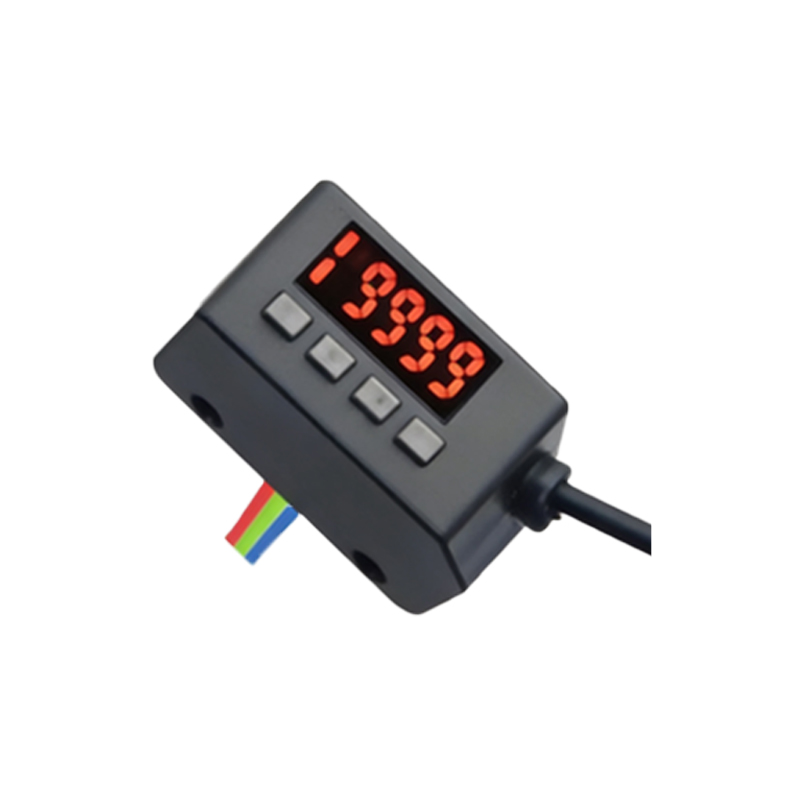
Mechanical Design and Environmental Ratings
The cylindrical form factor, typically M12, M18, or M30 thread sizes, enables easy integration into machine frames. Housings are made from stainless steel or nickel-plated brass, with IP67 or IP69K ratings for dust and water resistance. This makes them suitable for washdown environments in food processing or high-vibration applications in automotive assembly. Many models feature embedded LEDs for visual status indication, reducing troubleshooting time. The sensing face is often flush-mountable, allowing installation without protruding beyond the mounting surface, which prevents mechanical damage from collisions.
Key Applications in Industrial Settings
Button photoelectric sensors excel in automated production lines for detecting small parts, such as screws, caps, or electronic components. In packaging, they monitor film web breaks, bottle presence, and label alignment. In material handling, they confirm pallet positions on conveyors and detect stack levels in warehouses. Their compact size is leveraged in robotic end-of-arm tooling for precise part pickup verification. Additionally, in printing and textile industries, they ensure continuous web tracking and splice detection. The sensors’ ability to operate reliably in dusty, oily, or humid conditions makes them indispensable for harsh manufacturing floors.
Advantages Over Other Sensor Types
Compared to inductive sensors, button photoelectric sensors detect both metal and non-metal objects (e.g., plastic, glass, wood). They offer longer sensing ranges than capacitive sensors and do not require physical contact like limit switches. Their response time is superior to ultrasonic sensors for fast-moving targets. The button form factor also simplifies cable routing and connector options, with many models featuring M12 connectors for quick replacement. Furthermore, advanced variants offer IO-Link communication, enabling remote parameterization, diagnostics, and condition monitoring, reducing downtime.
Selection Criteria and Installation Tips
When selecting a button photoelectric sensor, consider the target material, color, and distance. For transparent objects, use retro-reflective mode with polarized filters. For dark or matte surfaces, choose diffuse sensors with high excess gain. Mounting should ensure the sensor’s optical axis aligns with the target path, avoiding interference from nearby reflective surfaces. For extreme temperatures, select models rated for -25°C to +60°C. Always verify the sensing range under actual application conditions, as dust and condensation can reduce performance. Use shielded cables and proper grounding to prevent electromagnetic interference in noisy environments.
Future Trends and Smart Integration
The evolution of button photoelectric sensors is driven by Industry 4.0 demands. Sensors are becoming smarter with embedded processors for self-diagnostics and predictive maintenance alerts. Wireless connectivity options, such as Bluetooth and WLAN, are emerging for portable monitoring. Miniaturization continues, with M8 and even smaller sizes for micro-automation applications. Additionally, multi-beam sensors within a button housing can now detect object profiles and orientation. As automation expands into logistics and collaborative robotics, these sensors will play a pivotal role in enabling safe, efficient, and flexible production systems.