2026-06-03
Tech Hub
By 创始人
Classification of Retro-Reflective Photoelectric Sensors in Industrial Applications
1. Basic Principle and Common Classification
Retro-reflective photoelectric sensors are widely used in automation and industrial control due to their reliable detection capabilities. They consist of an emitter and receiver in a single housing, utilizing a reflector to bounce the light beam back. The most fundamental classification is based on the type of light source: visible red light (typically 660 nm) and infrared light (often 870 nm). Red light models are easier to align and are preferred for transparent object detection, while infrared sensors offer longer range and better performance in dusty environments. Additionally, sensors are categorized by their output type, including NPN (sinking), PNP (sourcing), and analog outputs, which must match the control system requirements.
2. Polarized Retro-Reflective Sensors
Polarized retro-reflective sensors represent a critical subtype, designed to eliminate false triggers from shiny or reflective surfaces. They incorporate a polarizing filter at the emitter and receiver. The reflector is designed with corner-cube prisms that preserve polarization, while reflective targets (e.g., metal or glass) scramble the light polarization. This ensures that only the reflected beam from the intended reflector is detected. These sensors are ideal for packaging lines, where glossy wrappers or aluminum cans could cause erroneous readings. Common applications include detecting clear bottles, shiny plastic containers, and moving conveyor belts with high ambient light.
3. Optical Fiber Retro-Reflective Sensors
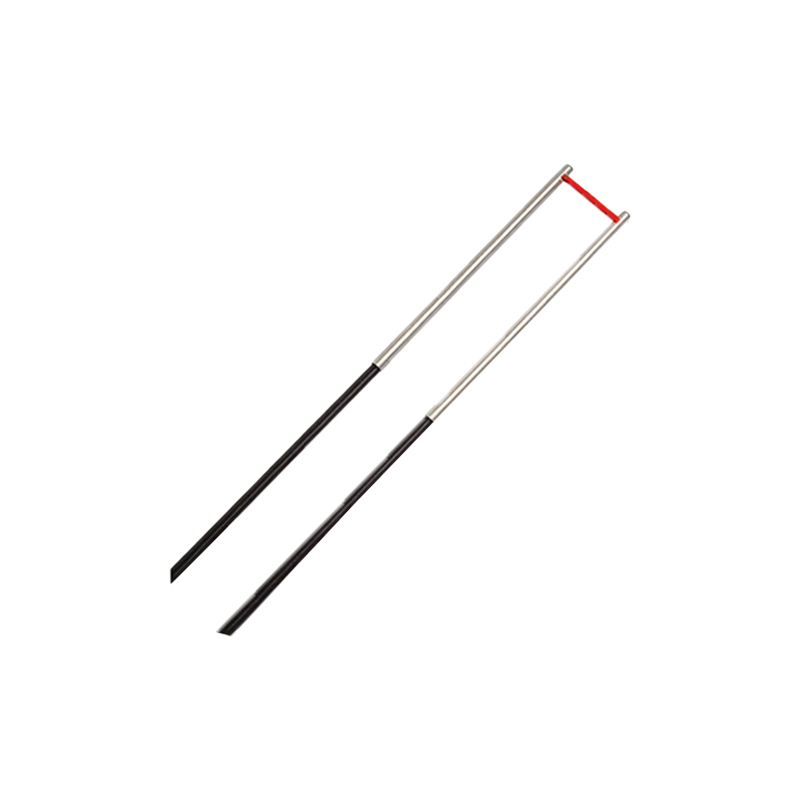
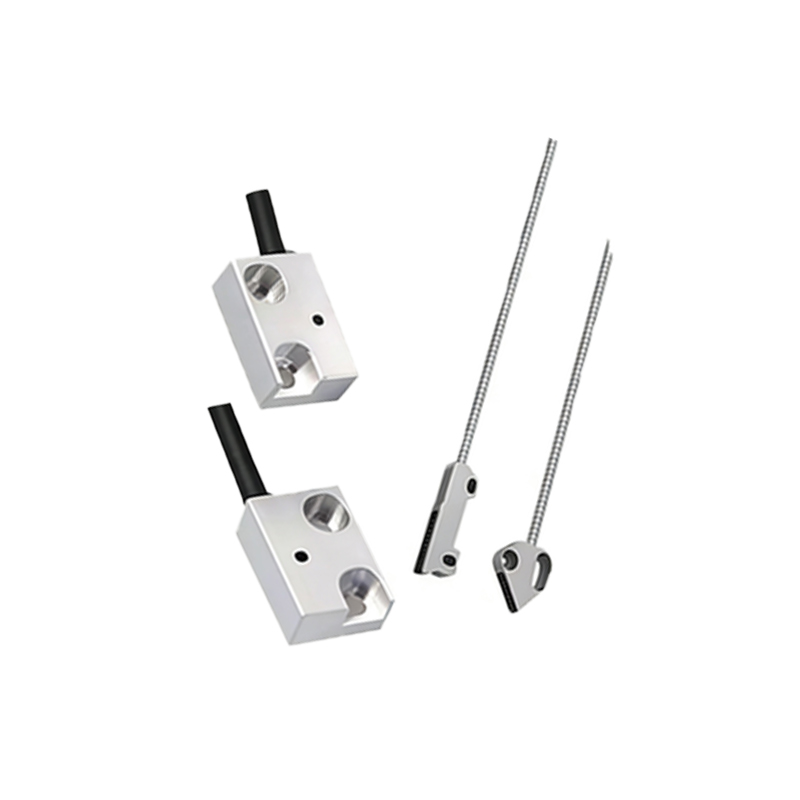
For confined spaces or extreme environments, optical fiber retro-reflective sensors are employed. These sensors use flexible fiber optic cables to separate the emitter/receiver from the sensing head. The cable is typically bifurcated, with one branch for transmission and one for reception. A reflector is placed at the far end of the cable. The major advantage is the ability to place the sensitive electronics away from heat, vibration, moisture, or corrosive chemicals. This classification is further divided by fiber material: glass fibers for high-temperature applications (up to 250°C) and plastic fibers for more cost-sensitive, lower-temperature environments. They are commonly used in semiconductor manufacturing, food processing, and machine tool monitoring.
4. Laser Retro-Reflective Sensors
Laser retro-reflective sensors use a focused laser diode as the light source, offering extremely precise and long-range detection. The laser beam is collimated, enabling minimal divergence over distances up to 50 meters or more. These sensors are classified by laser class (typically Class 1 or Class 2 for industrial safety) and by beam diameter (e.g., 0.5 mm or 1 mm). They excel in applications requiring high accuracy, such as detecting very small parts, measuring gaps, or aligning automated guided vehicles (AGVs). However, they require careful alignment and may be affected by airborne particles. The polarized laser variant further enhances reliability by rejecting stray reflections.
5. Background Suppression Retro-Reflective Sensors
A specialized but less common classification includes background suppression retro-reflective sensors. Unlike standard models, these sensors use a two-element receiver or a position-sensitive detector to measure the angle of the returning light. When the reflector is present, the light returns at a specific angle, indicating a valid target. If an object passes in front of the reflector, the light returns at a different angle or is blocked, triggering the output. This design provides high immunity to background disturbances, such as nearby machine parts or walls. They are often used in tight spaces where false detection from non-reflective objects must be avoided, such as in assembly stations and robotic cells.