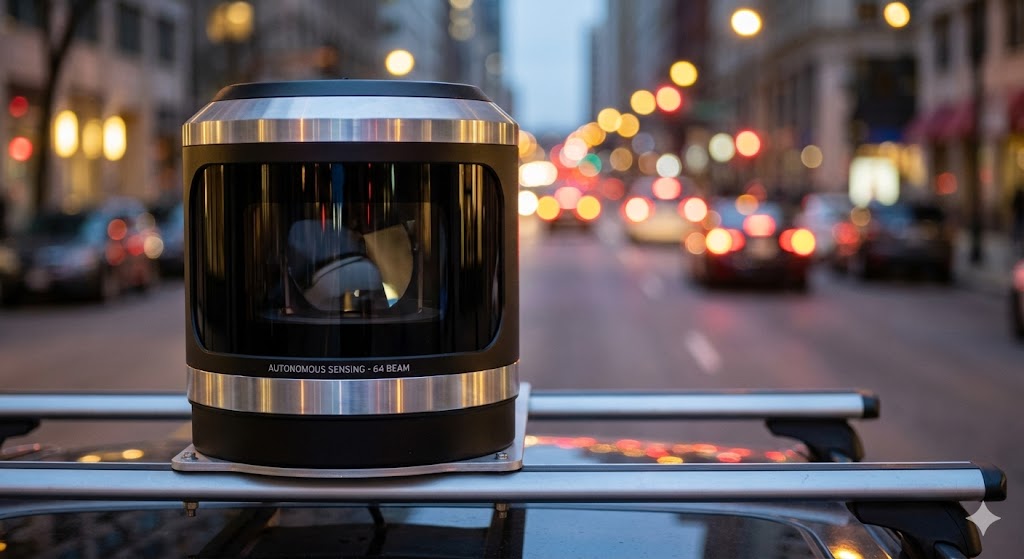
In the world of speed measurement and traffic management, precision and reliability are paramount. Among the various technologies available, the laser speed sensor stands out for its exceptional accuracy and versatility. Unlike traditional radar-based systems, laser speed sensors, often referred to as LIDAR (Light Detection and Ranging) guns, use a focused beam of infrared light to measure a vehicle's velocity with remarkable precision.
The fundamental principle behind a laser speed sensor is the time-of-flight measurement of light pulses. The device emits a short, invisible pulse of infrared laser light towards a target vehicle. This pulse travels at the constant speed of light, reflects off the vehicle, and returns to the sensor. An internal high-speed clock measures the exact time it takes for this round trip. By emitting hundreds of these pulses per second, the sensor can calculate the changing distance to the vehicle with extreme accuracy. The rate of change of this distance—the derivative—is the vehicle's speed. This method, known as the Doppler shift measurement for light, allows for pinpoint targeting. The laser beam is very narrow, often only about 3 feet wide at a distance of 1,000 feet, enabling law enforcement to single out a specific vehicle in dense traffic, a significant advantage over broader radar beams.
The core components of a typical handheld or tripod-mounted laser speed sensor include a laser diode transmitter, a high-sensitivity optical receiver, a precision timing circuit, and a microprocessor. The microprocessor performs the complex calculations in real-time, converting the nanosecond differences in pulse return times into a clear speed reading displayed on the unit. Modern sensors incorporate advanced digital signal processing to filter out background noise and ensure the reading comes from the intended target.

The applications of laser speed sensors extend far beyond common traffic enforcement. While they are a trusted tool for police officers to promote road safety, their use is critical in industrial and scientific settings. On automotive test tracks, engineers use them to calibrate vehicle speedometers and conduct performance testing with laboratory-grade accuracy. In sports, they clock the velocity of baseballs, tennis serves, and race cars. Industrial automation lines employ fixed laser sensors to monitor the speed of conveyor belts, rotating machinery, or production materials, ensuring process control and safety. Furthermore, they are integrated into some intelligent transportation systems for vehicle counting, classification, and monitoring traffic flow in specific lanes.
Compared to radar, laser sensors offer superior accuracy, often within plus or minus 1 mile per hour. They provide instant speed readings and are less susceptible to interference from other electronic devices. However, they do have limitations. Performance can be degraded by heavy rain, fog, or snow, as these conditions scatter the laser beam. They also require the operator to aim steadily at a specific part of the vehicle, typically the license plate or headlight, for a clear reading. Despite these factors, their benefits make them the technology of choice for situations demanding the highest level of measurement certainty.
The evolution of laser speed sensing continues. Emerging trends include the development of more compact, energy-efficient designs and the integration of advanced features like automatic license plate recognition (ALPR) and digital image capture. As automotive technology advances with adaptive cruise control and autonomous driving systems, the precise measurement principles underpinning laser sensors may find new roles in vehicle-to-infrastructure communication. Understanding the operation and capabilities of laser speed sensors highlights their importance as a tool not just for enforcement, but for measurement science, industrial efficiency, and the broader ecosystem of transportation technology.