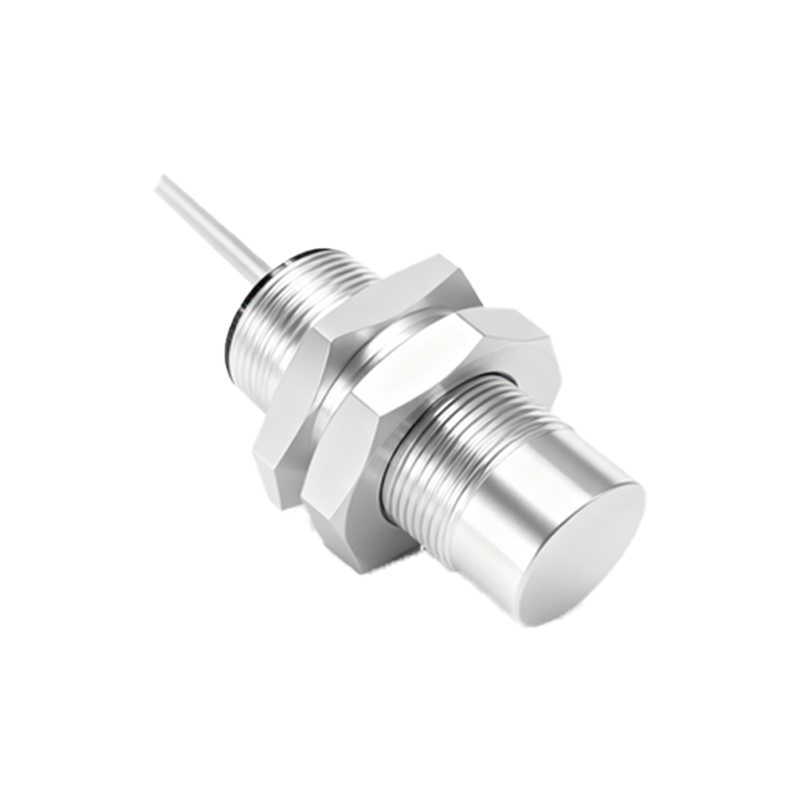
In the realm of industrial automation, consumer electronics, and automotive systems, proximity sensors are indispensable components. While their functionality—detecting the presence or absence of an object without physical contact—is well-understood, the significance of their physical size is often underestimated. The scale of a proximity sensor is not merely a matter of fitting into a design; it is a critical parameter that directly influences detection range, sensitivity, application suitability, and overall system integration.
The most apparent impact of sensor size is on the sensing range or distance. Generally, larger sensors, particularly inductive or capacitive types, can generate stronger electromagnetic fields. This allows them to detect objects from a greater distance. For instance, a large cylindrical inductive sensor might offer a sensing range of 40mm, whereas a miniaturized version of the same technology might be limited to 5mm. This relationship is crucial for applications like material handling on conveyor belts, where a larger sensor mounted at a distance can detect pallets or products reliably without risk of collision.
However, a larger size is not universally synonymous with better performance. The miniaturization of sensors has been a driving force in modern electronics. Ultra-small proximity sensors enable functionality in incredibly tight spaces. Consider modern smartphones: tiny infrared (IR) proximity sensors are embedded near the earpiece to disable the touchscreen during calls. This would be impossible with a bulkier component. Similarly, in precision robotics and compact machinery, miniature sensors allow for intricate object detection and positioning feedback without compromising the design's footprint.
Sensitivity and detection characteristics are also tied to dimensions. The size and shape of the sensor's active surface area determine its detection field. A larger sensor face might have a broader, more diffuse field, potentially detecting larger objects more consistently but with less precision for small targets. Conversely, a small, focused sensor can detect minute objects or specific features with high precision but may require more accurate alignment. The choice depends on the target object's size and the required accuracy. For detecting a metal screw versus a large metal plate, the sensor size selection would differ dramatically.
Environmental robustness and durability present another trade-off. Larger sensor housings often allow for more robust construction, better sealing against dust and moisture (higher IP ratings), and improved heat dissipation for demanding industrial environments. They can also incorporate more shielding against electromagnetic interference (EMI). Smaller sensors, while space-efficient, might be more susceptible to environmental stresses and often have stricter operating temperature limits. Engineers must balance the need for a compact form factor with the environmental rigors of the application.
Finally, integration and installation constraints are paramount. The physical dimensions and mounting style (threaded barrel, rectangular block, slot-style) dictate how a sensor integrates into a machine or product. A large sensor might require a substantial mounting bracket and a clear surrounding area, affecting the overall mechanical design. Miniature sensors offer flexible mounting options on circuit boards or within small assemblies, enabling sleeker end products. The choice influences not just the sensor's own placement but also the layout of adjacent components and wiring.
Selecting the right proximity sensor size is therefore a multidimensional optimization problem. It requires a clear understanding of the required sensing distance, the available physical space, the size and material of the target object, the environmental conditions, and the desired longevity. There is no one-size-fits-all solution. A meticulous evaluation of these factors against the specifications of available sensors—from sub-millimeter chip-scale packages to large industrial housings—is essential for achieving reliable, efficient, and cost-effective non-contact detection in any system.