Introduction to Photoelectric Sensors and Conversion Circuits
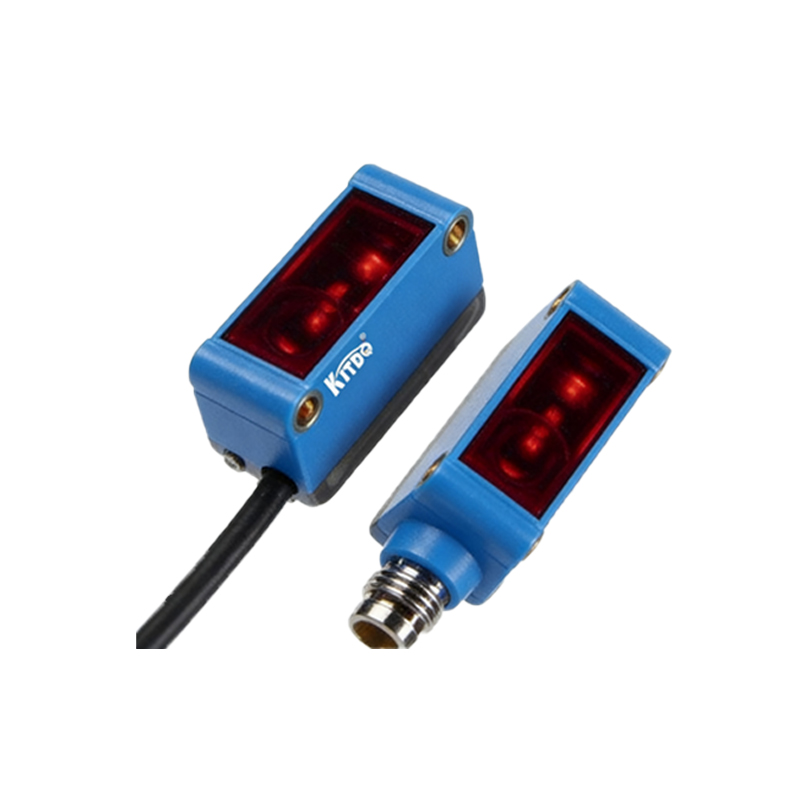
Photoelectric sensors are pivotal in industrial automation, detecting objects through light emission and reception. The measurement conversion circuit is the core that transforms optical signals into electrical outputs, ensuring precision and reliability. This circuit processes variations in light intensity, wavelength, or timing to generate analog or digital signals for control systems. In electrical engineering, optimizing this conversion is critical for applications like conveyor belt monitoring, object counting, and safety barriers. The circuit typically includes photodetectors, amplifiers, filters, and comparators, each stage refining the signal for accurate interpretation.
Key Components of the Conversion Circuit
The conversion circuit integrates several essential components. A photodiode or phototransistor captures incident light, converting photons into a current. This current is then amplified by a transimpedance amplifier (TIA) to achieve a usable voltage level. Noise reduction is achieved through low-pass filters, which eliminate high-frequency interference from ambient light or electromagnetic sources. Finally, a comparator or analog-to-digital converter (ADC) translates the conditioned signal into a binary output, matching the sensor’s logic requirements. Selection of these components—such as using a photodiode for fast response or a phototransistor for high gain—depends on the target application, like high-speed sorting or long-distance detection.
Signal Conditioning Techniques for Enhanced Accuracy
Accurate measurement conversion demands robust signal conditioning. Engineers employ techniques like differential amplification to cancel common-mode noise from power supplies and environmental sources. Automatic gain control (AGC) adjusts amplification dynamically to compensate for variations in target reflectivity or distance, ensuring consistent output over a wide operating range. Additionally, hysteresis in comparator circuits prevents oscillation near threshold points, stabilizing the sensor’s switching behavior. For high-precision tasks, such as in semiconductor manufacturing, synchronous detection using modulated light sources filters out ambient interference, boosting signal-to-noise ratio.

Challenges in Circuit Design and Practical Solutions
Designing photoelectric conversion circuits presents challenges like temperature drift, response time, and power consumption. Temperature changes affect photodetector dark current and component tolerances; using temperature-compensated amplifiers or software calibration mitigates drift. Response time constraints require careful selection of amplifiers with sufficient bandwidth, especially for fast-moving targets. Power-sensitive applications, such as battery-operated sensors, benefit from low-power ICs and intermittent operation modes. Practical solutions include implementing feedback loops to maintain gain stability and using shielding techniques to reduce electromagnetic interference (EMI), common in industrial environments.
Application Examples in Industrial Automation
In practice, conversion circuits enable diverse functionalities. For instance, a through-beam sensor uses a separate emitter and receiver, where the circuit detects beam interruption by a target, triggering a digital output for part counting. A retro-reflective sensor employs a reflector; the circuit identifies changes in reflected light intensity, suitable for detecting transparent objects. For diffuse sensors, the circuit measures scattered light from the target itself, ideal for close-range presence detection. Each application requires tailored circuit parameters—such as threshold levels and response delay—to handle varying object sizes, colors, and speeds.
Future Trends in Photoelectric Sensor Conversion Circuits
Advancements in technology are shaping next-generation conversion circuits. Integration with microcontrollers enables intelligent signal processing, like adaptive thresholding and self-diagnostics, reducing manual calibration. Use of silicon photomultipliers (SiPMs) offers higher sensitivity for low-light conditions, expanding applications in robotics and autonomous vehicles. Additionally, digital interfaces like IO-Link facilitate real-time data exchange, simplifying system integration. As industrial IoT evolves, conversion circuits will prioritize energy efficiency and miniaturization, supporting wireless sensor networks.