Understanding the Height Factor in Photoelectric Sensors
In industrial automation, the height of a photoelectric sensor is not just a physical dimension; it is a critical parameter that influences detection range, accuracy, and reliability. The detection distance of a sensor is often expressed as a multiple of its own height, which can range from 2x to 50x or more, depending on the sensor type. For example, a through-beam sensor with a height of 10 mm may detect objects up to 500 mm away, representing a 50x ratio. This factor is essential for engineers when selecting sensors for applications like conveyor belt monitoring or object counting.
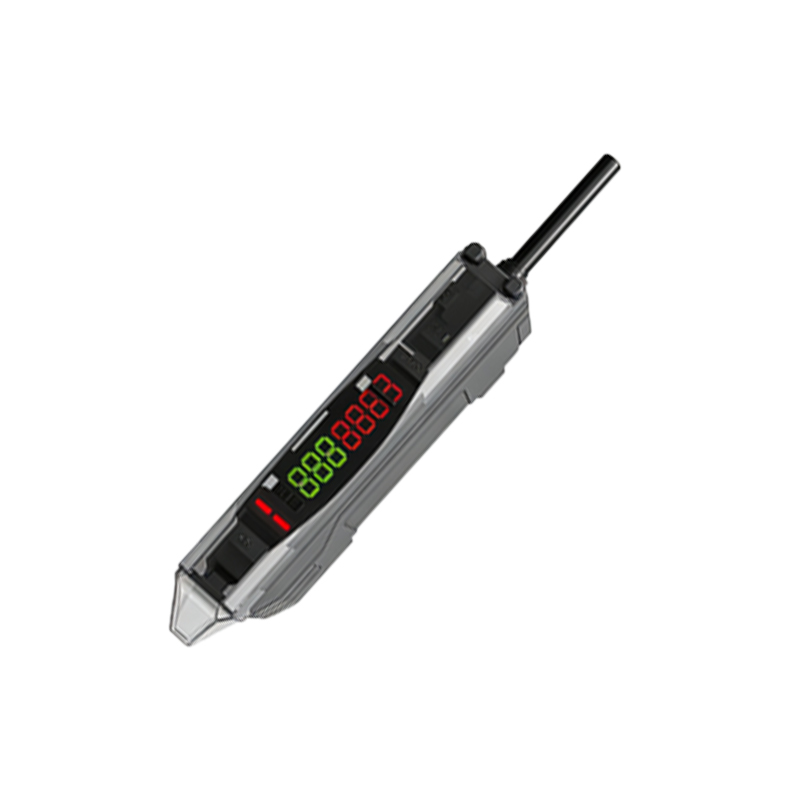
Sensor Types and Their Height-to-Range Ratios
Different photoelectric sensor technologies exhibit varying height multiples. Through-beam sensors, which use separate emitter and receiver units, typically offer the longest detection ranges, often up to 30-50 times their height. Retro-reflective sensors, which rely on a reflector, have moderate ratios, commonly 5-15x. Diffuse sensors, which detect reflected light from the target, have lower ratios, usually 2-5x. For instance, a 12 mm high diffuse sensor might have a maximum range of 36 mm (3x). Choosing the correct type depends on the required distance and environmental factors like dust or ambient light.
Practical Implications for Installation and Alignment
Engineers must consider the height multiple when installing sensors in tight spaces or on moving machinery. A sensor with a 10x height ratio means its detection range is ten times its height, but this also impacts alignment tolerance. For example, a sensor 20 mm high and 200 mm range (10x) requires precise alignment to avoid false triggers. Additionally, the sensor height affects the beam width: taller sensors often have narrower beams, improving accuracy but reducing coverage area. In applications like robotic arm positioning, a sensor with a 2x ratio might be preferred for shorter, more reliable detections.
Optimizing Performance with Height Multiples
To maximize performance, engineers should calculate the height multiple based on the target object size and speed. For fast-moving objects, a sensor with a higher multiple (e.g., 30x) provides earlier detection, but may require filtering to ignore background interference. Conversely, for small objects, a lower multiple (e.g., 3x) ensures higher sensitivity. Field adjustments, such as using a lens or aperture, can modify the effective height ratio. Always refer to manufacturer datasheets for exact specifications, as factors like ambient light and target reflectivity can alter the theoretical ratio.
Common Mistakes and Best Practices
A common mistake is assuming a sensor's height multiple is constant across all conditions. In reality, the detection range decreases with factors like dust, moisture, or dirty optics. For outdoor use, a sensor with a 20x ratio might only achieve 15x under heavy rain. Best practices include derating the ratio by 20-30% for reliability, testing in the actual environment, and using sensors with adjustable sensitivity. For example, in a high-vibration application, a sensor with a 5x ratio and reinforced mounting is preferred over a high-ratio model that may misalign.
Conclusion: Selecting the Right Height Multiple
In summary, the height multiple of a photoelectric sensor is a key design parameter that directly impacts system performance. Engineers should match the sensor's ratio to the application's distance, object size, and environmental conditions. A through-beam sensor with a 40x ratio is ideal for long-range detection, while a diffuse sensor with a 2x ratio suits precise, short-range tasks. Always validate the chosen sensor with real-world testing to ensure optimal operation. By understanding these multiples, you can enhance automation efficiency and reduce downtime.