Introduction to Photoelectric Sensors in Drone Applications
Photoelectric sensors are critical components in modern drone systems, enabling precise object detection, distance measurement, and navigation. As an electrical engineer, I focus on how these sensors convert optical signals into electrical outputs. Drones use photoelectric sensors for tasks like obstacle avoidance, altitude hold, and landing gear activation. The core principle involves emitting light (typically infrared or laser) and measuring the reflected signal to determine presence or distance. This article explores the technical operation, circuit design, and integration of photoelectric sensors in unmanned aerial vehicles (UAVs).
Basic Operating Principle: Emitter and Receiver
The fundamental operation of a photoelectric sensor relies on an emitter (such as a light-emitting diode or laser diode) and a photodetector (like a photodiode or phototransistor). In a drone, the emitter sends a modulated light beam toward a target. When the target reflects the light, the photodetector captures it and converts the optical energy into an electrical current. This current is then amplified and processed by a microcontroller to trigger actions. The modulation helps filter out ambient light interference, ensuring reliable detection even in bright sunlight. Key parameters include response time (often in microseconds) and beam divergence, which affect accuracy.
Types of Photoelectric Sensors Used in Drones
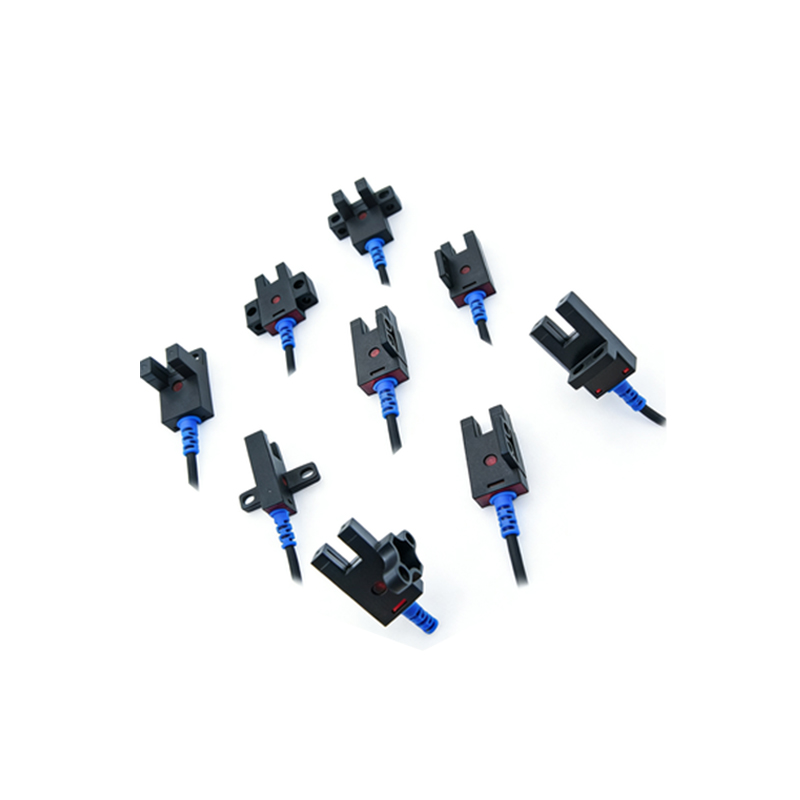
Drones commonly employ three types: through-beam, retro-reflective, and diffuse sensors. Through-beam sensors consist of separate emitter and receiver units, offering the longest range (up to hundreds of meters) but requiring physical alignment. Retro-reflective sensors use a reflector to bounce the beam back, simplifying installation. Diffuse sensors, the most popular for drones, rely on the target itself to reflect light; they are compact and ideal for close-range obstacle avoidance. Each type has distinct circuit requirements. For example, diffuse sensors need higher sensitivity amplifiers to detect weak reflections from dark surfaces.
Signal Processing and Noise Filtering
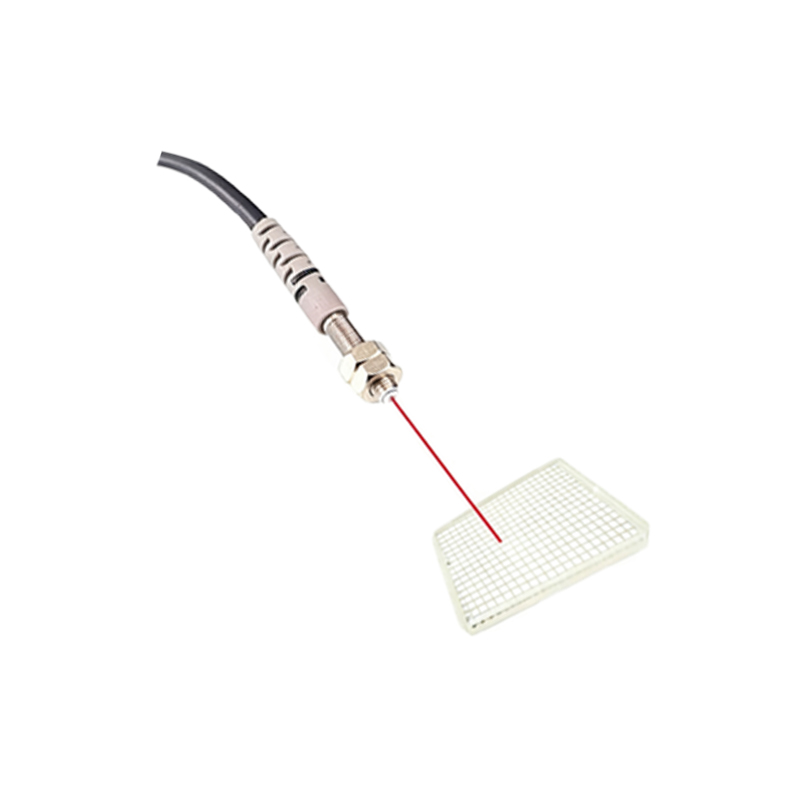
Raw photodetector signals are often weak and noisy due to electromagnetic interference from drone motors and propellers. Engineers design signal conditioning circuits that include amplifiers (e.g., transimpedance amplifiers) and band-pass filters tuned to the modulation frequency. For instance, a typical circuit might use a 10 kHz modulation to reject 50/60 Hz power line noise. The output is a digital pulse that indicates detection. Advanced drones integrate microcontrollers with analog-to-digital converters to measure signal strength for distance estimation. Proper shielding and ground plane design in the PCB layout are essential to maintain signal integrity.
Integration with Flight Controllers and Power Management
Photoelectric sensors interface with the flight controller via standard protocols like I2C, SPI, or PWM. For example, a pulse-width-modulated output can directly trigger a servo or ESC for obstacle avoidance. Power management is critical because drones have limited battery capacity. Sensors must operate at low voltage (e.g., 3.3V or 5V) and consume minimal current. Engineers often use sleep modes to reduce power when not in use. Calibration routines, such as adjusting threshold levels for different lighting conditions, are implemented in firmware. Redundant sensor arrays are common for 360-degree coverage.
Challenges and Engineering Solutions
Key challenges include environmental effects like fog, rain, and dust that scatter light, reducing detection reliability. Engineers mitigate this by using high-power emitters and adaptive threshold algorithms. Another issue is false triggers from sunlight reflections; solutions include using narrow-band optical filters and synchronous detection. Thermal drift in photodiodes is compensated by temperature sensors and software corrections. For high-speed drones, sensor latency must be below 1 ms to enable real-time reactions. These constraints drive innovation in circuit design, such as using avalanche photodiodes for faster response.
Future Trends in Photoelectric Sensor Technology for UAVs
Emerging trends include LIDAR integration (time-of-flight sensors) for 3D mapping, multi-spectral sensors for agricultural monitoring, and MEMS-based mirrors for scanning. Engineers are also exploring machine learning algorithms to process sensor data for predictive obstacle avoidance. Improved semiconductor materials like gallium nitride (GaN) promise higher efficiency and lower noise. As drone applications expand into autonomous delivery and inspection, photoelectric sensors will become more miniaturized and energy-efficient, driving the next generation of UAVs.